There’s a question we get asked time and time again, when someone’s looking at buying a landscape print for the first time.
“What actually makes a limited edition worth more than just… a print?”
And it’s a fair one. If you’ve ever stood in front of an image you loved, only to mentally talk yourself out of it by wondering whether you’re paying for the art or for the marketing, this post is for you.
While it’s genuinely not as complicated as some people make it sound, that decision does require a little understanding of what “limited edition” actually means – what separates real fine art photography from the decorative prints you’ll find in the “big box stores”, and why any of that matters to the person who lives with a piece of art on their wall.
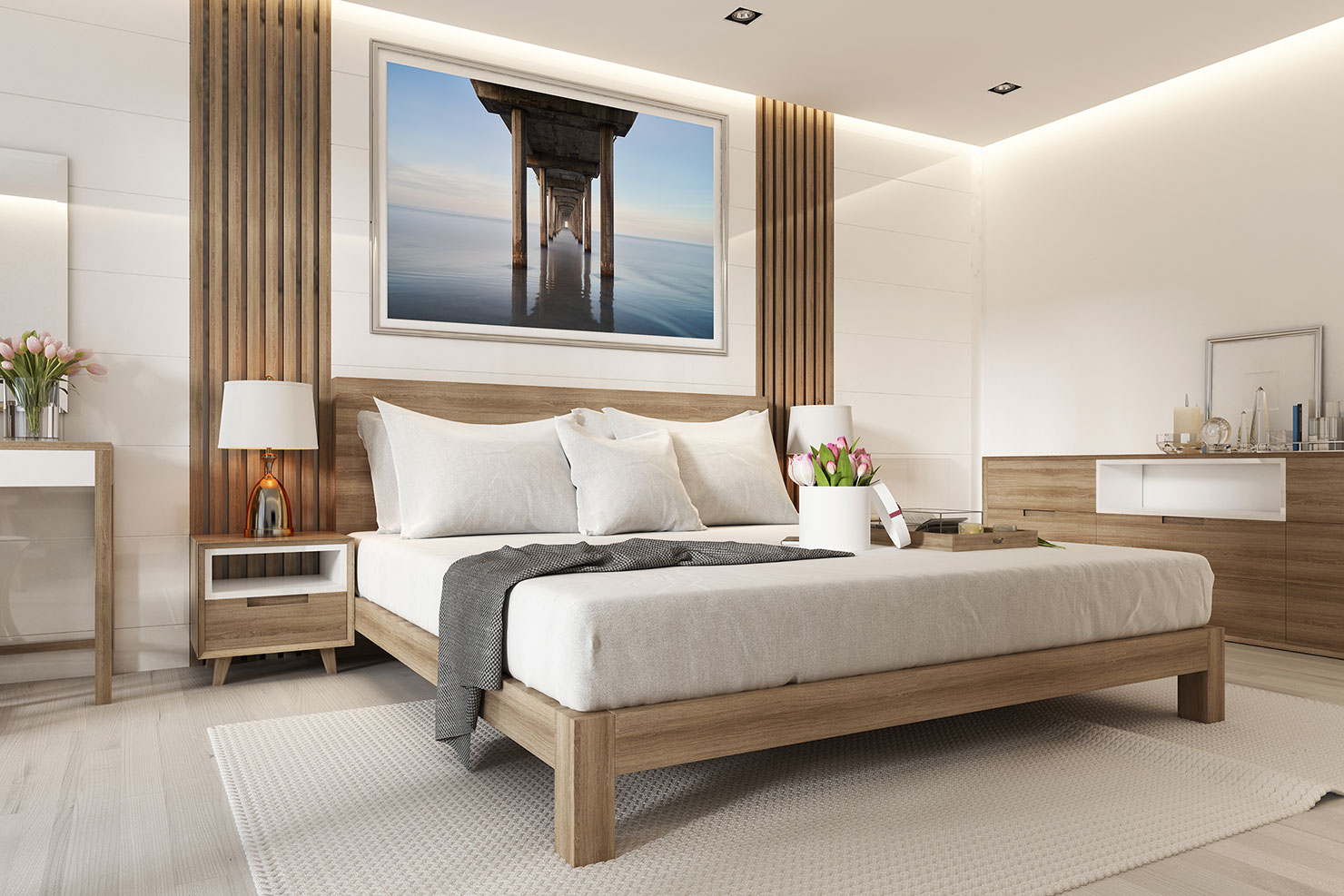
First, let’s clear up what a “limited edition” isn’t…
Walk into any high street home store and you’ll find “limited edition” slapped across everything from scented candles to kitchen tiles. It’s been so thoroughly abused as a phrase that it’s easy to understand why people have become so sceptical.
In photography – specifically fine art photography – a limited edition means something very specific: only a fixed, finite number of prints will ever be made of that image. When they’re gone, they’re gone: The edition is closed, and no further prints will be produced. Not in five years, not when demand picks up again, not ever.
Sadly, some photographers try to play clever with “sizes” here – it’s a limited edition in that size (and therefore unlimited by definition – they can (and do) add another 1mm onto its dimensions and claim it’s a whole new edition they’re producing).
We don’t.
For my own work, we keep things simple, upfront and honest – Limited means genuinely finite.
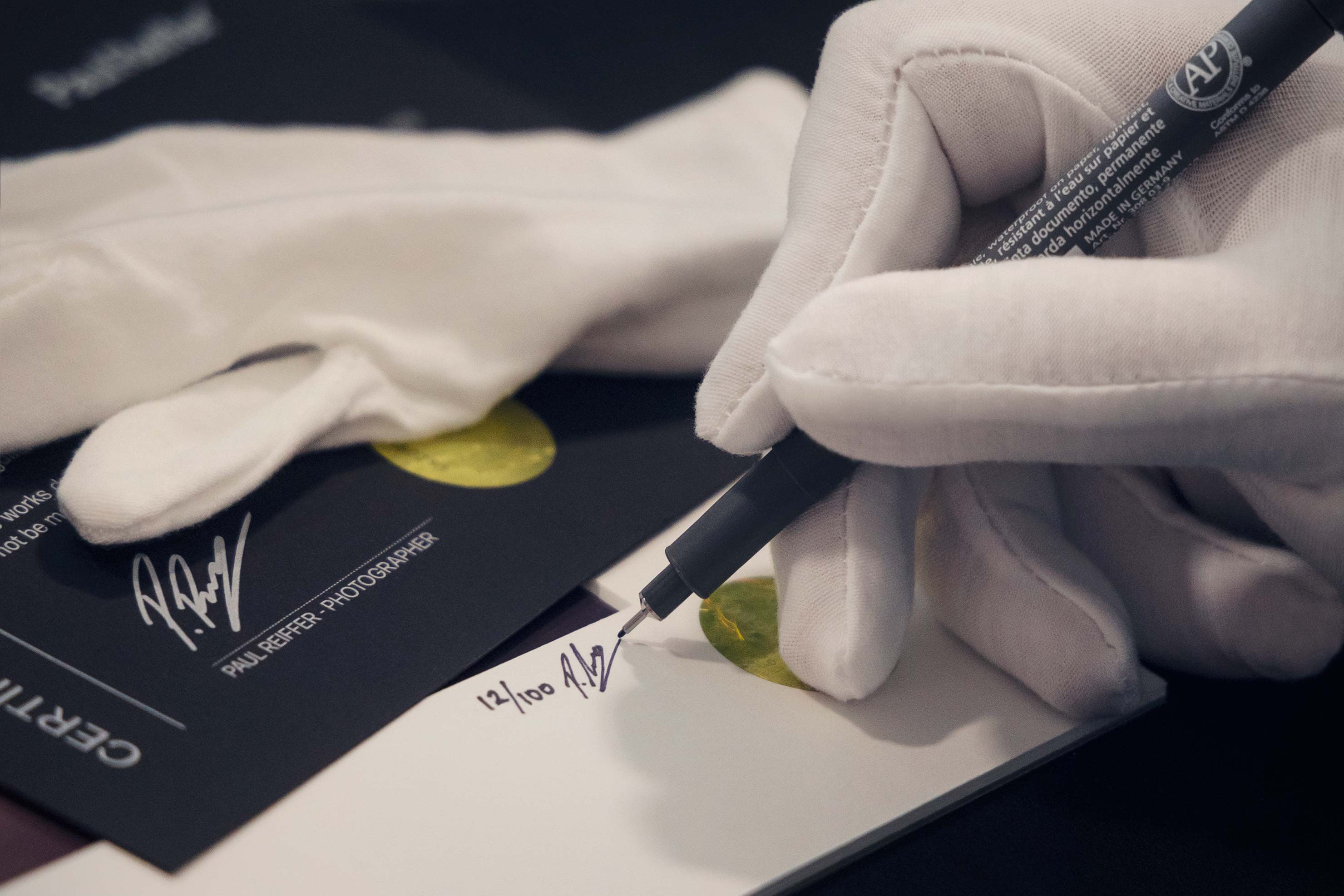
Each of our limited editions run to 100 prints across all sizes and formats – signed, numbered, and accompanied by a certificate of authenticity that carries both the edition number and my signature. An Artist’s Proof (AP) run of just 5 exists separately, for a very small number of personalised images.
And that’s it. The moment the 100th print leaves the studio, the edition is complete and never re-opens.
This matters – a lot – because the scarcity isn’t manufactured. There’s no version of our prints where “limited” turns out to mean “limited until we print more.”
So where does the value actually come from?
There are several threads to pull on here, and they’re all connected.
The first is the obvious one: scarcity. An image that exists as one of 100 prints worldwide is, by definition, rare. The fewer prints that remain available in an edition, the more the existing ones tend to hold their value. This isn’t unique to photography – it’s how limited editions work across every art form, from lithography to sculpture. It’s fundamental supply and demand, applied to something that is genuinely and permanently finite.
The second is provenance. My prints ship with documentation that traces them directly back to me – the photographer, the artist, the person who was standing in that exact spot at that exact moment. That provenance doesn’t disappear when ownership changes hands. A signed, numbered print carries its history with it too.
The third – and this is the one people underestimate most – is the physical quality of the print itself. A “fine art print” isn’t just a category description, it refers to a specific production standard: archival-grade materials, museum-quality inks, papers that are designed to last for generations without fading or degrading. Our prints are meticulously produced, finished and framed by hand. The paper, the process, the framing options – all of it is selected for longevity, not cost efficiency.
A genuine fine art landscape print made to these exacting standards looks as good in thirty years as it does on day one. It has to – it’s got my name on it.
The image itself has to earn its place
This is the part that separates fine art photography from decorative photography – and the difference is significant.
A decorative photograph is one that looks nice. It fills a space. It matches the sofa. It’s pleasant enough that nobody objects to it being there. There are millions of them, and most cost around as much as the frame they arrived in.
A fine art photograph is one that makes you stop. Not just once – but every time.
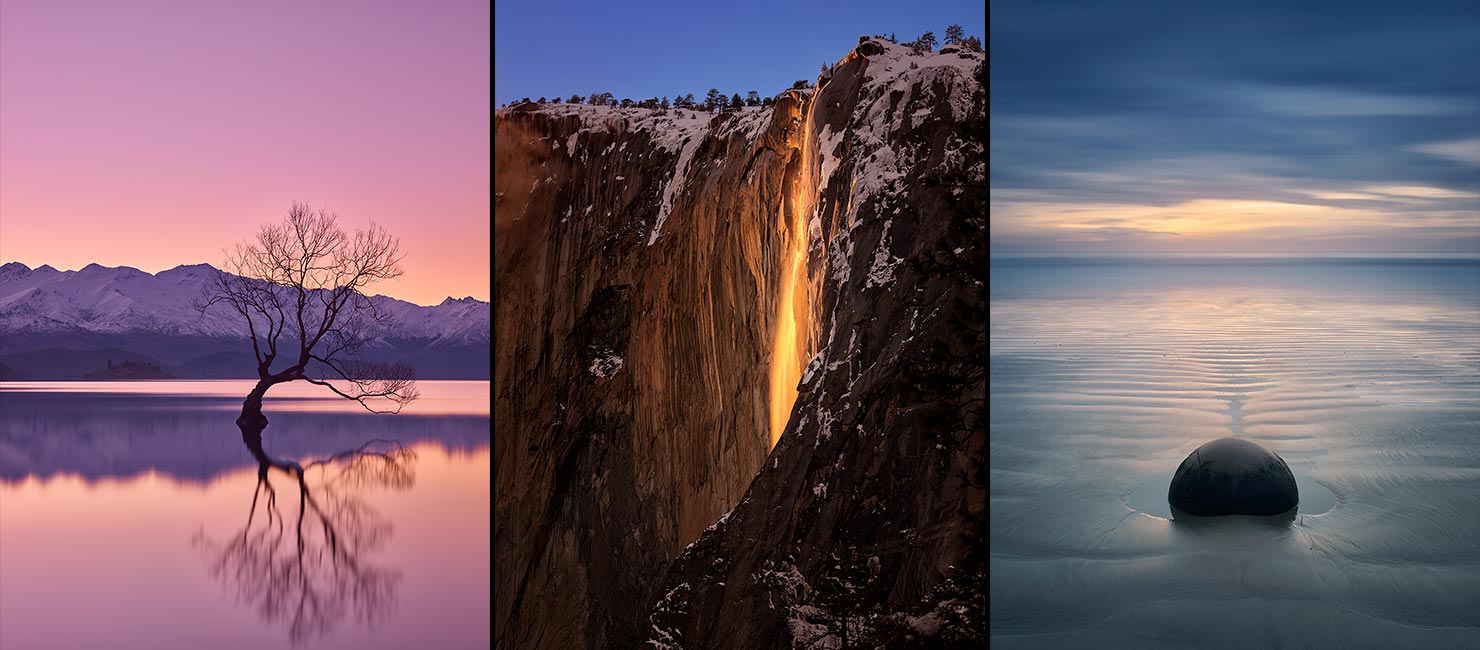
It has something in it that rewards repeated viewing, that speaks to you – whether it’s a quality of light that feels almost impossible to have caught, a sense of scale and depth that pulls you into the frame, or a moment of stillness in a world that rarely stops long enough to be remembered.
The images I release as limited editions are not my “best sellers” in a commercial sense – they’re the ones that passed a much harder test:
Would I want to live with this in my life?
Does it share something that can’t easily be replicated?
Is this an image that only exists because I waited long enough for the right moment?
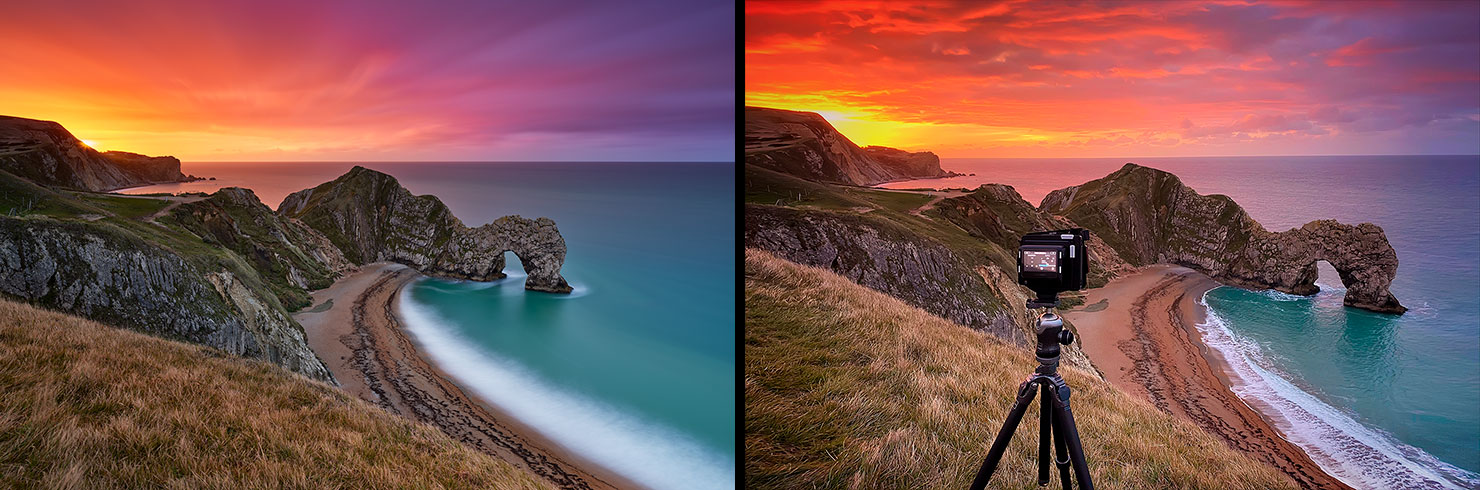
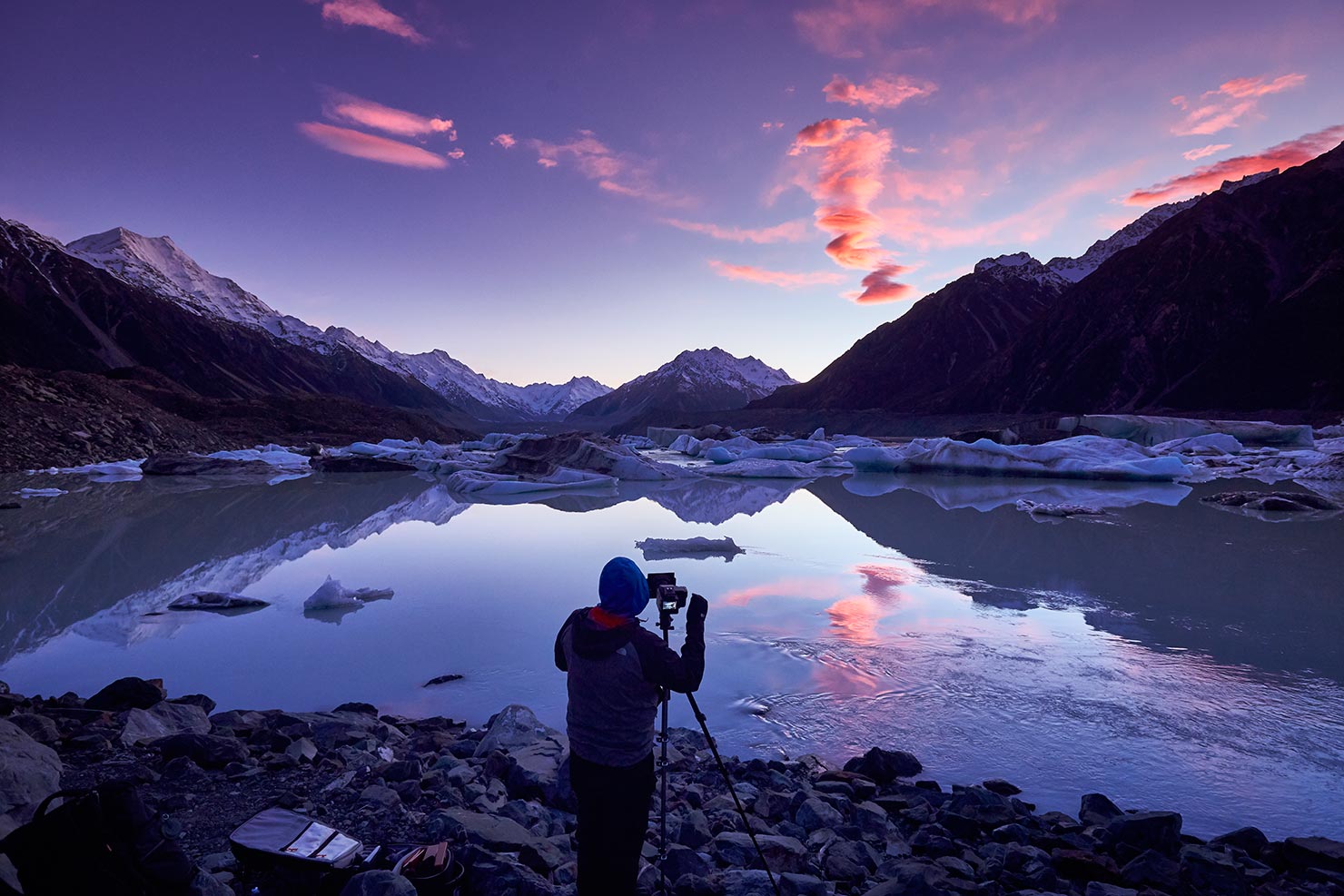
More often than not, those images took years to get. Not in the sense of sitting at a desk designing them – but in the sense of returning to locations around the world, across multiple seasons, in different conditions, until the elements aligned in a way that justified pressing the shutter.
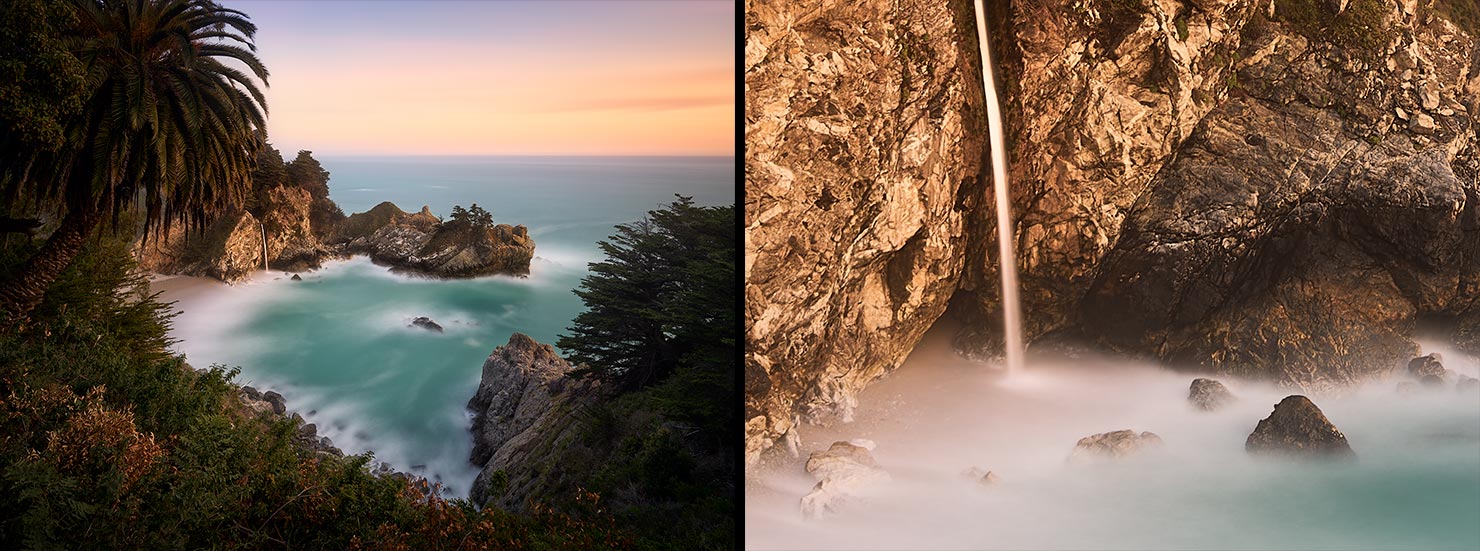
The McWay Falls print I eventually released? More than ten years of visits to that same stretch of coastline, captured eventually by camping on the hilltop.
My images of Uluru? Multiple trips, official permits from the park authority, and a sunrise window of about forty minutes to get what I was after.
And these aren’t stories we tell to impress anyone. It’s just context. Because when you understand what went into an image – the access, the timing, the patience – the edition size suddenly feels less like a marketing feature and more like a reflection of what the image actually stands for when it’s on your wall.
Editions that speak for themselves.
Not all limited editions are equal, and it’s worth understanding what different edition sizes tend to communicate.
A print released in an edition of 5,000 is technically still “limited” – but at that volume, it’s unlikely to appreciate significantly in value, and the “rarity” argument wears thin pretty quickly. Editions of that size are common in commercial photography and poster art, where volume is the point.
Editions of 100 sit in a different category.
At this scale, the prints are genuinely collectible, and the arithmetic of scarcity starts to work in the buyer’s favour over time.
It also means I know every single owner of my work. Artwork that’s not sitting on thousands of walls around the world, intentionally – it’s special to both the buyer, and me.
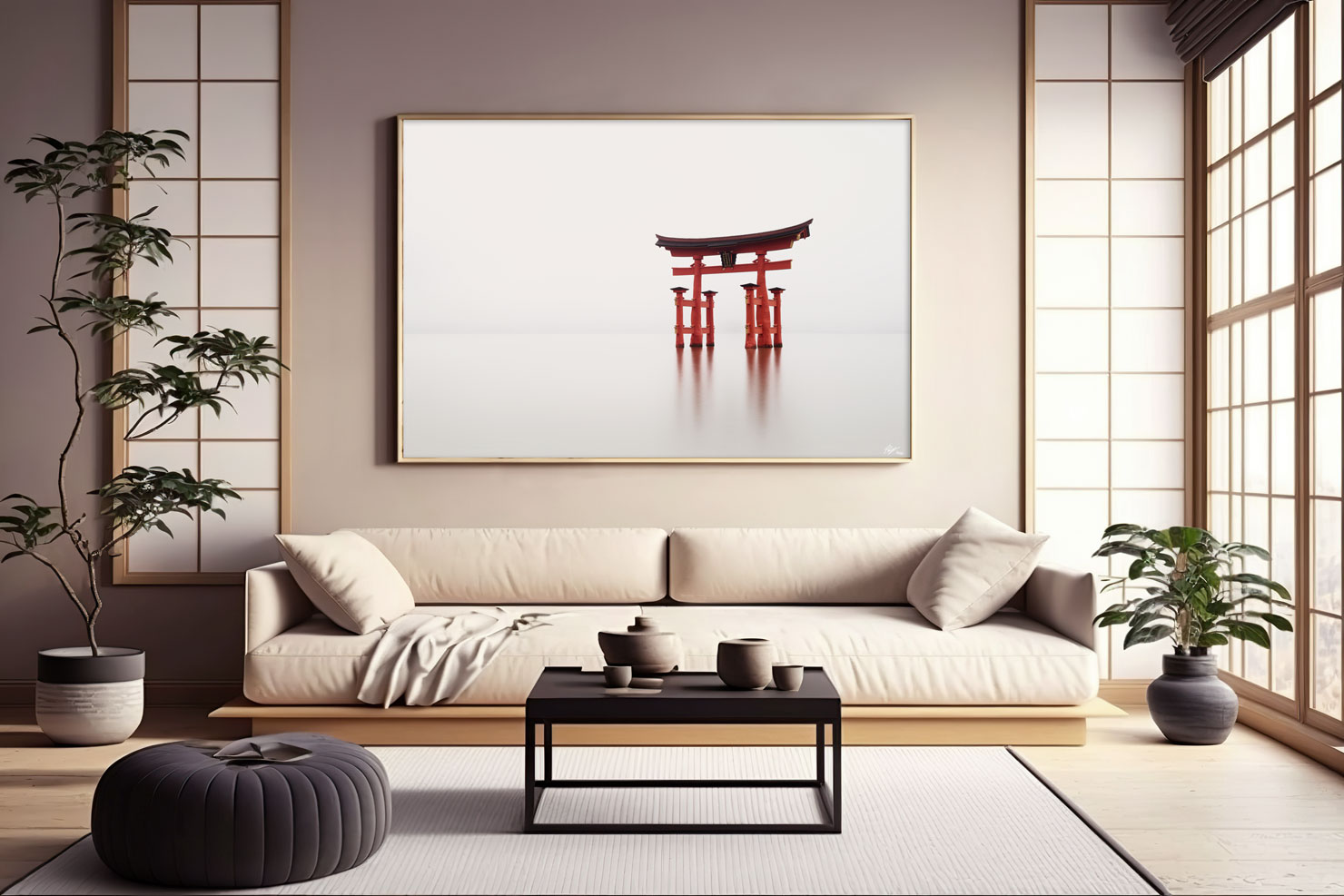
Going one step further, we then offer an “Artist’s Proof”.
The small AP run exists outside of the main edition – with each print carrying its own significance for the buyer.
Traditionally used by printmakers to verify the final production quality before the main edition was released, APs are numbered separately (AP 1/5, for example) and are, by convention, kept by the artist or released in very small numbers. We personalise the presentation for each AP collector, and these prints remain the most desirable pieces of a given print.
Because size really does matter…
One thing that surprises people is how significantly the physical dimensions of a print affect their experience of it – not just aesthetically, but in terms of what the image can actually deliver.
My images are captured on the highest quality full-frame medium format digital systems. The Phase One IQ4 150MP, for instance, produces files of a size and depth that most photographers never work with – and that resolution exists for a reason.
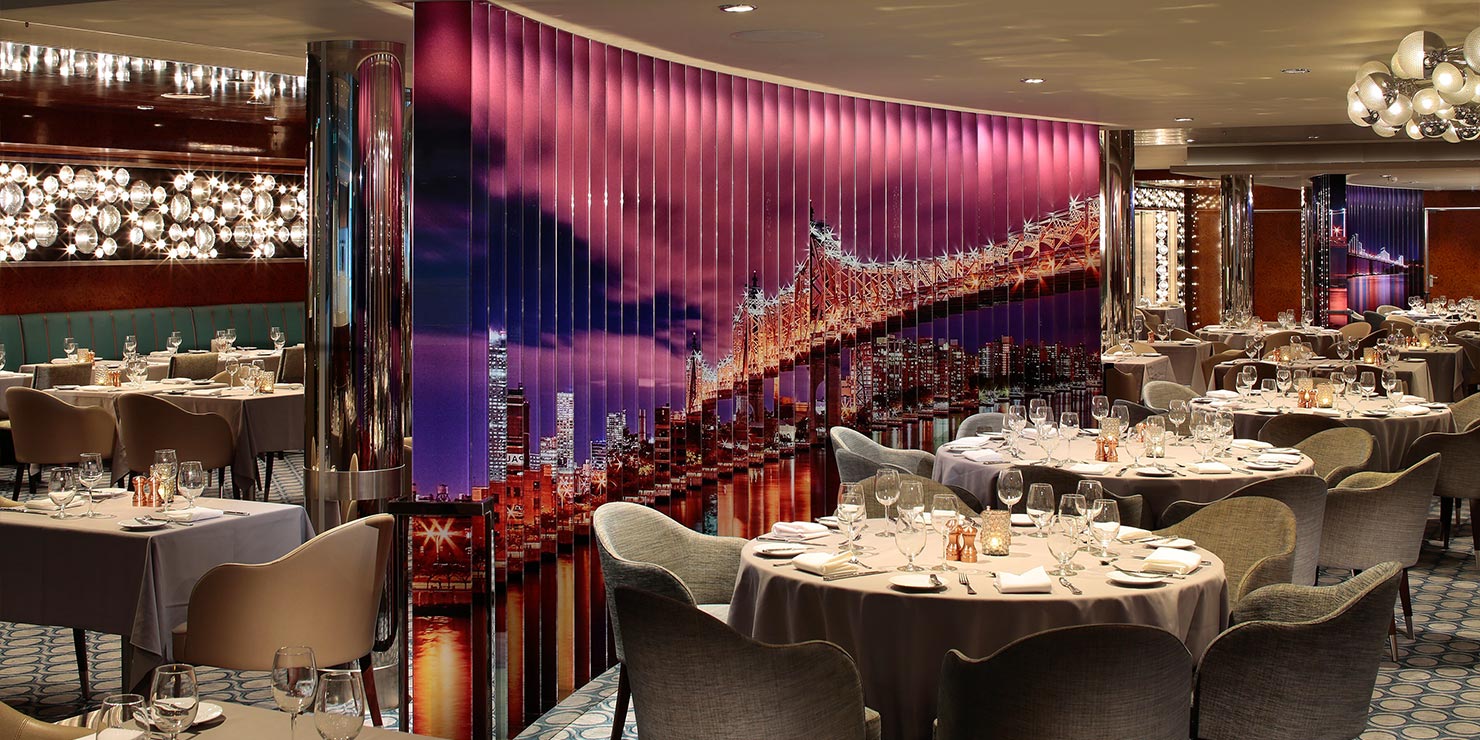
It means that a print at 150cm, 180cm, even several metres across, retains every detail that was in the original scene, viewable up close, without loss.
The texture of that rock, the individual water droplets in a waterfall, the layering of light across a cityscape at blue hour – you can stand close to a large format print of my work and it holds its own. That’s not possible with a file from a standard camera sensor, regardless of how good the post-processing or digital manipulation is claimed to be in order to reach a size they’ve been asked to produce.
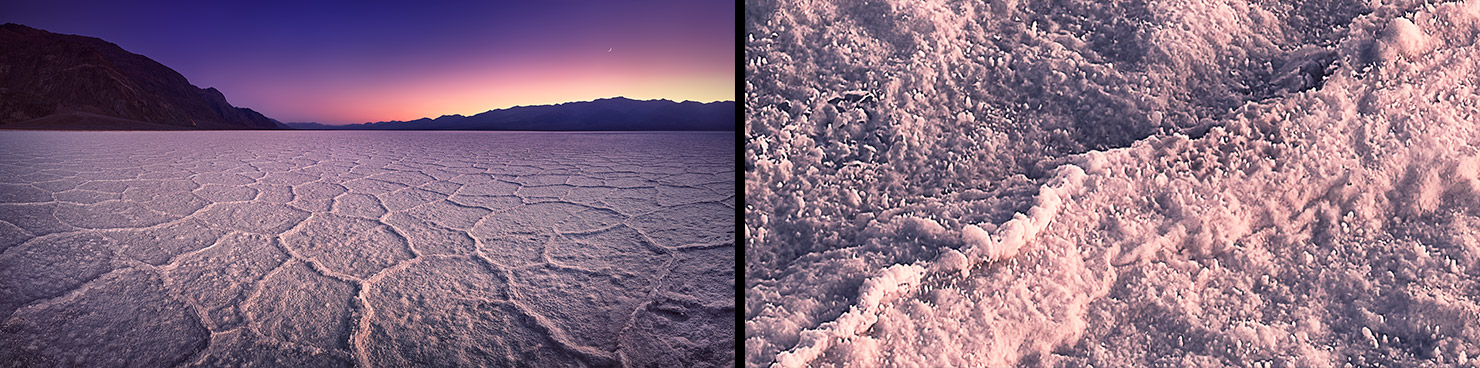
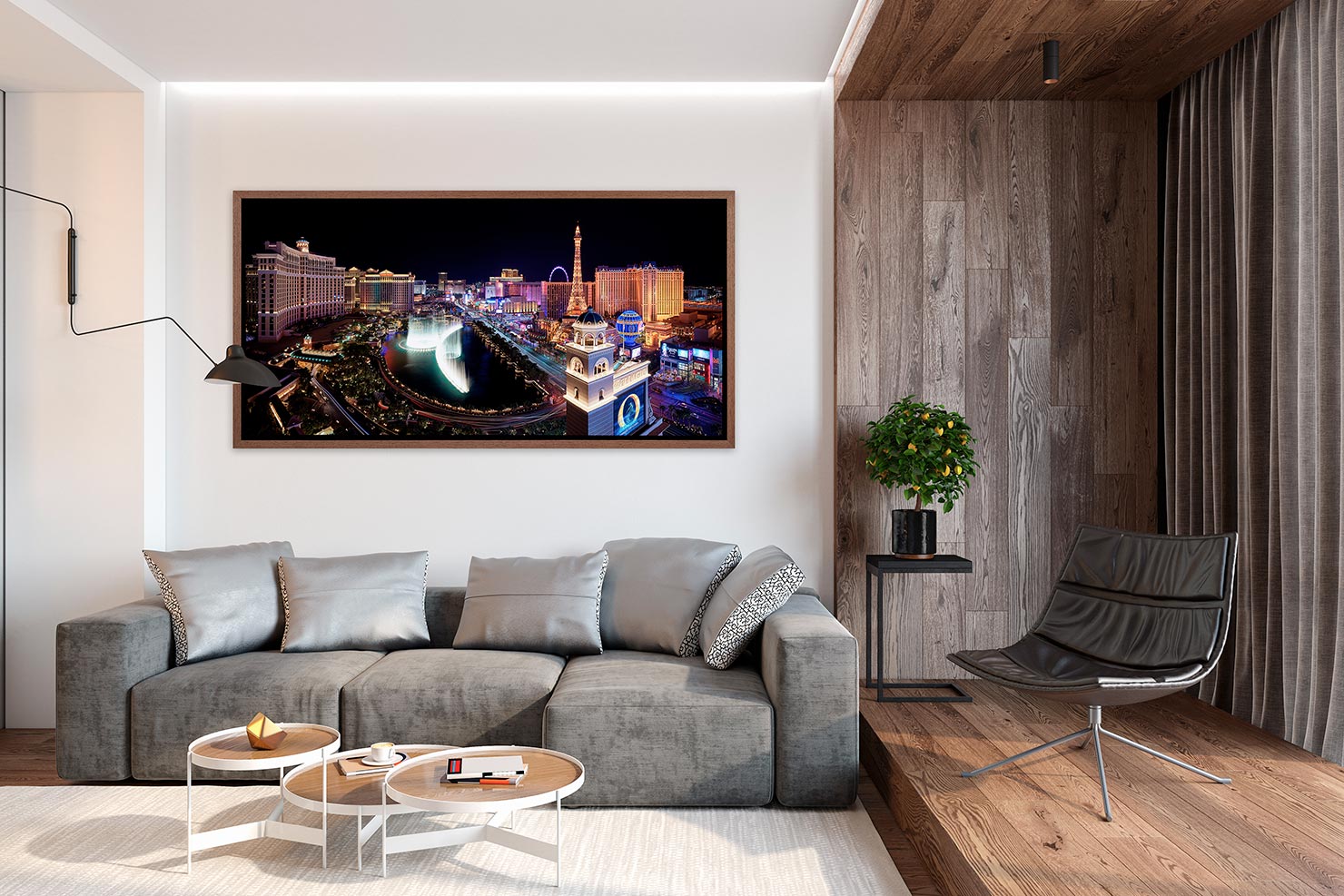
For collectors buying work to fill large walls – which is most of the people who come to me for prints – this matters enormously.
A small print of a landscape image is decorative. A large format version of the same image, properly produced with experience of such display requirements, is genuinely immersive.
It changes the room, by design.
What about the investment angle?
I’ll be careful here, because I’m a photographer, not a financial adviser – and anyone who tells you fine art photography is a guaranteed investment is either oversimplifying or selling something (most likely fine art photography).
What I can say, honestly, is this: well-chosen limited edition prints by established photographers with documented provenance do hold their value. In some cases, significantly. The secondary market for fine art photography is real, active, and significant – and editions that have closed (meaning all prints are sold) tend to command premiums over their original release price when they come up through auction houses or private sales.
The factors that matter most for value retention are ones I’ve already mentioned: edition size, provenance, the reputation of the photographer, the physical quality of the print, and – perhaps most importantly – whether the image itself has longevity.
Work that feels current because it’s trendy tends to date, while work that was made with an eye on something more permanent tends not to.
I won’t pretend every print I release will end up at Christie’s. But I will say that the collectors I’ve worked with over the years – many of whom have bought multiple editions – treat these as serious acquisitions. They’re stored properly, hung carefully, and in more than a few cases, insured.
That’s not an accident – it’s what happens when the work, the production, and the edition are all taken seriously from the very beginning.
The part nobody talks about: living with the work
Beyond anything else – the edition numbers, the archival materials, the provenance documentation – there’s something much simpler that determines whether a fine art print is worth owning…
Do you want to look at it every day?
I ask, because it’s the test that matters most – and it’s the one that gets overlooked most often in conversations about value and investment and all the rest of it when it comes to fine art photography.
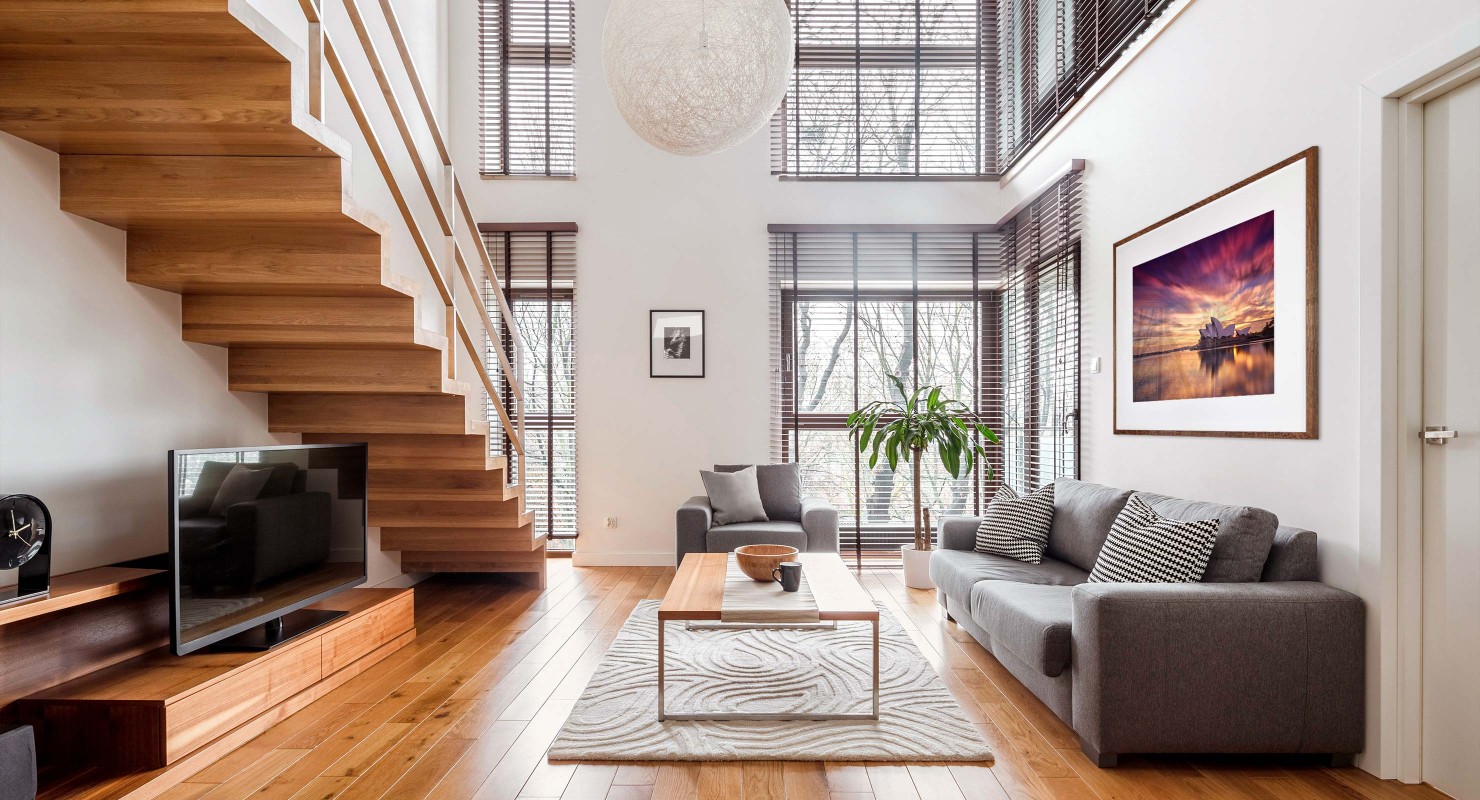
A print that you stop noticing after six months has faded away (even if not physically), regardless of what it cost. A print that you keep finding new things in – a quality of light you missed before, a detail in the foreground, a sense of depth that shifts depending on how the room is lit, a story that remains unanswered – that’s the one worth having.
And that’s what fine art is, really. Not the certificate. Not the edition number. Not even the name of the photographer on the back. It’s the image itself, something you enjoy, that rewards your attention over time.
Everything else – the scarcity, the materials, the provenance – exists to protect that investment.
It exists to make sure the experience of looking at it now is the same experience someone has in twenty years. To ensure that what you’re buying isn’t just an image, but a permanent, fixed, moment in time – produced to a standard that means it doesn’t deteriorate, doesn’t fade, and never stops being what it was on the day it left the studio.
Real is rare – and when it’s made properly, it lasts.
If you’re considering a limited edition print and want to understand more about the editions, sizes, materials, or framing options available, the Buyer’s Guide covers it all – or feel free to get in touch directly.