You don’t just stumble across Uluru. It’s a place you choose to visit – and in terms of impact on your travels, that’s a decision that’s going to add some serious time and effort.
Located in the heart of Australia’s “Red Centre”, it’s not exactly near to many other destinations, so transportation options from somewhere like Sydney appear somewhat limited. At the more economical end of the scale, there’s the 4 hour knee-inspection flight with Jetstar (that goes on some days of the week), the 30+ hour drive by car, or the 61 hour train & bus combo – all of which mean you arrive into Yulara bearing an uncanny resemblance to a fermented sardine.
However, visiting Uluru feels like something bigger than dealing with travel gripes (even for me!) It carries so much cultural, spiritual, and historical weight, I’m one of many that clearly feel compelled each year to make the trip and experience it first-hand, regardless of what that does to budget or schedule.
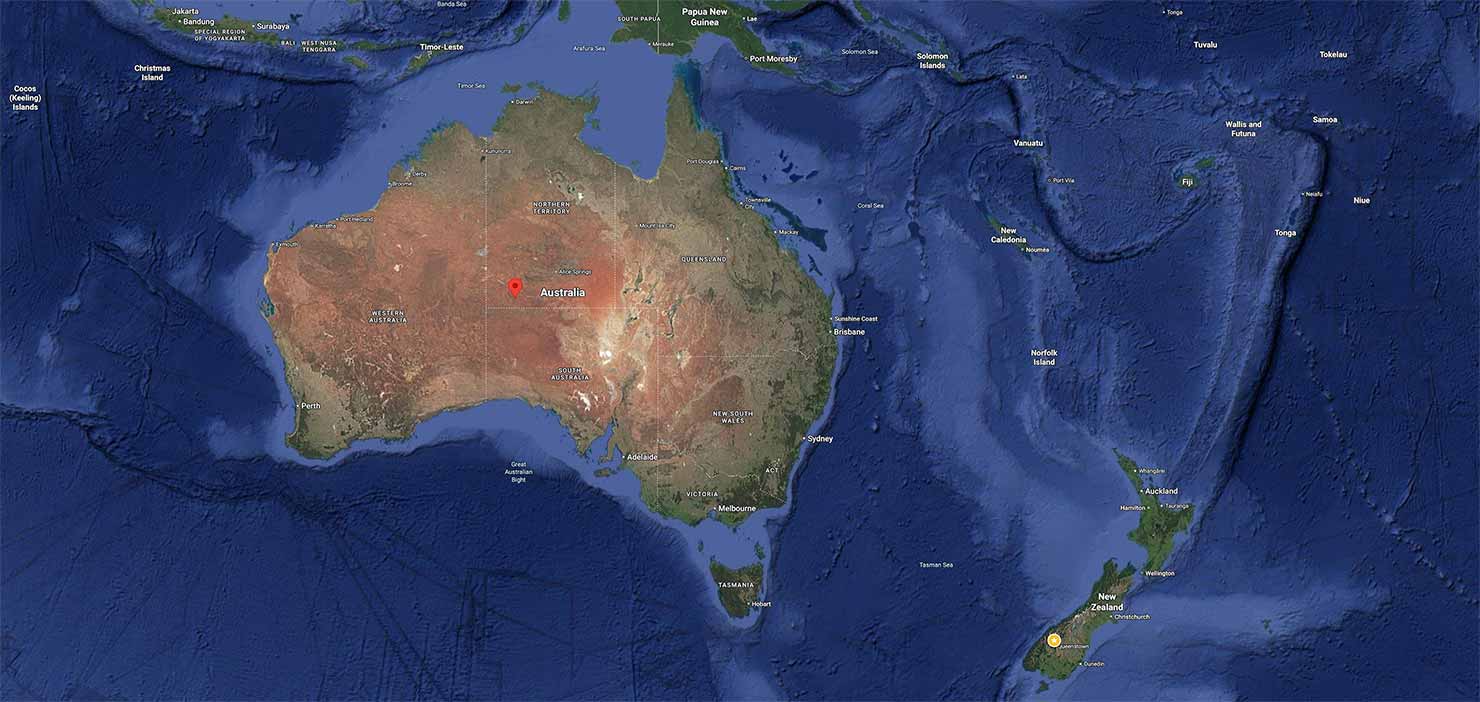
(Yes, that’s it right there under the little red pin)
Before anything else, and having watched many visitors “in the wild”, I will say one thing as a photographer: Uluru is not sat there waiting for our tripods. It’s existed for a long time before us, and so wil it continue to, for a lot longer after – not just for photography.
Turning up with a camera doesn’t elevate you, soften the rules, or earn you special consideration as an “influencer” (cough) – especially if, like many of us, you’re someone who doesn’t hold a cultural connection to this land. You’re a visitor, the same as everyone else – learning about its significance, and operating inside a framework that is there for everyone, equally, to enjoy this special place.
This is a place where the sentence “access is a priviledge, not a right” really holds true, and if anything, it makes a great case for taking the opportunity to experience somewhere, not just going there to capture it on a memory card.
Distance removes excuses
So, with the effort to get there stripping out any lazy thinking, it forces an early commitment – with transportation, pre-booking (there are very limited hotel options in Ayers Rock Resort) and packing all being things that need consideration months in advance.
First up, trip 1. When faced with adversity, I did what any reasonable visitor would do – paid my way out of discomfort.
With business class tickets on the monopoly-priced Qantas offering, you get an eye-watering ticket cost, bundled with a bigger seat and (more importantly), access to the Sydney lounge and its iconic toastie maker station. (IYKYK)
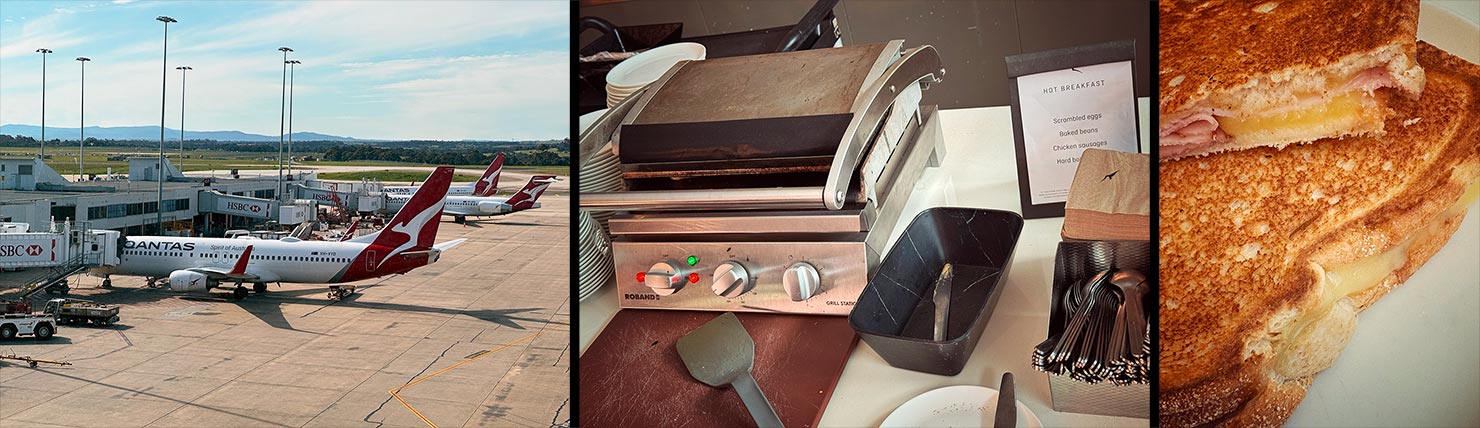
Novelty? Sure.
Would I travel all the way to Australia to use it? Quite possibly.
4 hours of flying later, and then being able to compare this trip to the others I’ve done since to AYQ (from that overpriced seat, to the Jetstar knee-torture-cells with no windows, to the emergency exit row and no entertainment) – I’m still convinced this is a route that proves all airlines simply hate their customers.
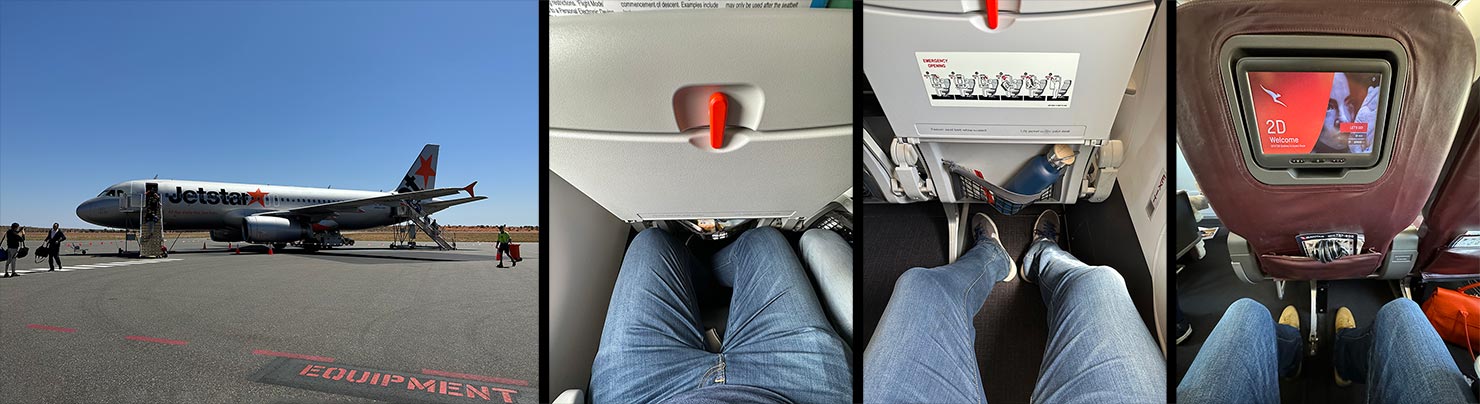
Still – once you’re out and away from whichever city you left, you begin to get a sense of the scale of Australia itself, along with its heart sat right in that big “Red Centre”.
Every now and then, you pass tiny airstrips in the land below. There are incredible river structures, cloud formations, valleys and shapes in the sand for much of the flight, so a window seat is worth it for that alone.
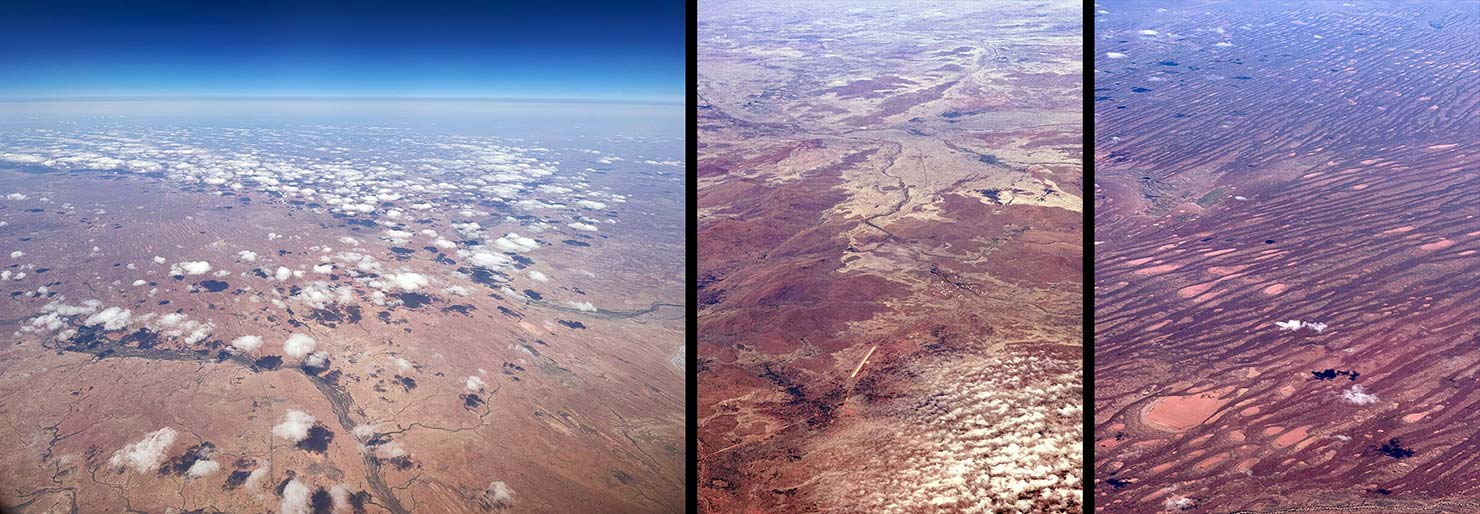
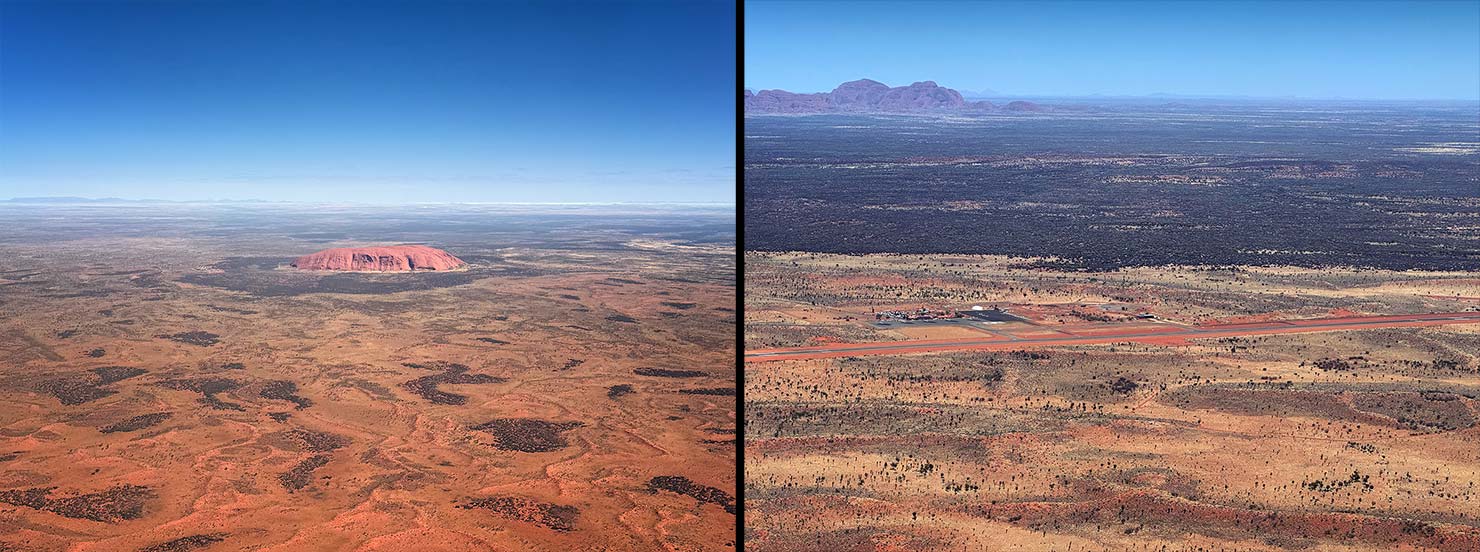
But slowly, as the plane begins its descent, the big reveal begins – where Kata Tjuta, Ayers Rock Resort, the AYQ airport (and of course, Uluru itself) come into view.
Arrival comes with structure
Once you’re on the ground, it’s quite clear that everything here is regimented, familiar, and well planned for those who provide hospitality and travel – nothing is accidental.
With such a tiny area (in the grand scheme of things), it does make sense.
- Yes, there are only a handful of car rental options – each with a 100km mileage limit (which it turns out is plenty).
- Yes, the roads are a little “isolated” – not many turnings or options to choose from.
- And yes, everyone on that plane seems to be going to the exact place (I mean, where else are you going to stay otherwise?)
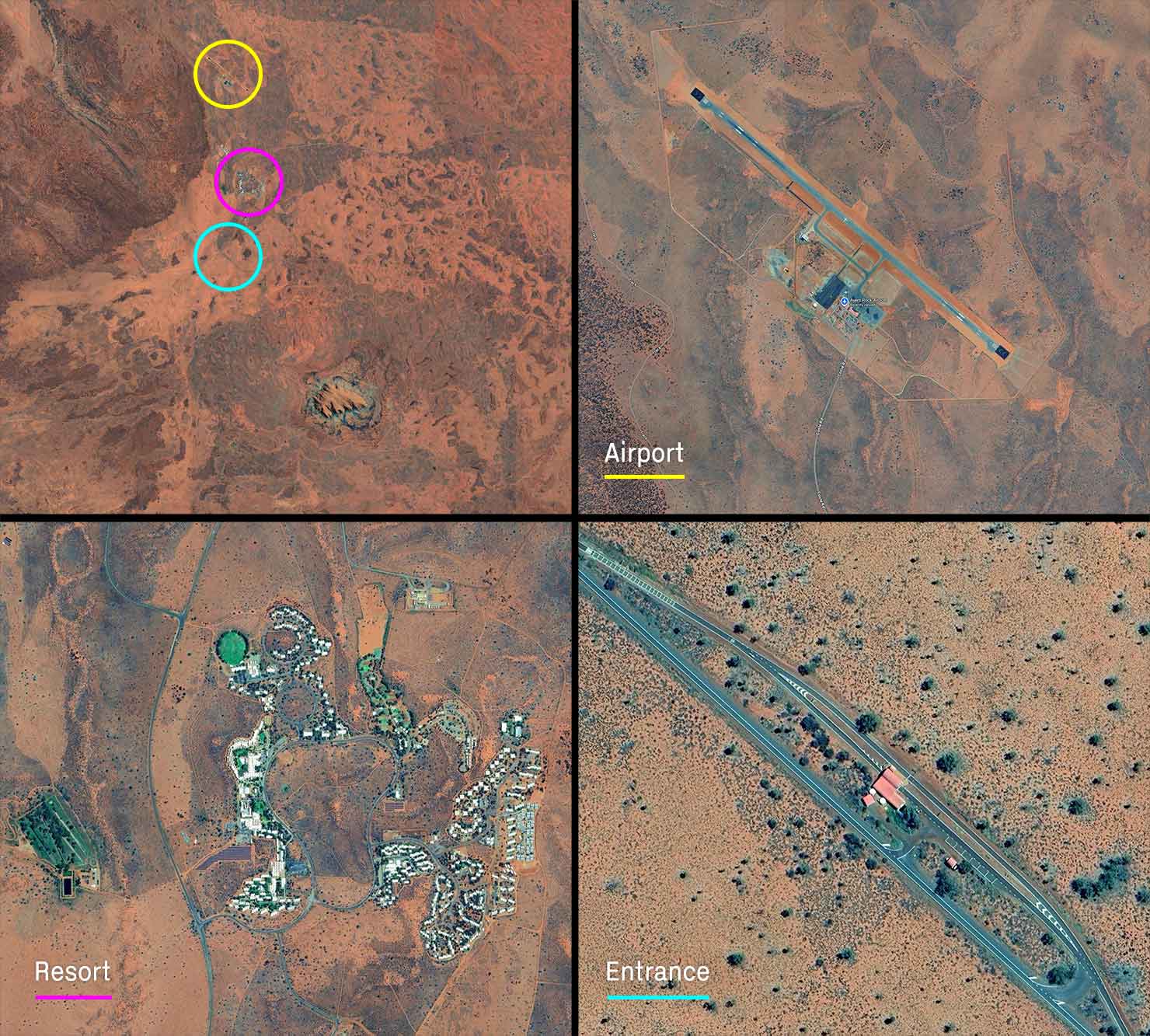
So, with each and every flight, every day, the community and hospitality workers in Yulara (the service area for Ayers Rock Resort, the airport, and tours etc) all put on their show of appreciation for your visit and present you with lots of itinerary options all surrounding the world’s largest sandstone monolith.
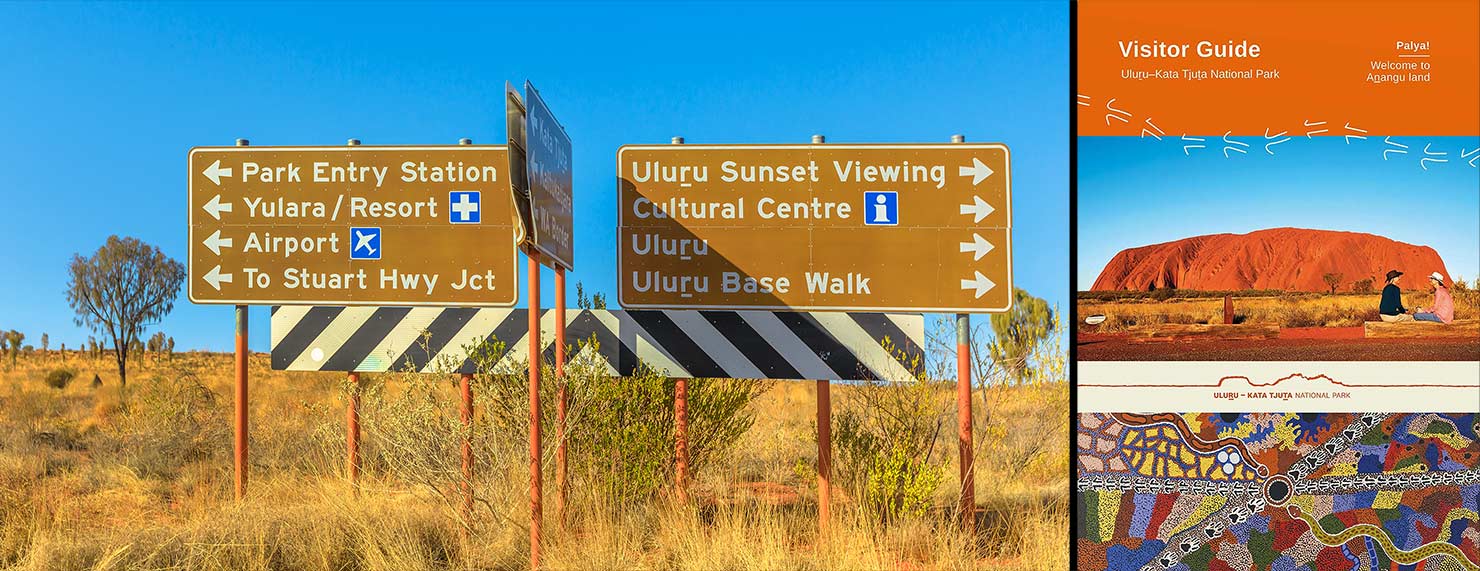
Visitor guides are issued, park passes are offered (it’s paid entrance at the road stations to get in – but you can do this on your iPhone), and the expectations for both visitors and photographers are then spelled out clearly:
This entire location demands, and deserves, respect.
Uluru is sacred to the Aṉangu people, the Traditional Owners of the land, and is central to Tjukurpa – a living system of law, knowledge, and responsibility that governs how the land is understood and cared for.
As someone (along with most of us) who does not fully understand that culture, it feels only right to take their guidance on what is, and is not appropriate as far as activities go in the area. Uluru itself remains protected – not because it is old or iconic, but because it is culturally active, with specific sites and stories that are not public and not open for unrestricted photography or use.
And to help show that respect, all visitors are given clear guidance on which areas can, and cannot, be photographed for personal use, taking sensitive sites into account, and that no areas may be photographed or filmed for commercial use or public sharing without explicit permission or a permit.
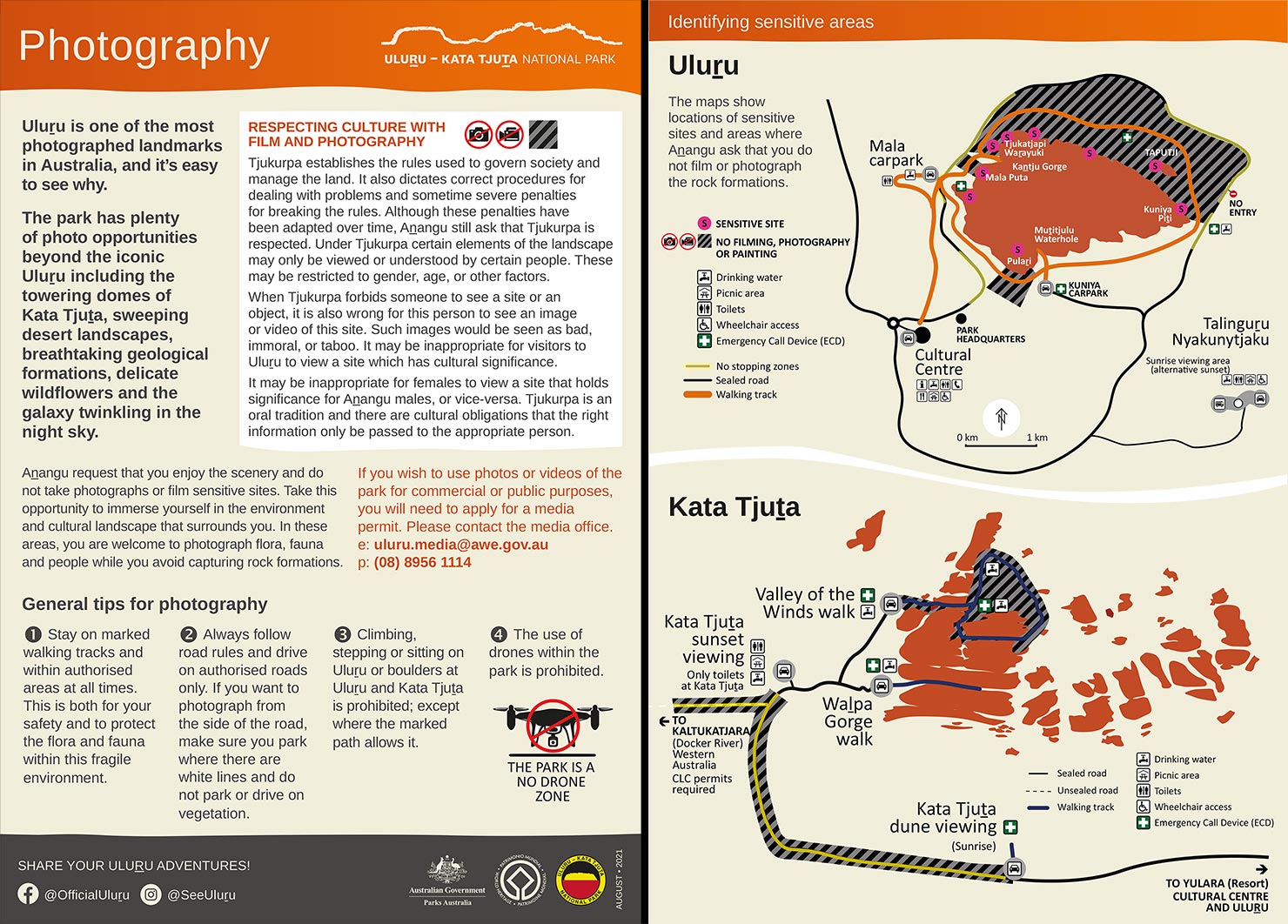
In fairness, it’s all quite simple:
- Some areas are culturally sensitive.
- Some images aren’t for sharing.
- Drones are banned.
- No off-road driving.
- Paths are not just suggestions.
- Climbing the rock is not (any longer) permitted.
- No commercial photography is allowed without a permit. (including “just” for social media use)
- None of this is hidden or ambiguous, and none of it is negotiable.
This is also the part where a lot of photographers get uncomfortable. Not because the rules are unclear, but because they are clear.
If you plan to use images of Uluru anywhere online – portfolio, blog, social media, editorial, it doesn’t matter – you need a permit, and that means in advance. (Remember that planning thing I mentioned early-on…?)
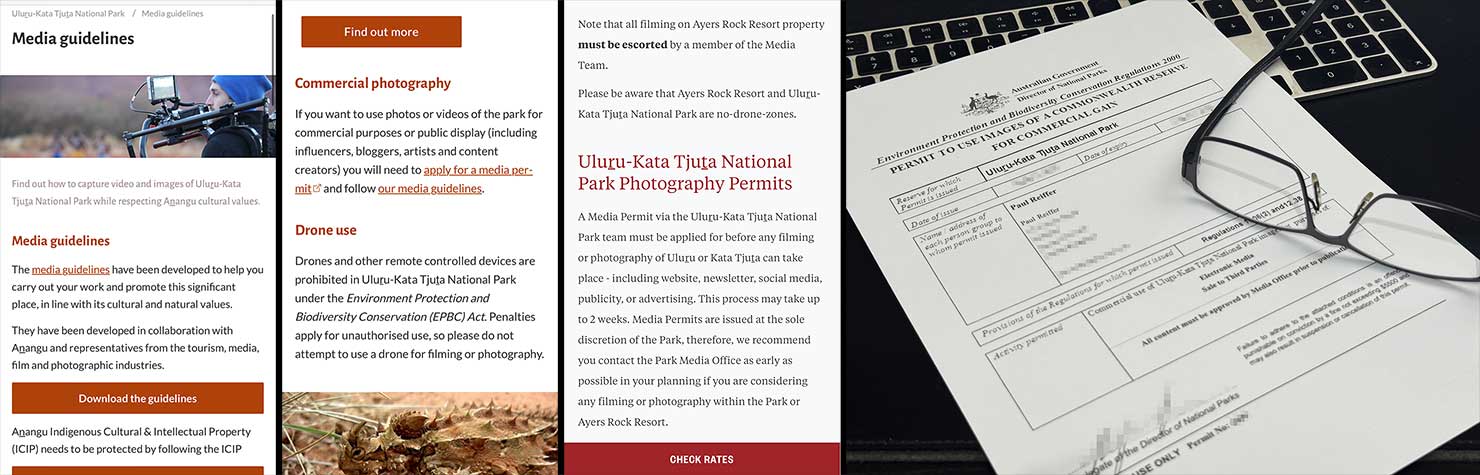
Use is what matters, not whether you think your intentions are noble or in some way important. This applies to everyone, and that process is not a quick one – so you need to be well prepared.
And be aware, as this is not only one of the strictest natural sites for photographers, it’s also one of the most heavily enforced. They can, and do, follow up with those who choose to break the rules (rules that you agree to when buying a pass and by stepping foot onto the land) – so don’t be surprised if you get called out for thinking and acting like it doesn’t apply to you.
Reality bites.
So, you’ve managed to get here, you’ve got your car sorted, you’ve booked your (ish) luxury accommodation (Sails in the Desert is pretty good, in fairness) – time to relax, right?
Wrong.
This is the Outback of Australia.
If the poisonous spiders aren’t enough to put you off, then the highly venomous King Brown snake (or liru) should make for a good warning – but to be honest, these seemed to pale into insignificance when compared to the real beasts of the area in my view…
The bugs.
The heat is great – but the hotels know what you’re going to need, as you won’t have packed enough. This is not a place of serenity on demand – it’s home to 99.983% of the world’s flies in the summer, bugs, weird insects, things even Google can’t identify when asked.
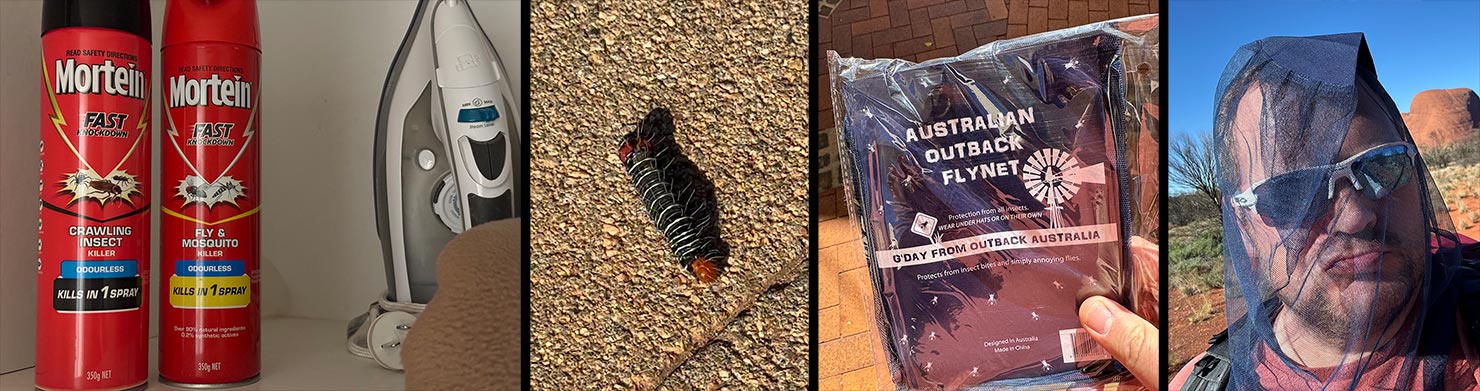
The flies don’t care about your mindset, activity or schedule – they’re relentless – and they make a point of maximum impact at the exact moment you want to enjoy, or capture, of the scenery. It’s irritating, and it’s part of being there. You either accept it or you let it get under your skin. (I opted to let them get under my skin, metaphorically, after several purchases of fly nets in the afternoon.
What keeps you engaged, however, is the atmosphere.
Some say the desert “hums”
And depending on where you sit – that could refer to many aspects of this incredible area.
For some visitors, the “hum” or “vibe” comes from its 550-million-year-old, glowing red, iron-rich, sandstone monoliths. For others, it’s the deep connection to the Anangu people and that spiritual energy, the sounds of traditional didgeridoo, and the enduring presence of these ancient, sacred, and sometimes hidden places. For some, “hum” can also represent the sound of the wind, especially in the 36 red rock domes of Kata Tjuta (Many Heads), which are known for their windy conditions.
Regardless – the second you step out onto the wilderness, and see that huge red rock, I challenge anyone to say they don’t feel something here.
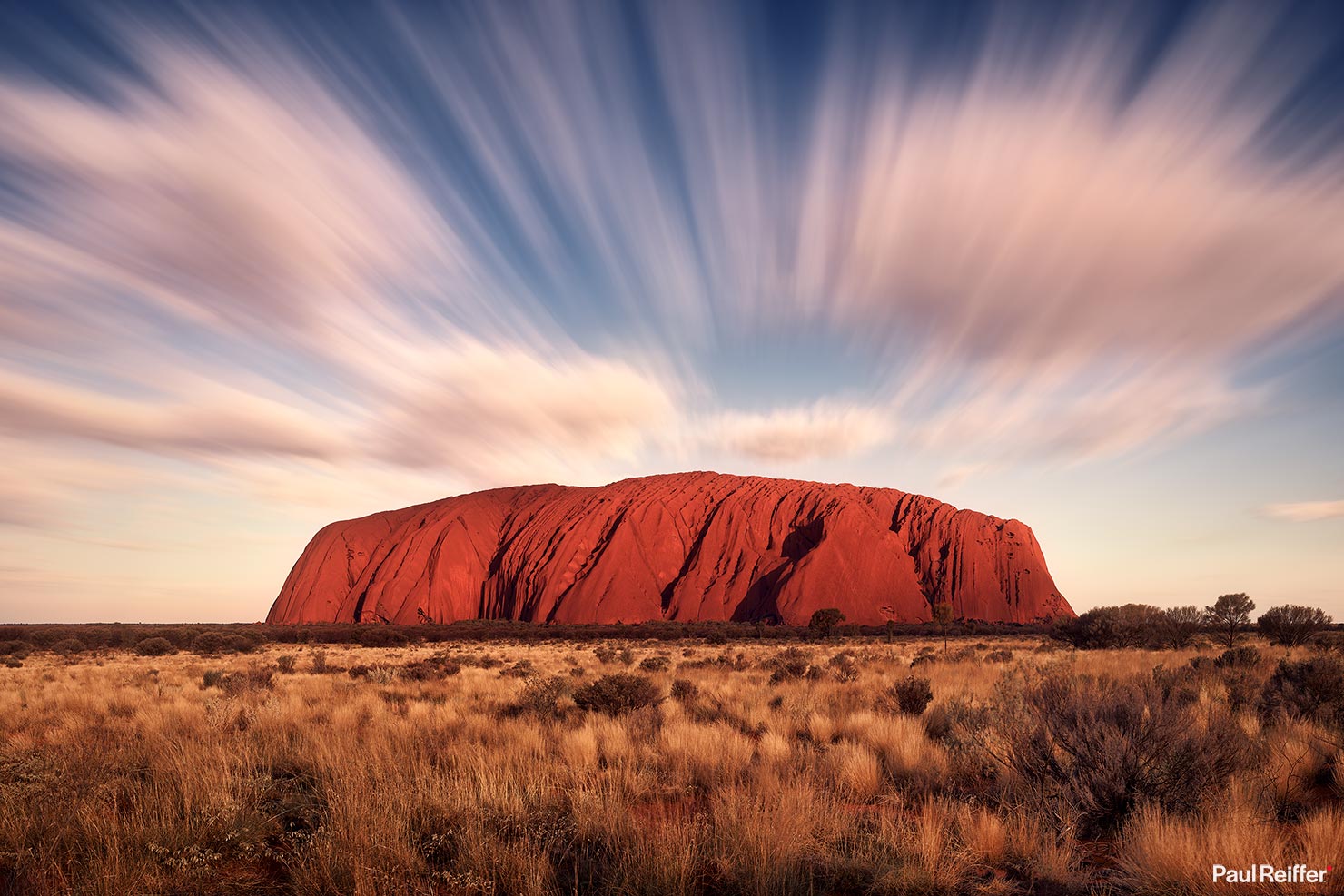
And it’s that feeling – of permanence, of 500 million years of history, that I wanted to capture in a frame with movement in other ways. Whether that was in the motion of the bush in all directions around the base of it – or from the floating clouds in the sky above – I wanted something that would force Uluru to be front and centre.
Popular viewpoints = predictable behaviour
Granted, when I first got to the sunset “spot” (it would become a standard feature on future trips) – things weren’t looking good: Clear skies are wonderful for re-energising the flies that have made it through your head-net, but not much good for that movement I was searching for, especially with no wind.
But, sure enough, my next visit would be more successful – don’t you just love that about the weather, how it changes?!
We almost had the place to ourselves that day, save for two travellers who’d set up a picnic (not for long, flies!) to enjoy the evening.
But I was still hoping for more. Regardless of clouds above Uluru itself – if the sun is clear on the horizon, it’s the ultra red natural glow of the rock that we should get really excited about, especially at this time of year as the shadows dance across its face with every degree the sun moves down the sky.
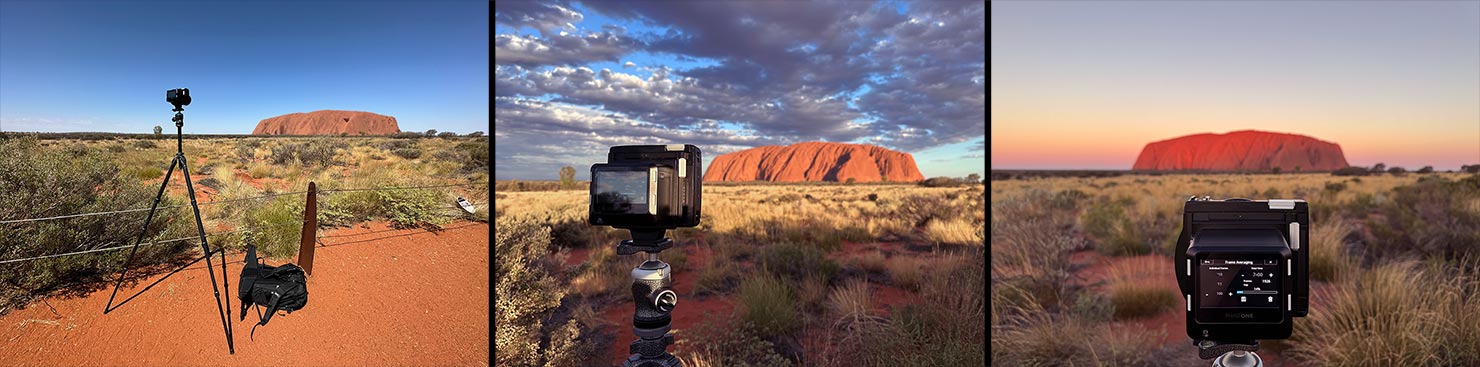
If I compare the measures they’ve taken at Uluru Kata Tjuta park to manage the flow of people, it feels eerily familiar – and so does the blatant ignorance of those measures by many.
What’s frustrating, is the more of the world I visit, the more I see that infrastructure as a necessary way to manage our impact on a space – and not something that is evidently seen by some as a baseline for where their own creativity should begin from.
When it’s respected, it works, quietly. When it’s ignored, the natural world suffers.
To help with visitor crowding at peak times, the parks service has set aside two viewing areas for sunset (and a huge one for sunrise) which are the most popular. To give them credit, they’re all great vantage points – and I don’t see why people would feel the need to move to a different (off limits) area to capture a worse photo, but hey-ho…
For sunset, to the north, you have the tour bus park which enables two things:
- It gives them their own dedicated space to enjoy with their flag-waving tour-guide and accompanying loudspeaker, from a slightly raised hill overlooking the land.
- In return, it keeps those same, annoying, big groups with their flag-waving tour-guide and speaker setup away from people who actually want to experience a place on their own terms…
Now, from that, you might read into my words that I’m somewhat against large format stop-click-consume-go bus tour groups that locust themselves across the world…
I am.
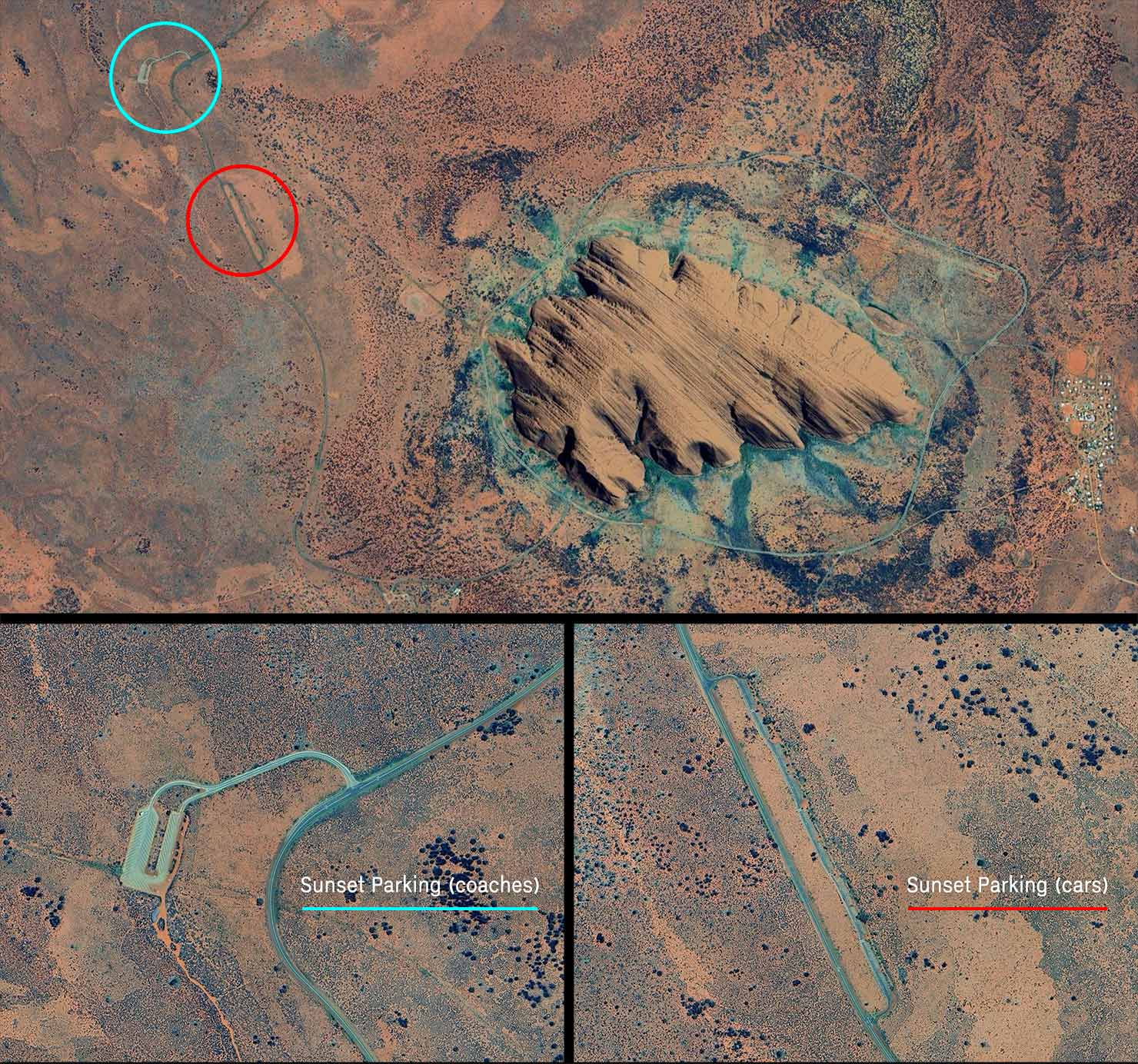
Then, further south, you have one of the longest parking areas I’ve ever visited for the single car visitors to stand and enjoy their time watching the glow.
By day – a deserted car park.
By evening – a selfie-stick holding, tripod-infested, fence-locking (stupid – DON’T do it), fly-swatting group of absolute strangers, forming the outback’s most diverse tailgate party. And all are there to experience the same phenomenon of light and shadow as their subject moves from daylight into night.
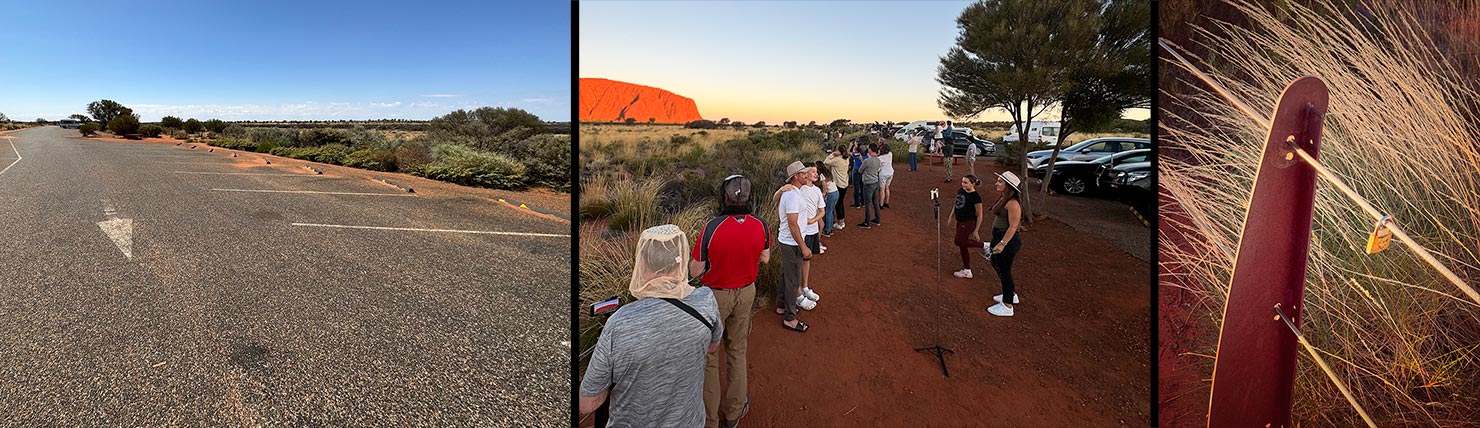
Interestingly, it never felt crowded here – and I’ve been there in peak season. It feels orderly, respectful, almost calm, and (apart from the idiots trying to start the damaging padlock trend) everyone seems acutely aware of how to behave on a site that’s lasted 500 million years longer than we have on this earth.
But wow – that light.
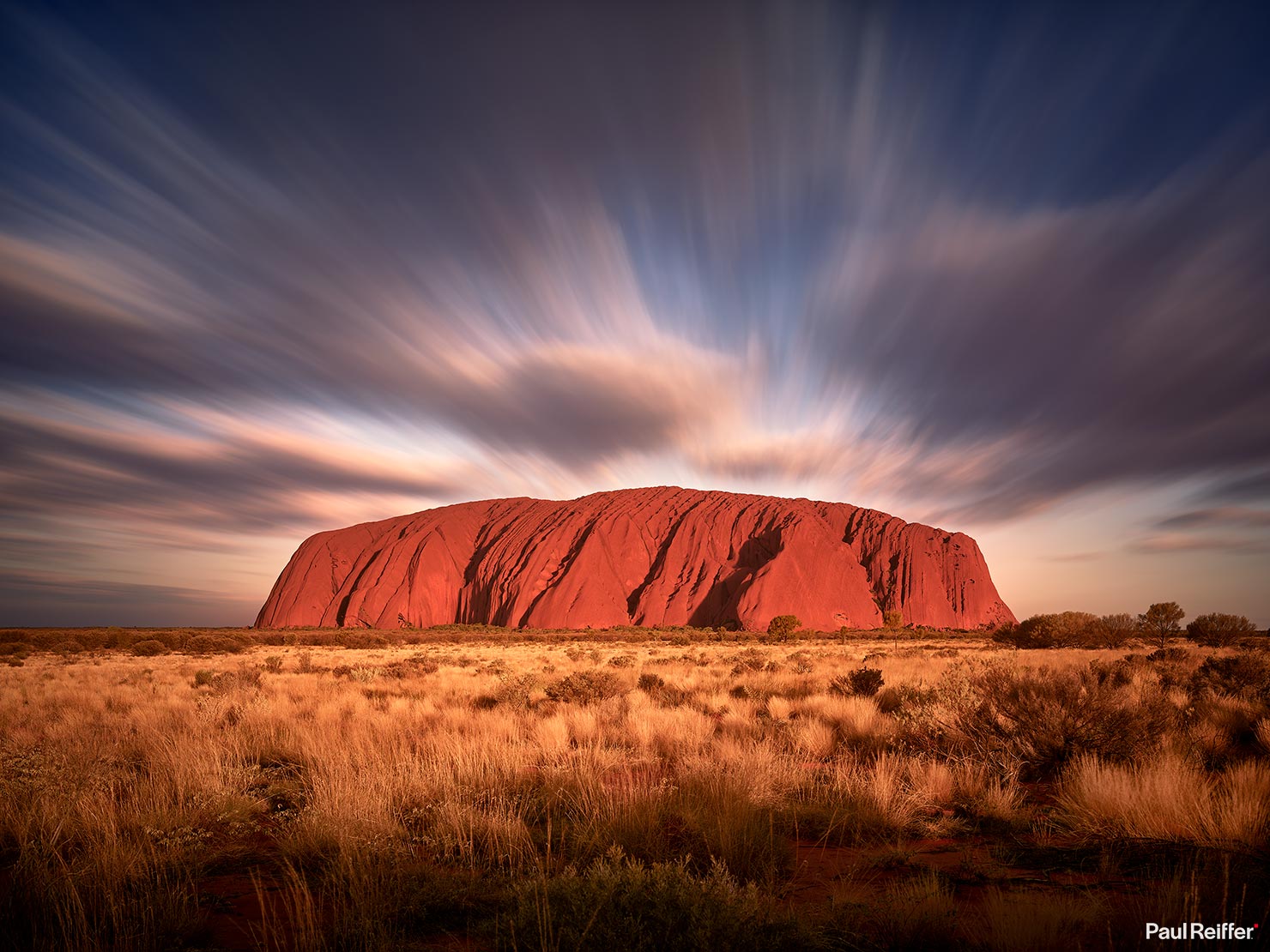
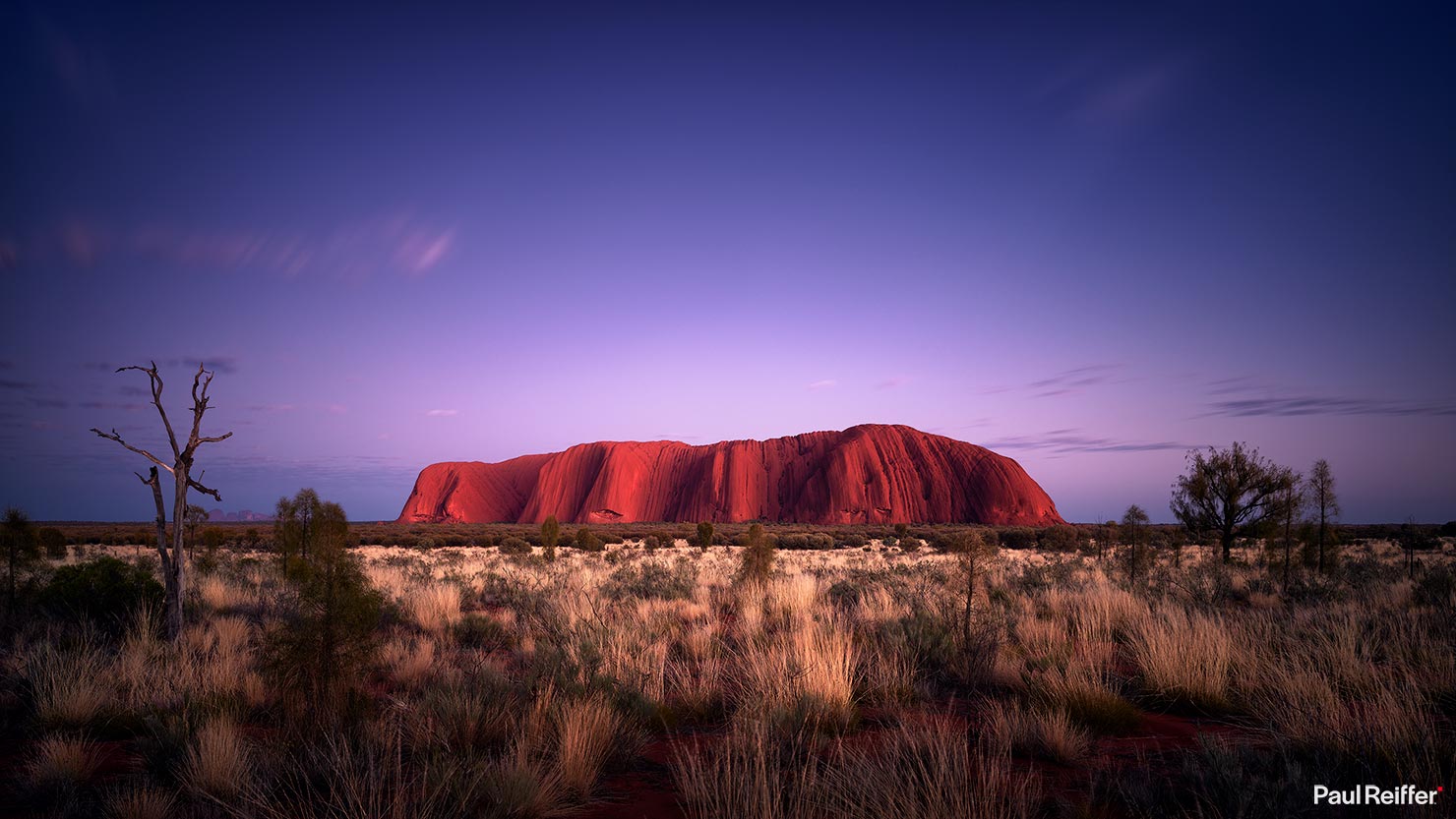
It’s true – Uluru really does glow at sunset. So much so, my iPhone actually struggled to deal with the saturation at peak. Luckily, shooting in raw on that as well as my Medium Format “big camera”, we could calibrate – but this giant piece of our planet really did earn its reputation as a spectacle to behold.
The work happens between the moments
Funnily enough, when the daytime heat hits record temperatures, the lure of an air conditioned restaurant, poolside bar and chill-out time can be too strong to stay out and explore in the midday sun.
There’s a bit to see around the resort as well – including Indigenous art galleries and shops, but it does feel a little “split personality” as you keep finding nods to the (old) name for this location, Ayers Rock, or even its pun-basd asian restaurant “Ayers Wok” (I see what they did there…)
Maybe it’s still a transition period, maybe this is how it ends up – but given the importance of taking the name back to its origins, it does feel a little strange to not see all of the signs change; just the most obvious.
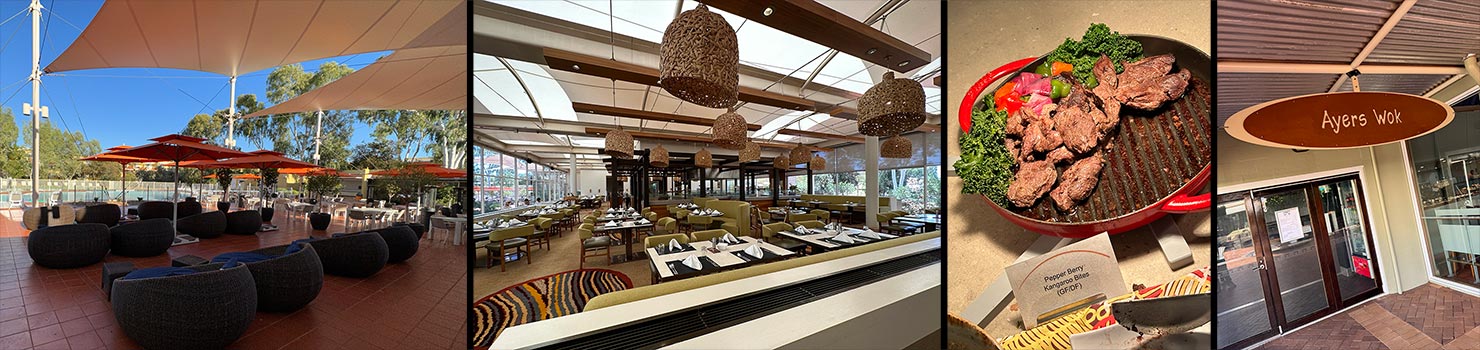
That said, with limited time out here, planning moves front and center of the mind in between shoots. What’s the weather doing? Where should I be? Where’s the sun/moon/star position? What time are the tour groups leaving? What lenses should I load up?
It’s not about obsessing over apps for the sake of it – more removing guesswork so you don’t end up justifying any bad decisions later.
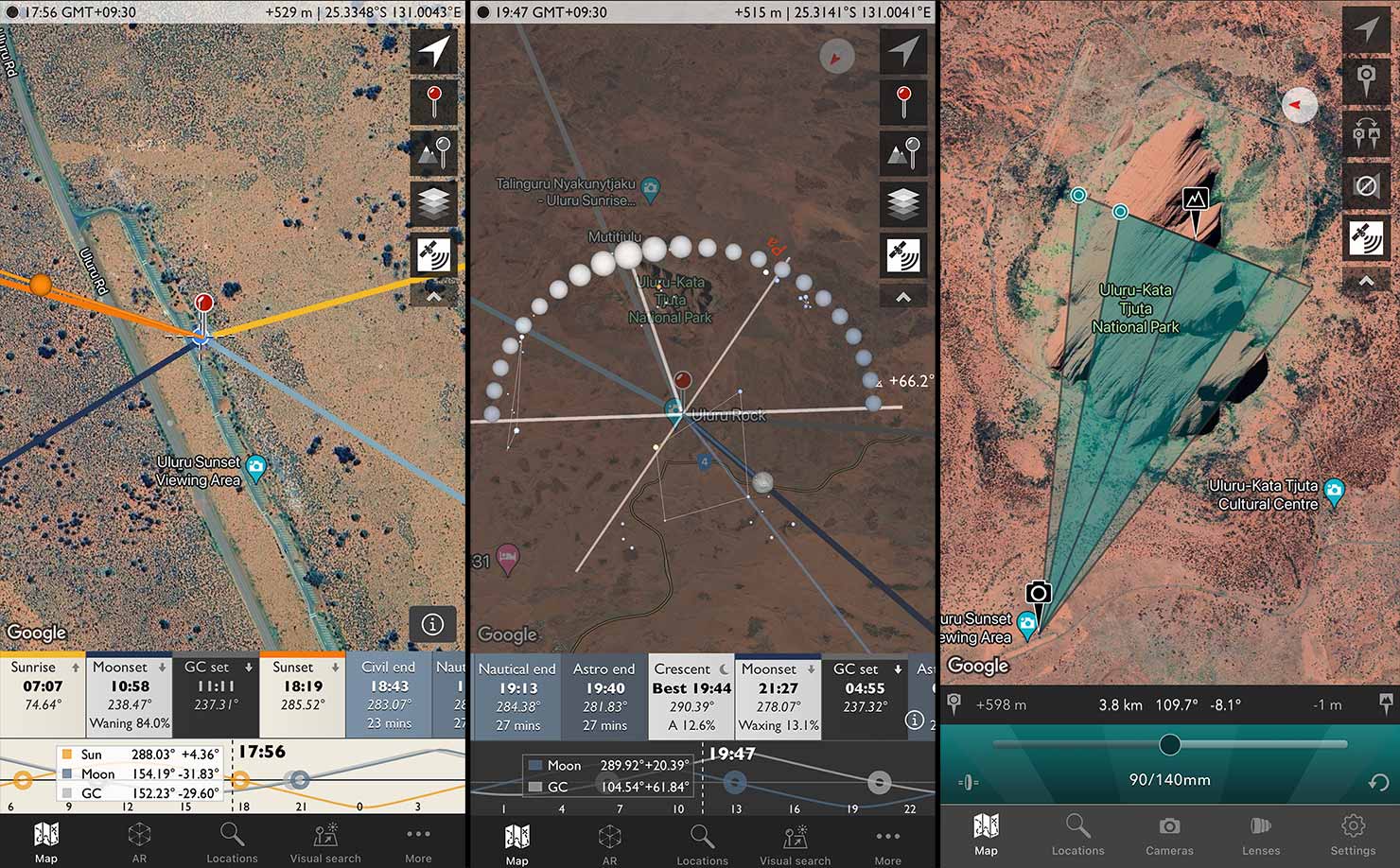
Now as many of you will appreciate – in photographic terms, early starts are a practical move, not a bragging right.
Less people, (normally) still air, time to see what the sun is about to do (instead of what it’s already done) and that soft, pastel glow of blue hour that can sometimes seem too vivid by the time we shoot in the evening.
The only problem? The park itself only opens juuuuuust about sunrise. Depending on the month, and the start/end of that month, you can get lucky with timing, but a parks pass is essential if you want to zoom through the entrance gates (which are strictly closed until the stated time).
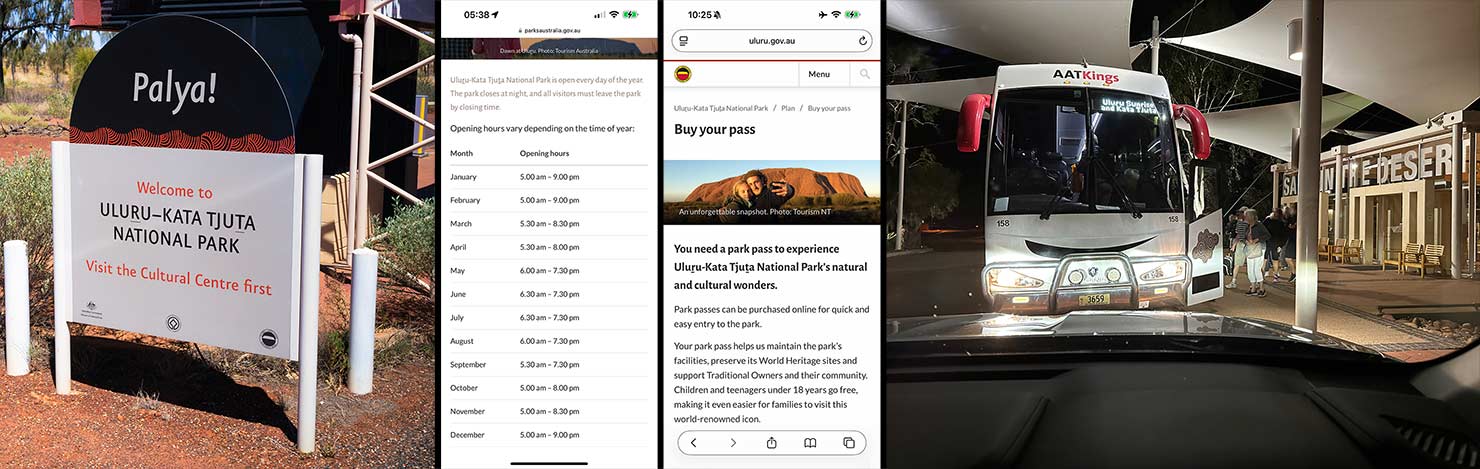
So between weather issues, opening time challenges, and a tour-bus full of people chasing us down the highway, I wasn’t entirely hopeful for that serene sunrise experience that the park promises. Turns out, there was no need to worry.
Morning changes everything
For a start, given my experiences at the popular sunset spots, sunrise visitors seem to behave differently here. It’s genuinely quieter, slower, less “broadcasty” than the parking lots of the evening light. People even whisper to each other, as-if to respect the dawn.
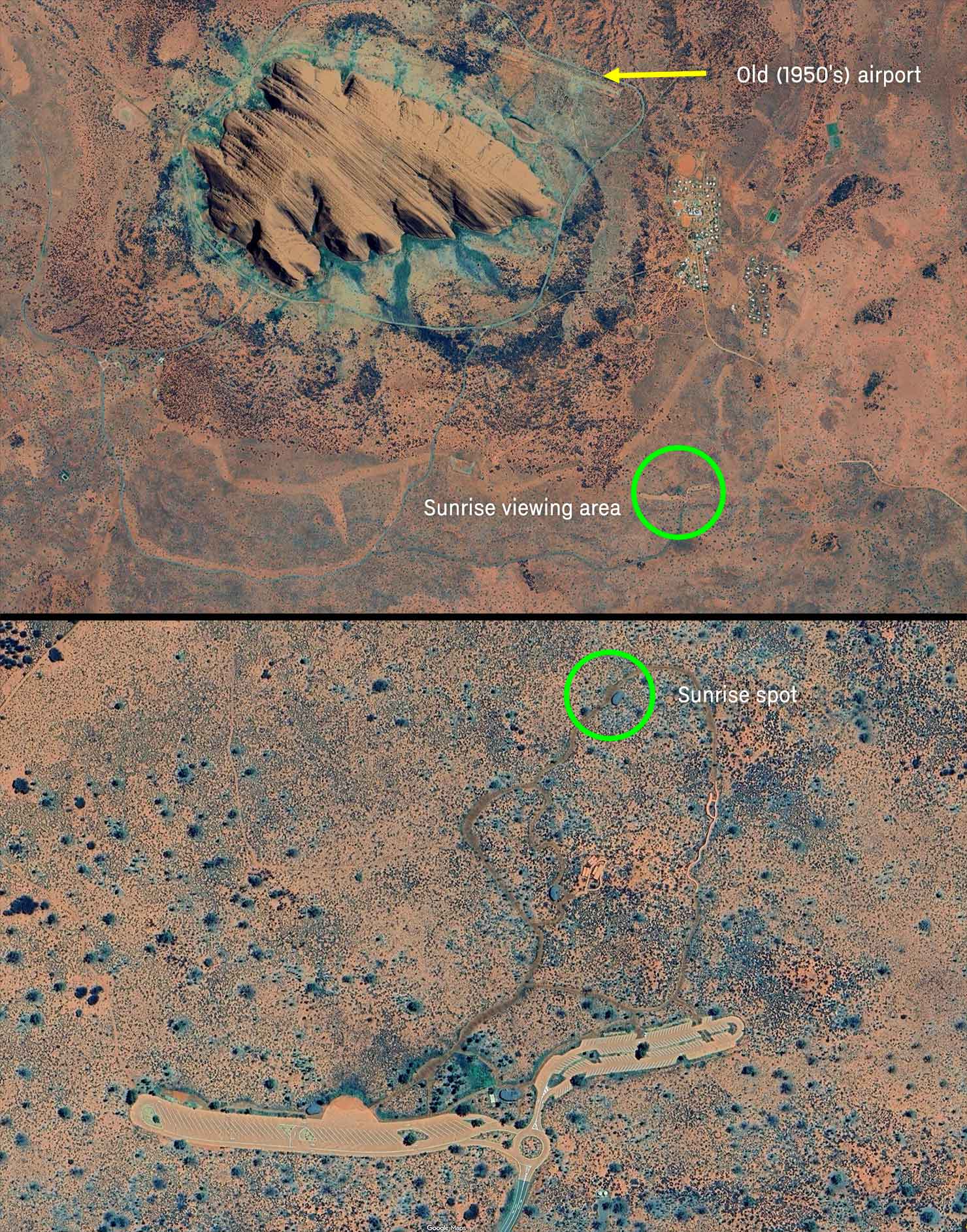
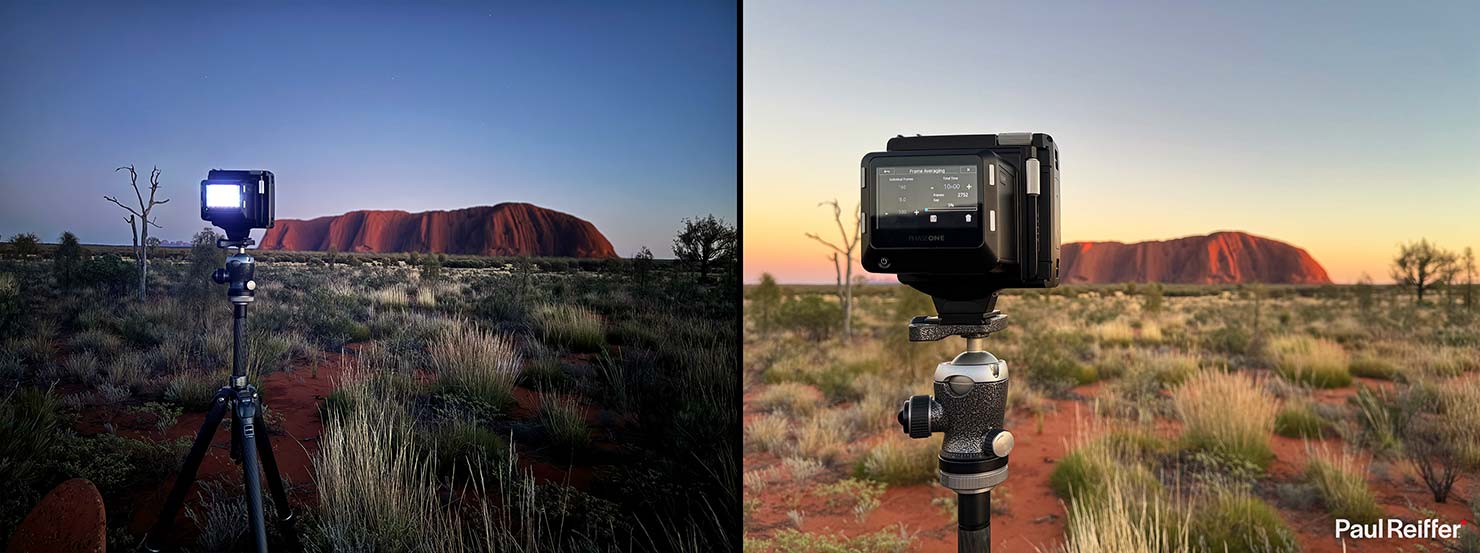
That earlier planning? Routes matter. Orientation matters. Specific locations matter. We got there and immediately I knew where we were headed – along that bush footpath that takes you right out to the furthest hut.
It turns out the tour buses all head to the raised platforms half way there – but photographically, I wanted foreground – at a human level, I wanted peace away from the crowds. Perfect.
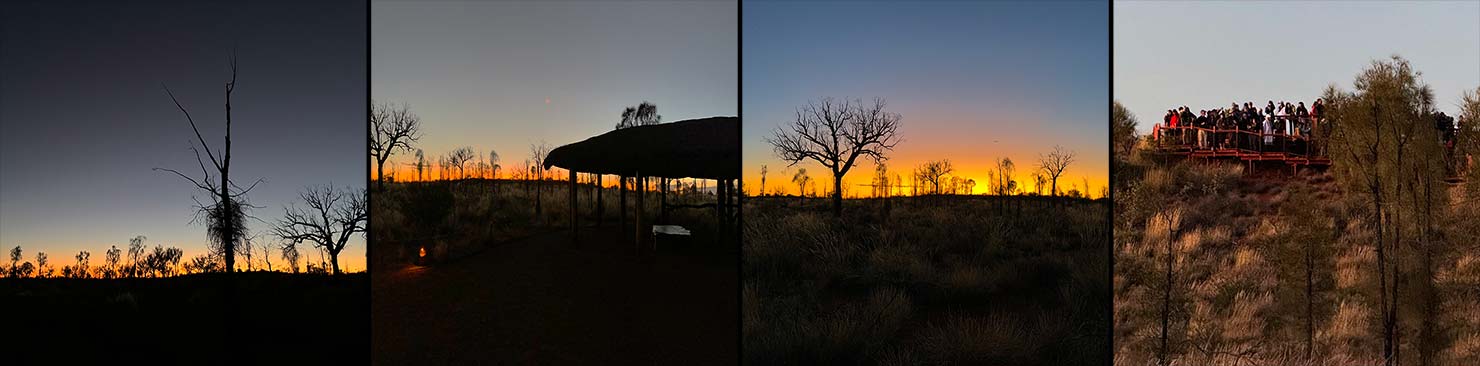
Even as the sun comes up, the entire area still felt settled, revered, respected.
Sure, you could hear the clicks of cameras – but there was no frenzy like I’ve seen in other countries’ national parks. Just a stunning view, a woosh of sunrise wind as the warmth hit the horizon, and the colour-change from blue hour to golden glow just as the sun hit the horizon behind.
And that’s the funny thing about these two places – photographically, they’ve got it right.
In so many locations, the sunrise spots are wrongly identified because they look INTO the sun. Likewise, so too the sunset spots deliver retina-blinding views facing directly at our firey gas ball that sits millions of miles away.
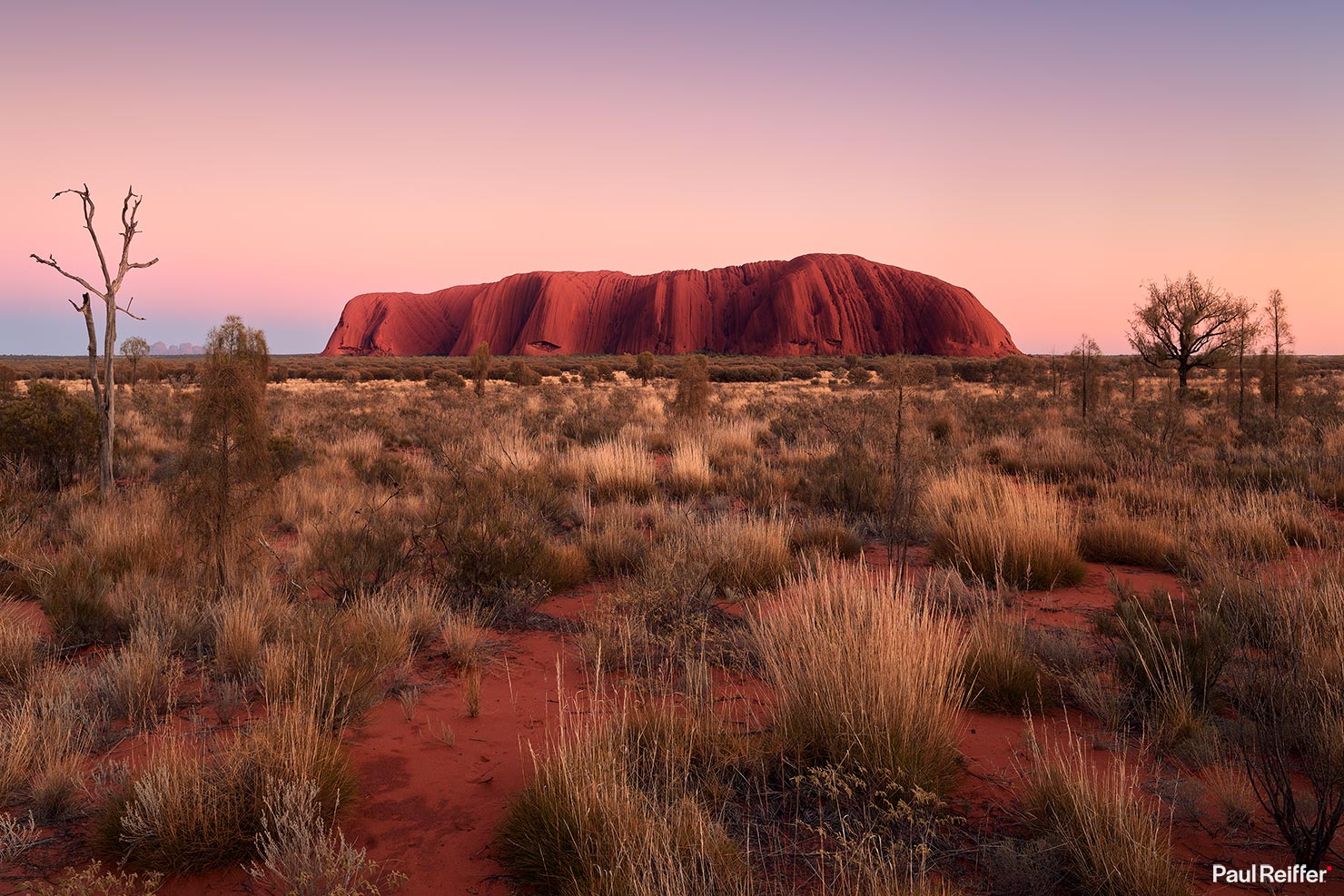
Here, they’ve called it right. We have our backs to the sun, and our faces to the colour. Magical.
And then, when the light finally shifts towards the daytime, that transition feels controlled and precise rather than overly dramatic. The shadows slowly creep across the rock again, on the south side this time, but it seems slower, more diffused, in some ways more mature than the sunset glow with its “boom” of red at the end.
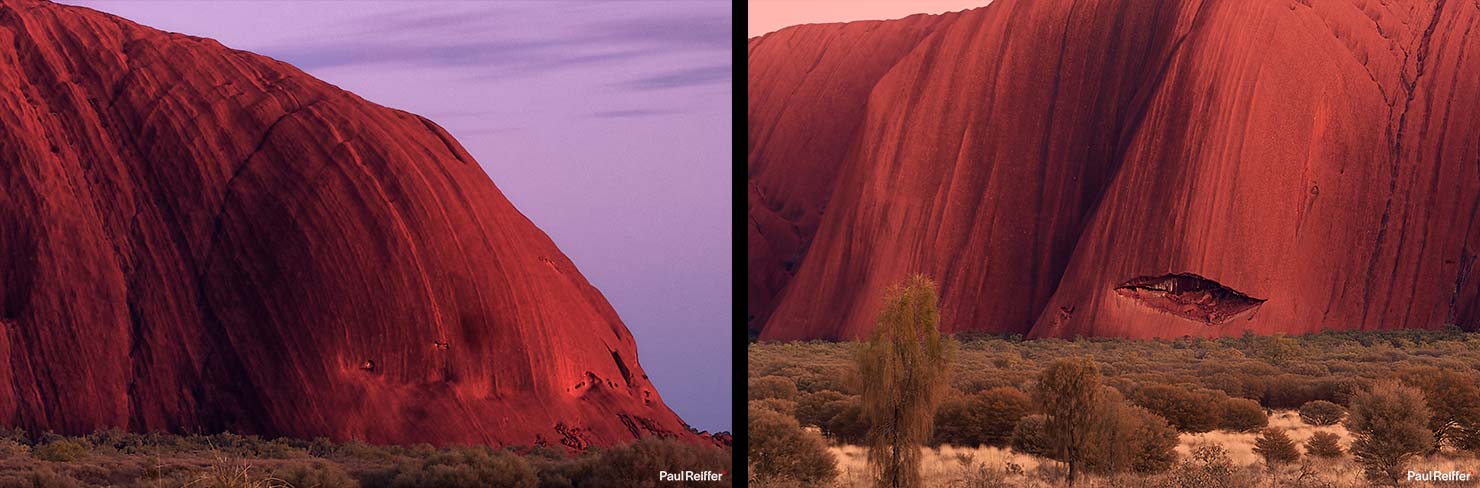
As always in anything I shoot with an intention to print big, it’s those details that count, and I’m pretty happy with the level I caught – especially on the Rodenstock tilt lenses which give me front-to-back sharpness in this scenario that delivers a sense of depth even our brain needs time to fathom.
There’s always ONE…
Now, I say “the entire area felt settled, revered, respected.” – Except for ONE issue.
Of course – aside from the local animals, there always seems to be at least one influw@nker in the wild – wherever you go these days.
Turns out, those extra 50ft really mattered for her self-presenting action-cam that morning. Despite the many (many, many) signs pleading visitors to respect the pathways and protect the area – clearly they were not intended for her.
When called out on it (as some of you will know, I’m always happy to start a “discussion” on manners and ethics) – her response? – “So?”
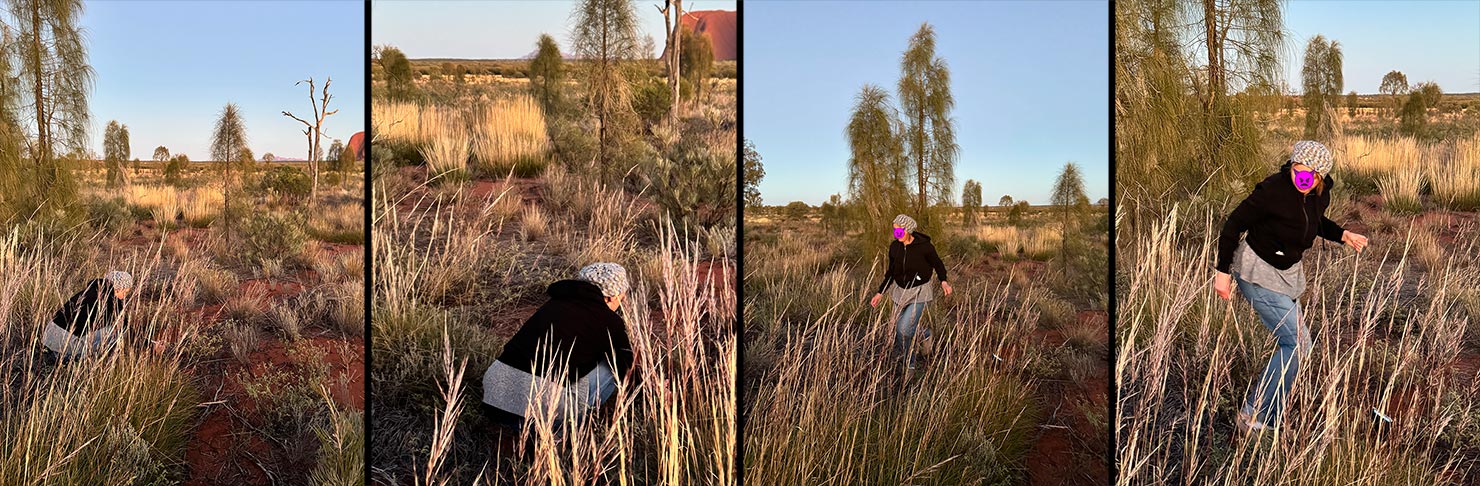
Turns out, if you’re a wanna-be perzonality, on their worldly travels, you can always just ignore all signs and warnings and walk wherever you want to get closer with your camera. The irony, given where she placed that device in amongst all that bush and scrub, I’d guarantee it could have seen more than it did if she’d left the lens cap on.
The world has gotten smaller. The population has gotten (exponentially) bigger.
If we all behave like this, there won’t be much left to enjoy. Long-term goals, people, long term goals…
And no, I’m not tone-deaf to our issues as an industry. Photography does drive overtourism. Photographers like to push boundaries. We sometimes go beyond the safety rail to “get the shot”, but hopefully as safely as possible, and I’d like to think with some form of self-awareness and (hopefully?) permission…
What we don’t, or shouldn’t, do – is endanger the very existence of a location when others have already assessed that it needs to be left alone to survive the demands of our visiting crowds.
Disturbing it with human (or tripod) feet, just for our own vanity’s sake? That is never OK.
Perspective arrives whether you invite it or not
No matter how considered the trip, the ordinary always finds a way back in.
For me – nothing quite takes my mind off an ignorant, arrogant, selfish visitor to such a special place quite like an appallingly cooked egg. (For those who don’t follow, do try and keep up!)
But, in all seriousness, while I give many restaurants a hard time over their inability to prepare one of the most basic items of food – delivering them, en-masse, in a vat of tepid gloopy water each morning?

Well, that’s a new low.
A place that’s bigger than the photo
Uluru also has a habit of dominating attention so completely that people forget it sits within a much wider landscape of just as significant importance.
Just a few miles away by car (or local bus) is Kata Tjuta, an equally impressive, and also important, rock formation for the Indigenous population in this area. Indeed, to the Anangu people, Uluru and Kata Tjuta are not “landmarks” at all – they’re law, history, instruction, and obligation made physical.
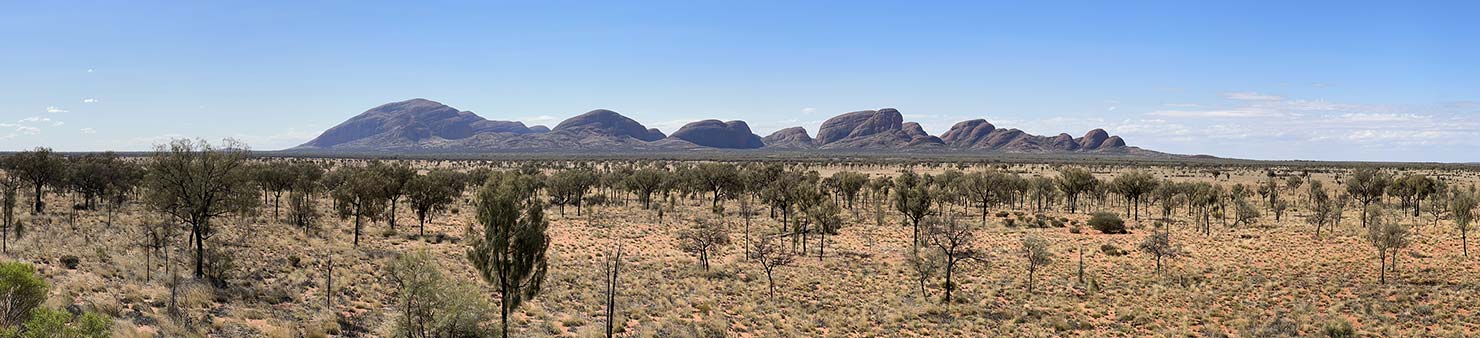
And with that in mind, I can only respect their wishes on the basis that as an outsider I’ll likely never understand their intentions when it comes to this special place.
I found this place one of the most fascinating, confusing, and bewildering places I’ve visited on earth – with stories I can only scratch the surface of, stones that feel like they’re connected to the earth in a way that doesn’t make much sense to my modern (western) mind, and a deeper meaning that, as a reult, isn’t designed for me.
And that’s one of the key reasons I have the utmost respect for Uluru and Kata Tjuta.
Sadly, I saw a several who don’t.
“Pushing the boundaries” here isn’t clever – it’s disrespectful – and next came the reminder of what happens when that guidance turns into enforcement as we faced the base of the rock.
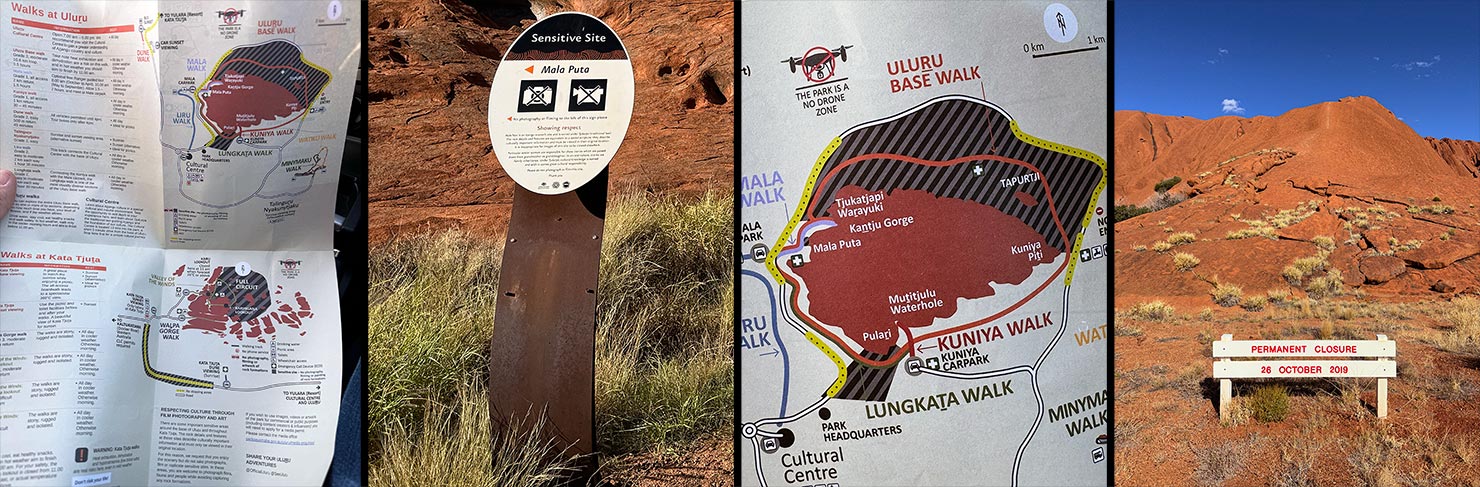
Closures aren’t just break-out sessions for the fun-police – they tend to be responses to continued bad behaviour by more than a few.
They exist because enough people ignored what they were told, often while convincing themselves they were being respectful or “doing no harm”.
And sadly, we often forget that we’re both physical, and cultural visitors to a land that isn’t ours. We must come to appreciate these places as such.
Equally, it seems that’s where the permits come in – through so many people over the years profiting from an ancient story, manifestation and formation without giving back.
As photographers, we must do better – we should be leading the charge on responsible captures of incredible places.
The process isn’t difficult, it’s not expensive, the team are extremely helpful – and while it will restrict you to only those exact images that are approved by them, you know that in publishing and selling those approved photographs, they’ve been checked to verify that they don’t cause any offense or unease to the very guardians of this fascinating land through doing so.
Leaving, having gained, but not taken.
If you’ve done it right, you don’t need a final flourish here.
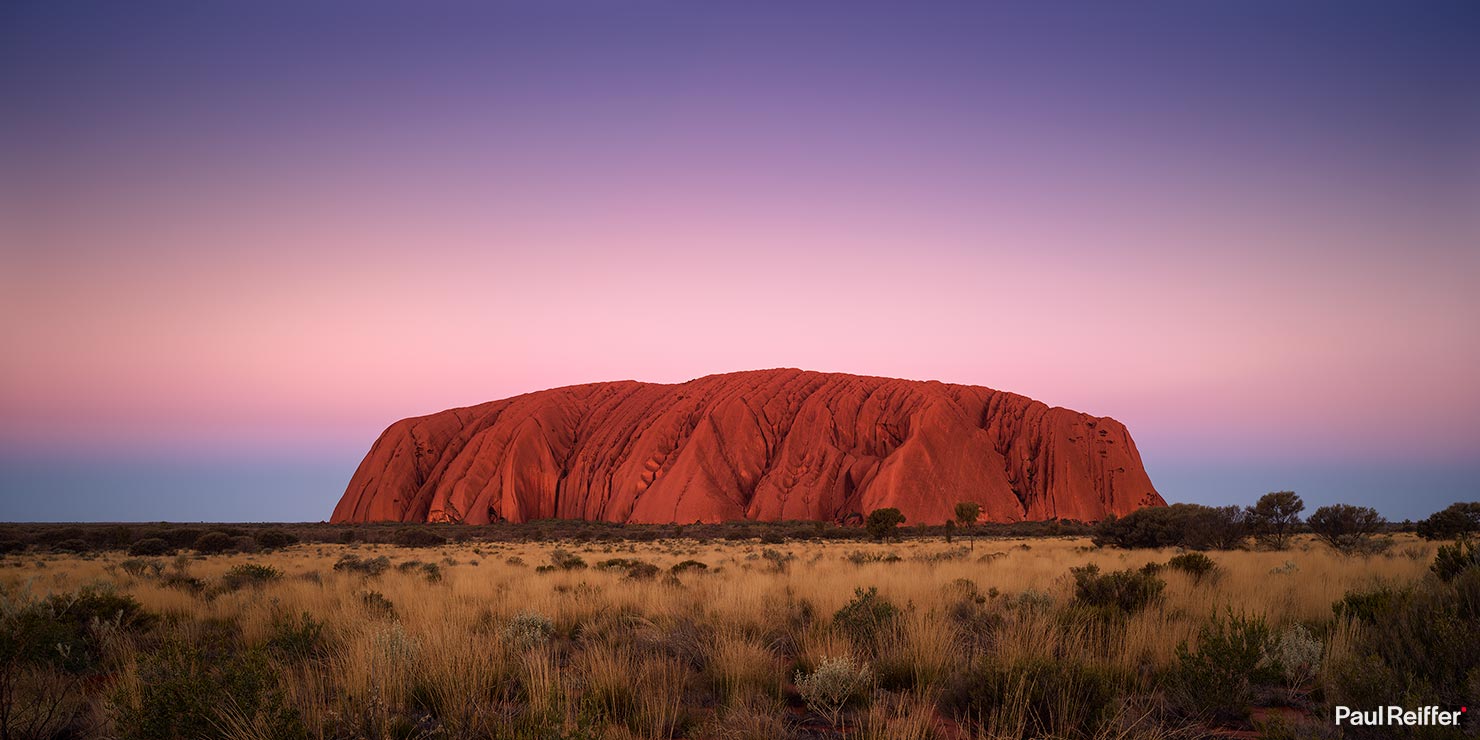
I really didn’t feel the need for “one last shot” to justify my trips to Uluru – a trip here simply doesn’t need that justifiication. The place has already given you what you wanted when you arrived, and it’s time to leave it behind.
Turns out, a few people over the years have also left something else behind – petrol bills – as never before have I seen a pump with a padlock on it, waiting for customers to go inside and pay before touching it.

Luckily, they’ve fixed the accompanying problem of significant pie theft by only selling 2″ diameter options, juuuuust in case.