“I’ll definitely be back” – I wrote, when I left my Shanghai home of over 3 years for the very last time in 2015.
And it was true. Apart from a few years around 2020 when things got a bit, well, tricky(?) – this city has remained a feature of my calendar for most of my life ever since.
But it’s always been for another reason. A workshop, a client shoot, filming, a New Year’s Eve return for the fun of it – but in every trip since I’d managed to miss one of the most important parts of being in this incredible city:
Watching it from the rooftops.
And it felt like it was time to make good on that.
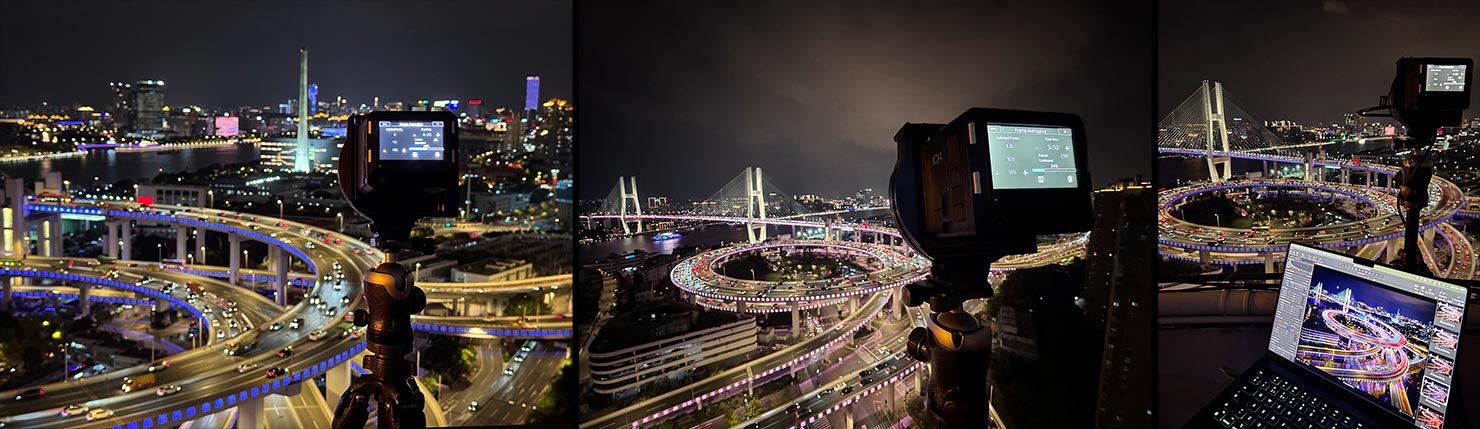
You see, Shanghai really did help me to establish visual language as a cityscape photographer.
It was what led to my shift from purely landscape imagery to the excitement of capturing a moment in a city that would never be repeated – the energy, the motion, the feel and tone of an electric vista laid out below your feet.
Nobody knew I was there – but that split second I captured was a unique record of millions of lives across a metropolis.
Sure, I’d photographed plenty of cities since leaving Shanghai – but in a way, this would always be my anchor and reminder of how it felt to get up above it all with a camera.
And after a decade, so much had changed that it was time to refresh both the memories and those images to respect the new cityscape and skyline that’s evolved over time, as well as adapting to my own shift in how I see and capture the world around me.
So where better to start than the location that helped me win the UN International Year of Light award many (many, many!) years ago…?
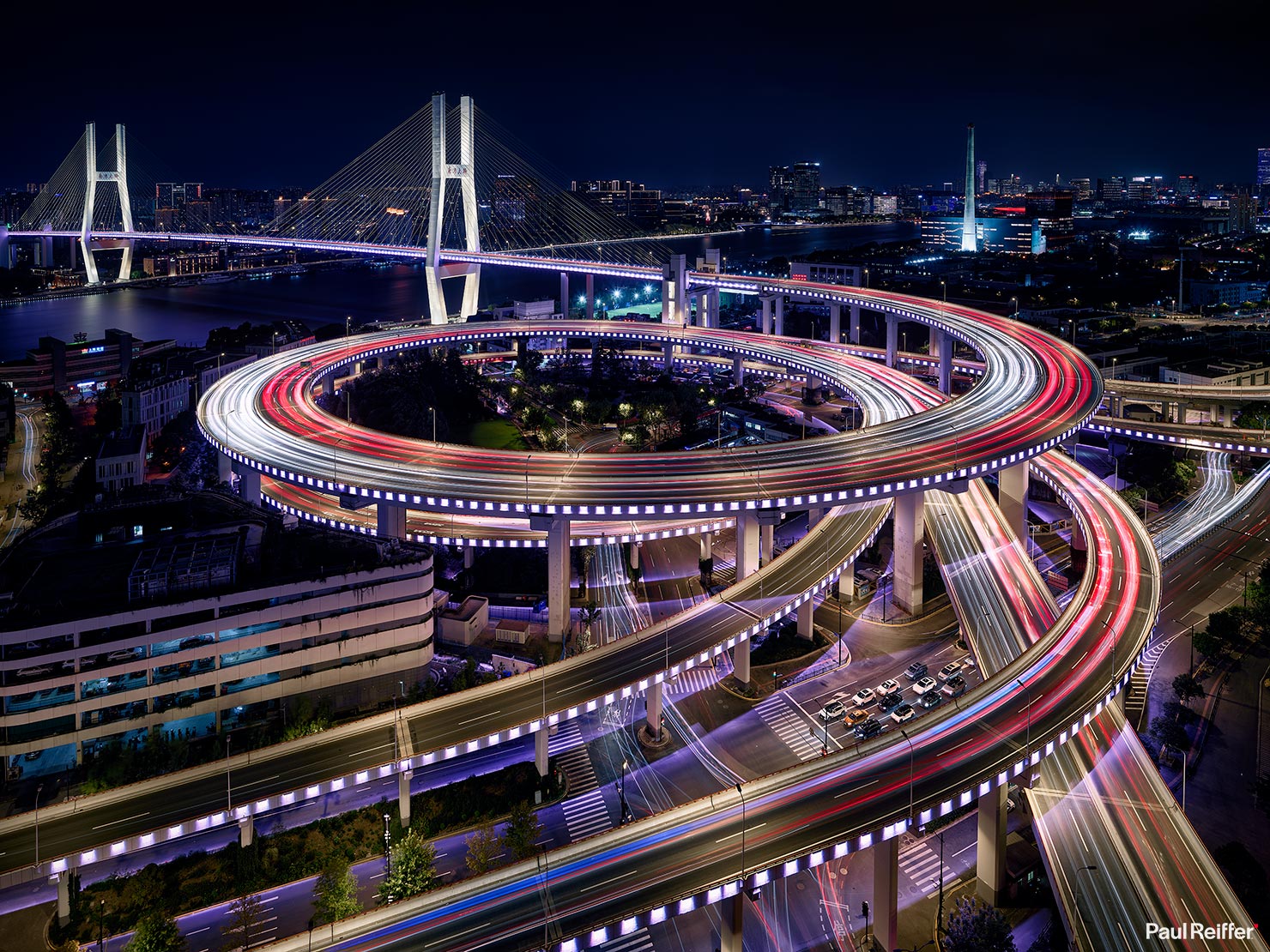
Nanpu Bridge Approach.
That iconic “racetrack” feel with its night-time glow and circular trails can only be Shanghai – and as it lights up each night, it breathes energy in all directions across the frame.
At 23mm (14mm equivalent), the scene is made all the more exciting as the context of the city around gives scale, just as when I shot my original – “Over the Rainbow” all those years ago.
Up-close (at 150mm, or 90mm equivalent), the criss-cross of traffic lanes becomes even further defined – weaving through as the cars rise up to, and fall from, the deck of the famous bridge.
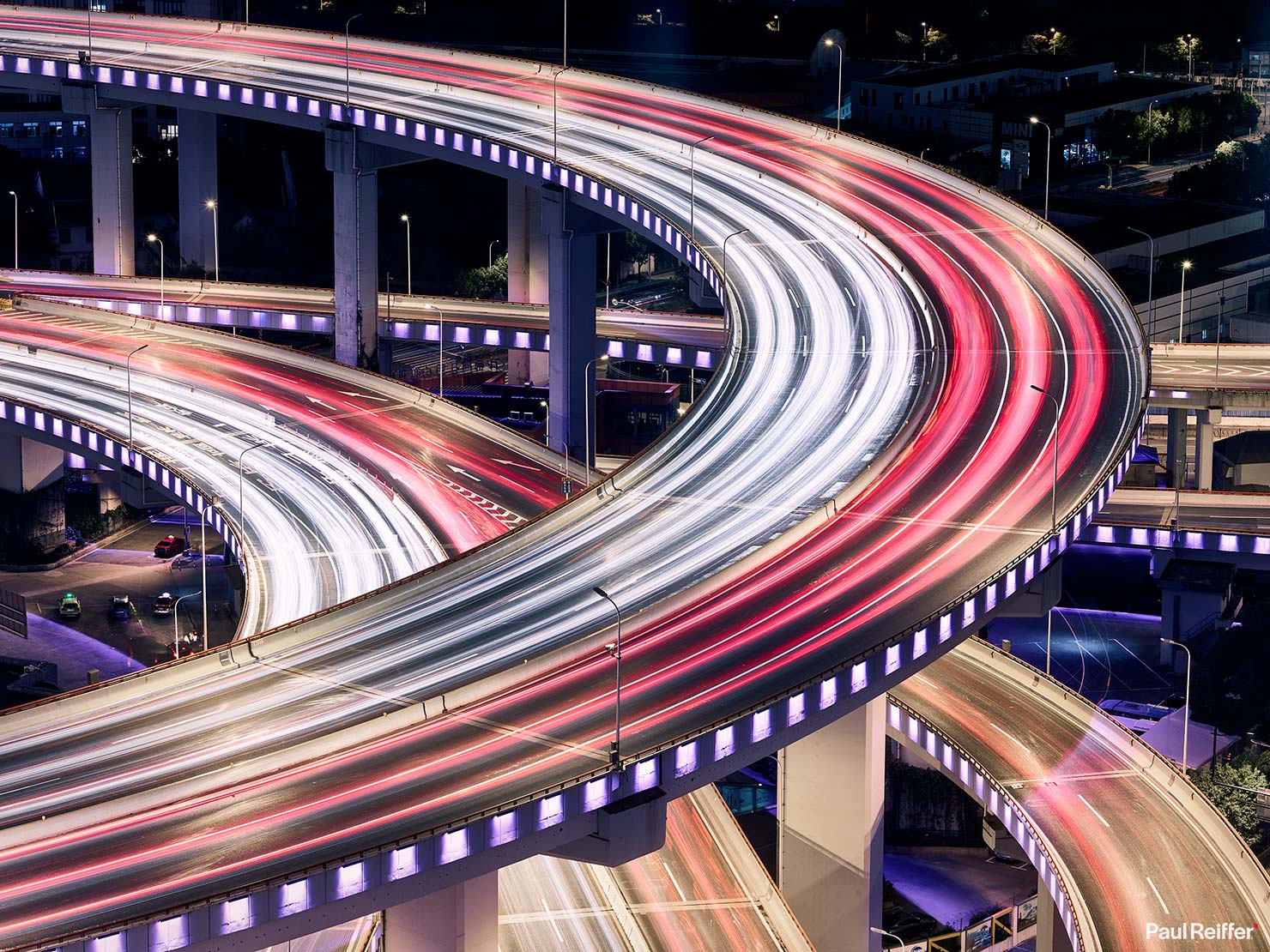
And it’s those details that matter – that’s more than a tagline, it’s the part of a high-definition print that pulls you in to see more. The lane changes, the police lights, the hard braking you can see over a 30-120 second exposure in amongst things.
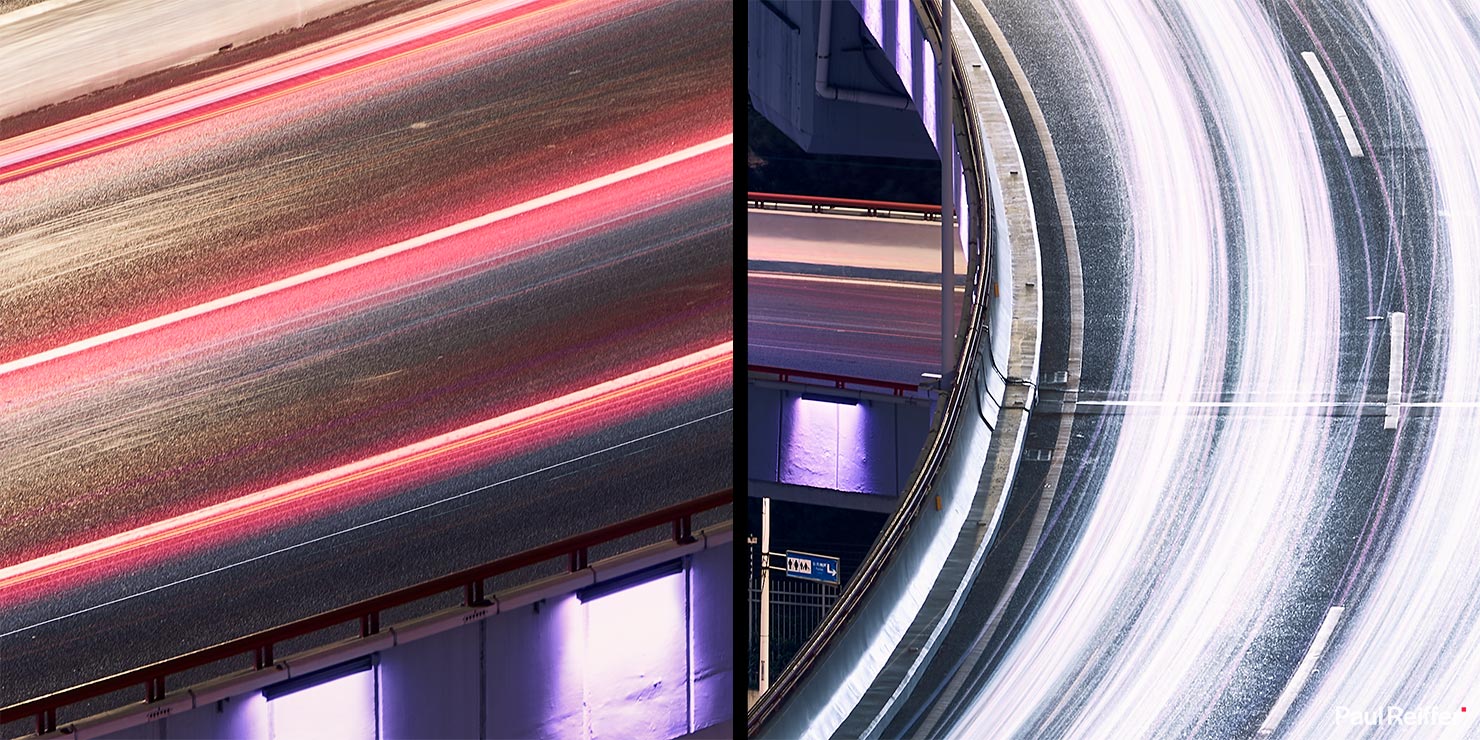
Control of the huge dynamic range in this scene has gotten a lot more capable since my first captures – the switch from CCD to CMOS, coupled with relatively noise-free frame-averaging really does deliver the goods when it comes to recovering highlights and shadows now – regardless of their distance.
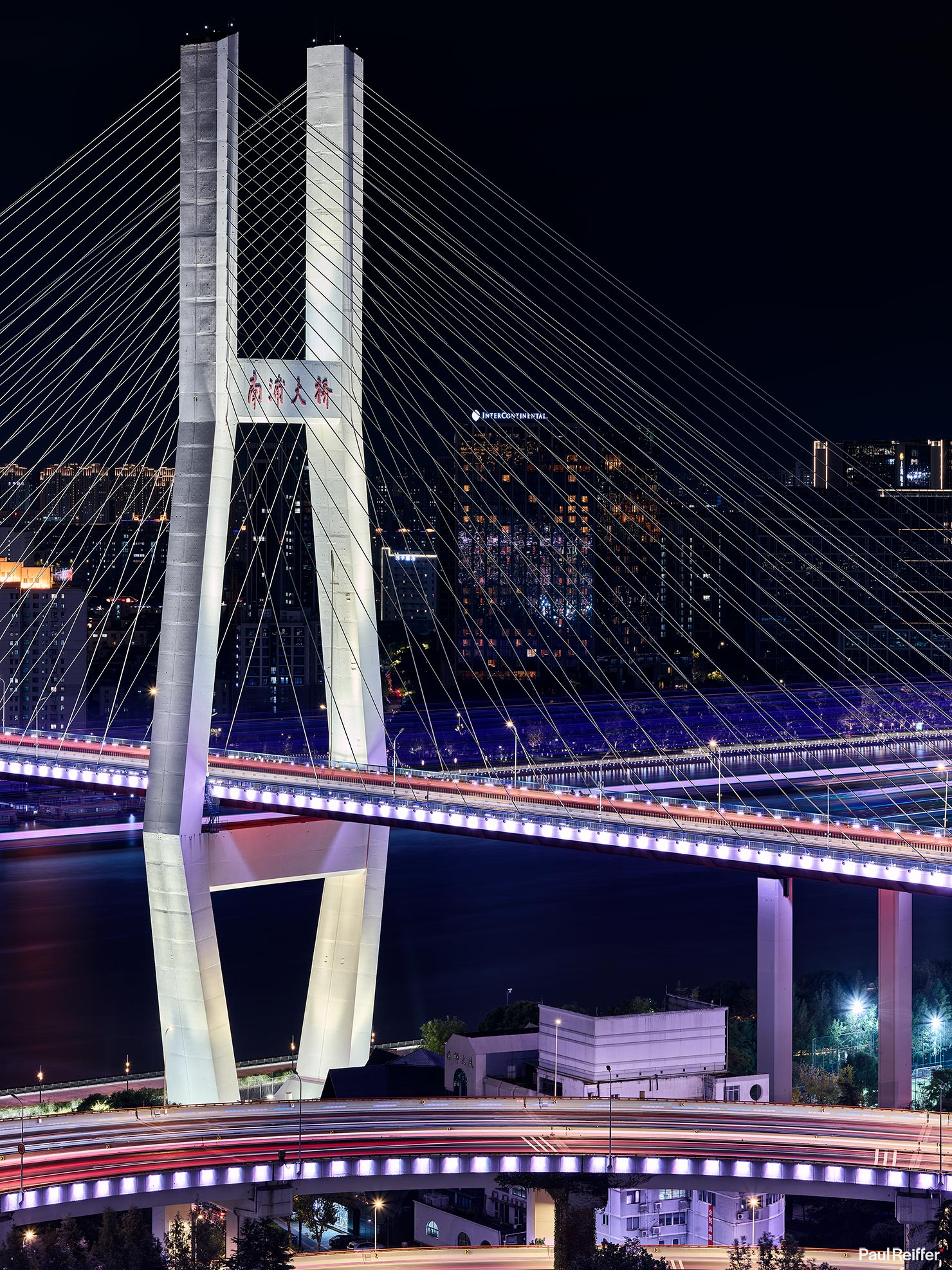
And yes, those lights along the road edge do still change colour. They weren’t quite rainbow this evening, but hey – they’re still hypnotic to watch, even if the traffic isn’t quite as cool when captured for less than the long-exposures I’ve been shooting for years.
Access has become an increasing challenge across all cities around the world as time has gone on. “Influencers” mocking security failings, shout-outs to governments and excessive promotion have meant a lot of locations are more difficult to shoot now than ever.
Here, however, there’s always an alternative. Just a few metres away, we hit the same subject, but a very different view looking across the river and out towards PuDong.
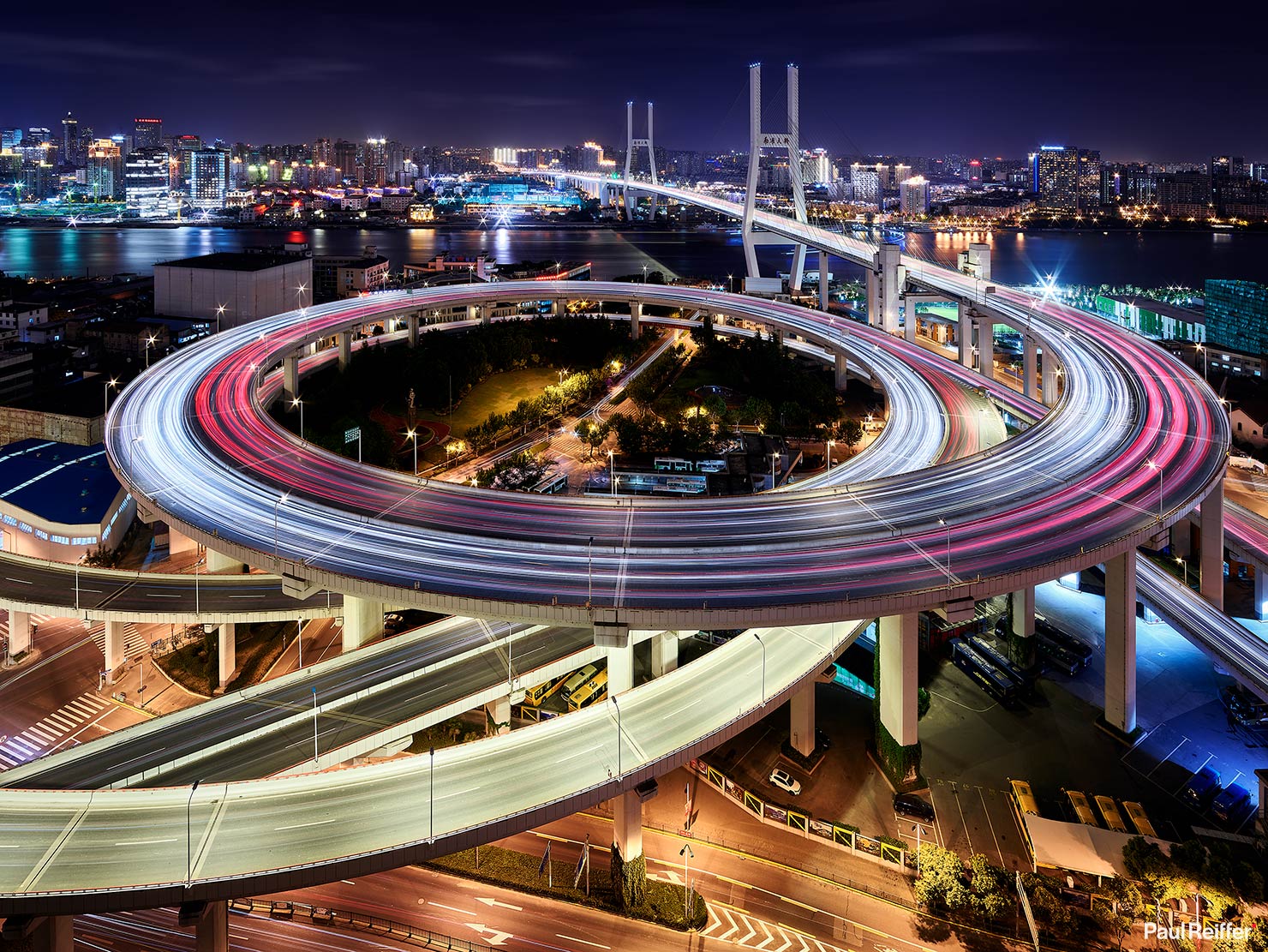
And, if it’s a “different view” we’re really looking for, well, not many are going to get more funky than the ultra-wide stitch of 3x 23mm shots from up high…
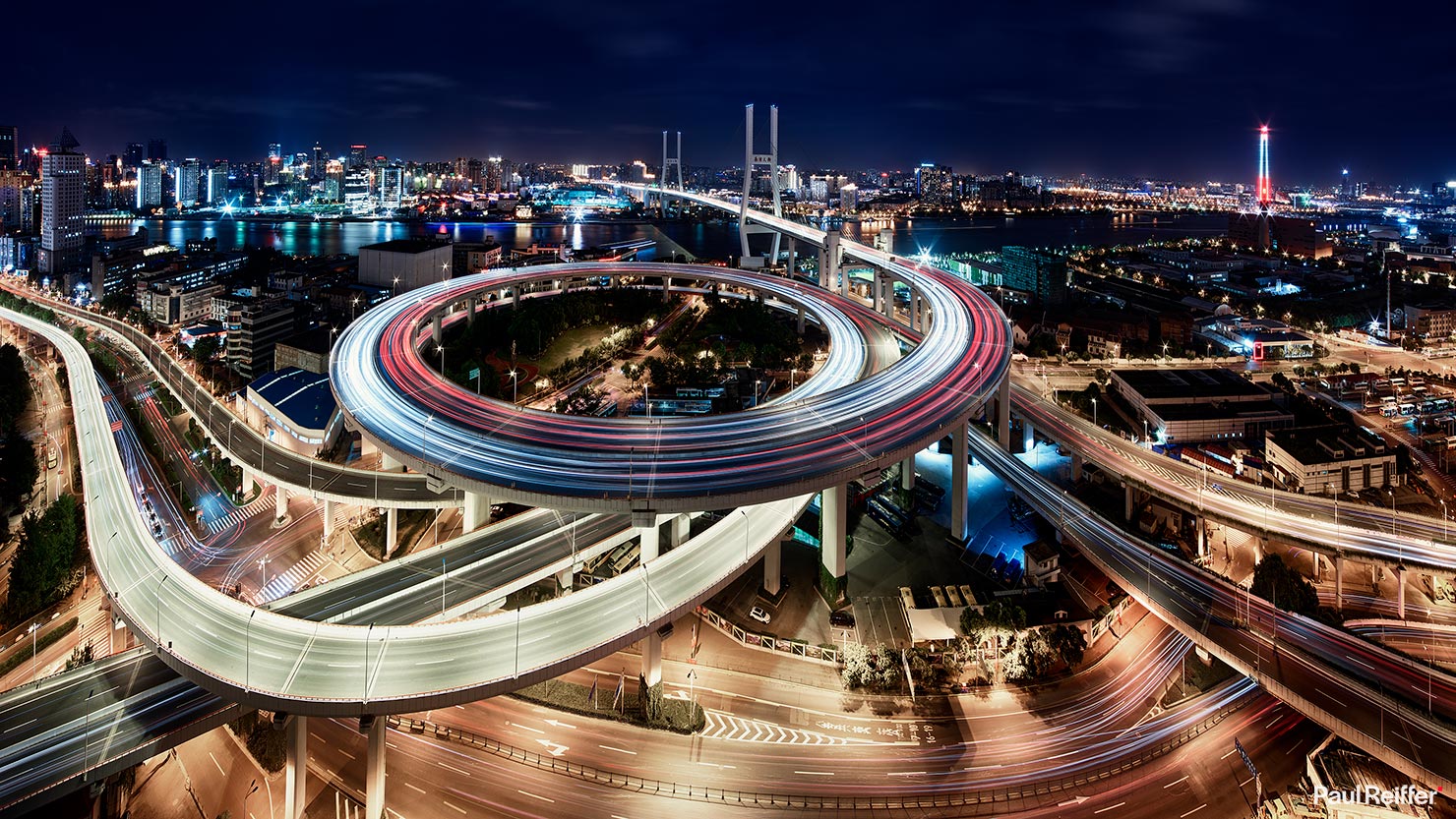
Now tell me that doesn’t look like an epic Mario-Kart track and mean it… 😉
Now, while I’m drawn to the views from up high, there are some classic vistas of Shanghai which demand a more “down to earth” approach to get the best of them – especially if you venture to the Garden Bridge area on the northern turn of the river.
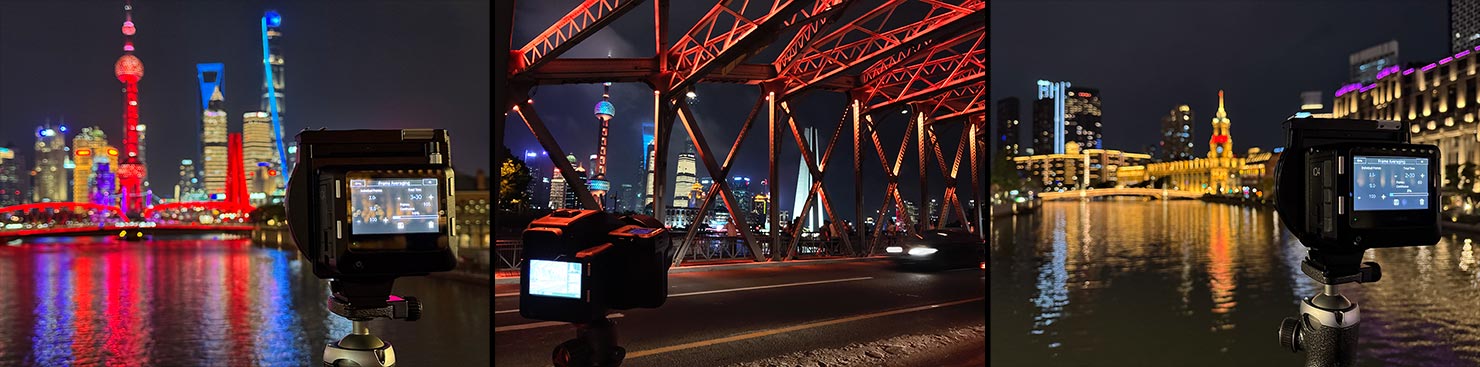
With three picture-postcard cityscape views to capture within 2 minutes of each other, this whole area is a draw for photographers (and wedding parties… hmmm….) from far and wide.
Of course, shooting it “clean” is a challenge – the river is a working one, with a mix of large dark shipping vessels and then a sprinkling of venga-boys-party-boats with their neon lights screaming by in-between.
But frame it far enough out, allow for a long enough exposure, and you have an iconic shot of the financial district’s skyline and that landmark red bridge before.
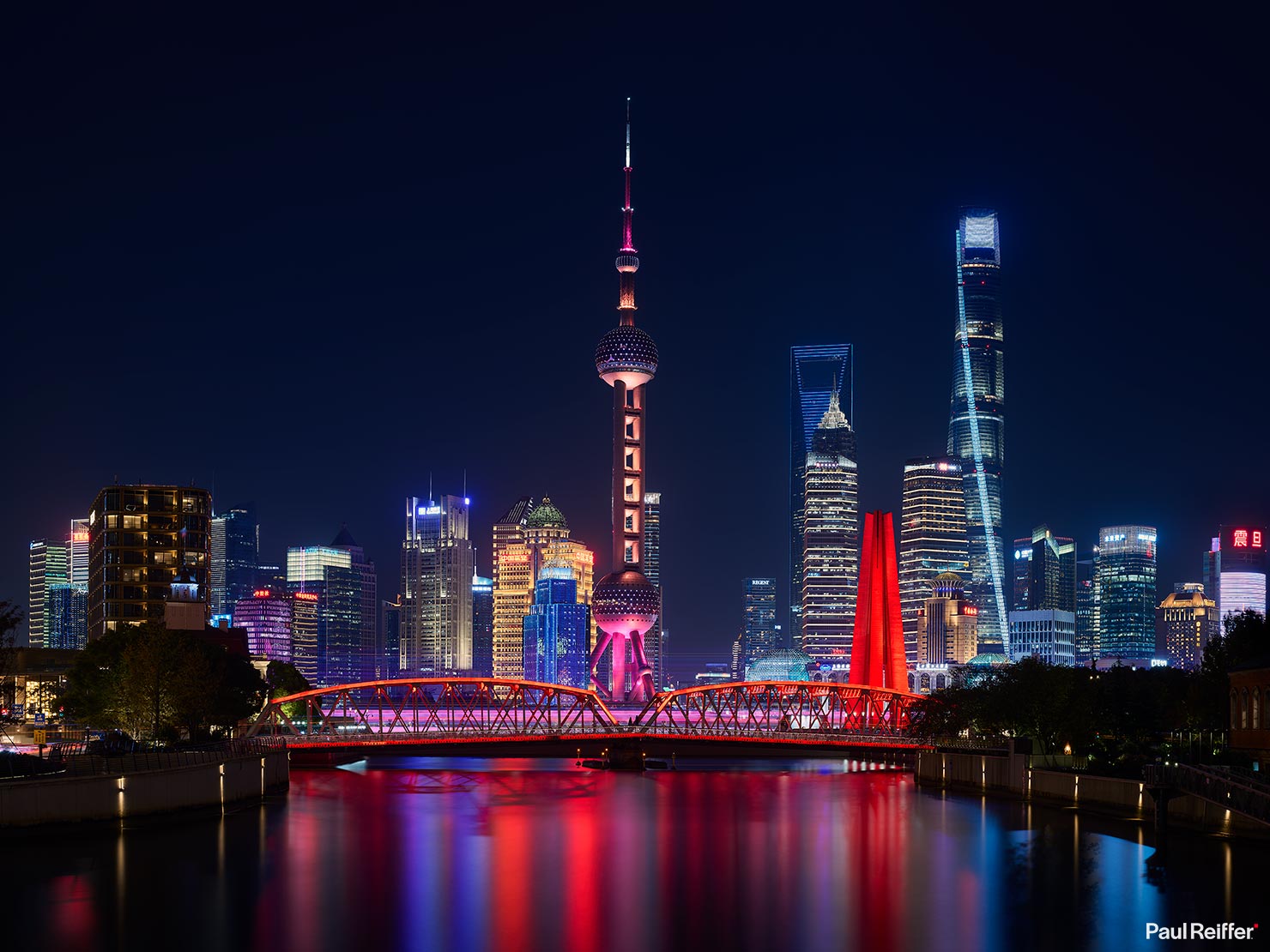
The bridge itself is actually harder to shoot than it seems from a distance. Not only is it not “straight” in vertical terms (it rises in the middle, meaning your vertical lines will never quite match the correct perspective in the distance) – but it’s also constantly moving, especially with buses running across every 10-12 minutes.
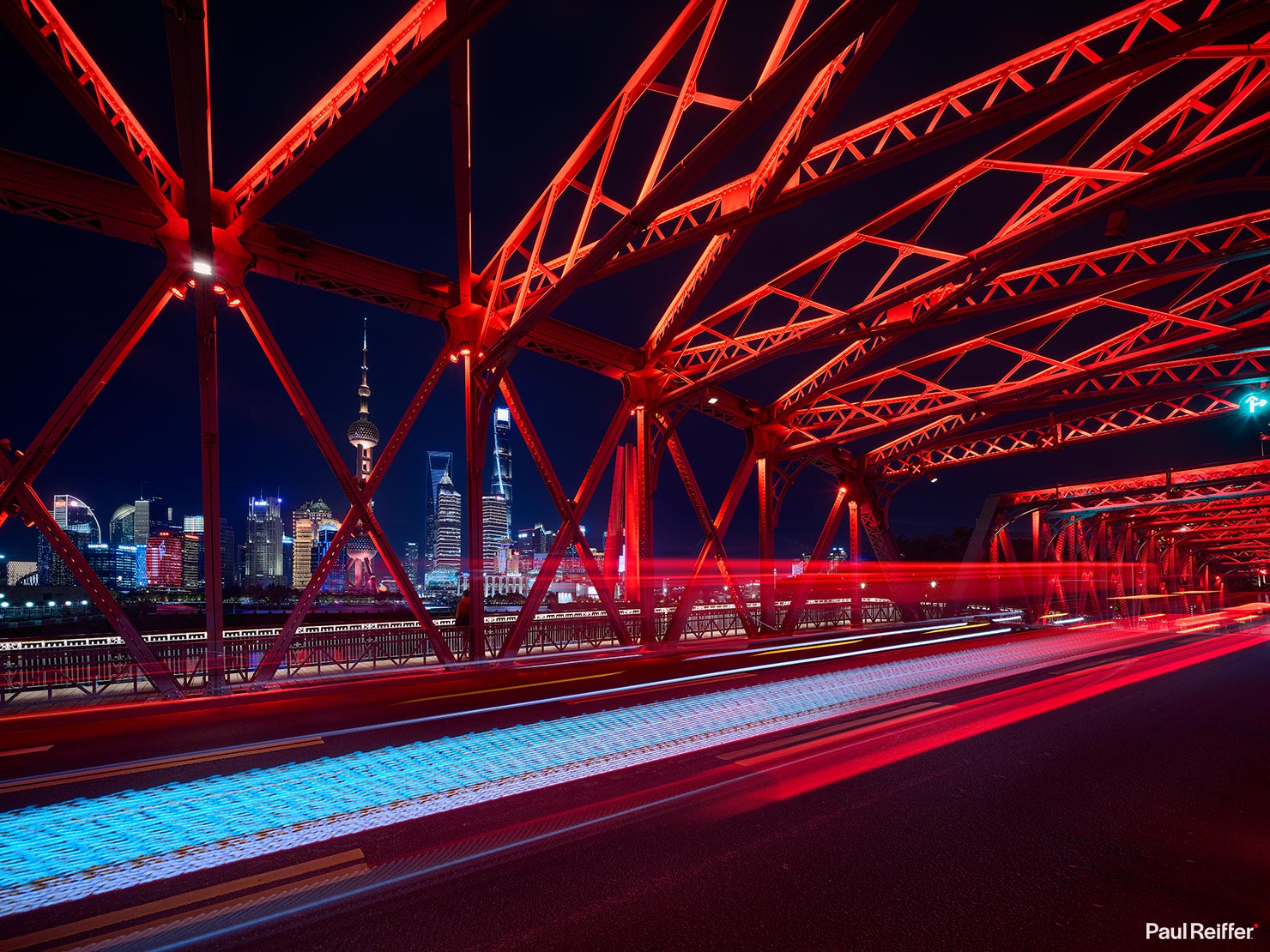
But if you time it right, don’t obscure the Oriental Pearl Tower with a traffic trail, and manage to avoid any heavy vehicles – it’s quite the reward for seeing it through.
Turn around, and the feel of the city changes the same 180º as you have – from ultra-modern steel and glass in Lujiazui to the neoclassical colonial buildings such as the Shanghai Postal Museum along Suzhou Creek.
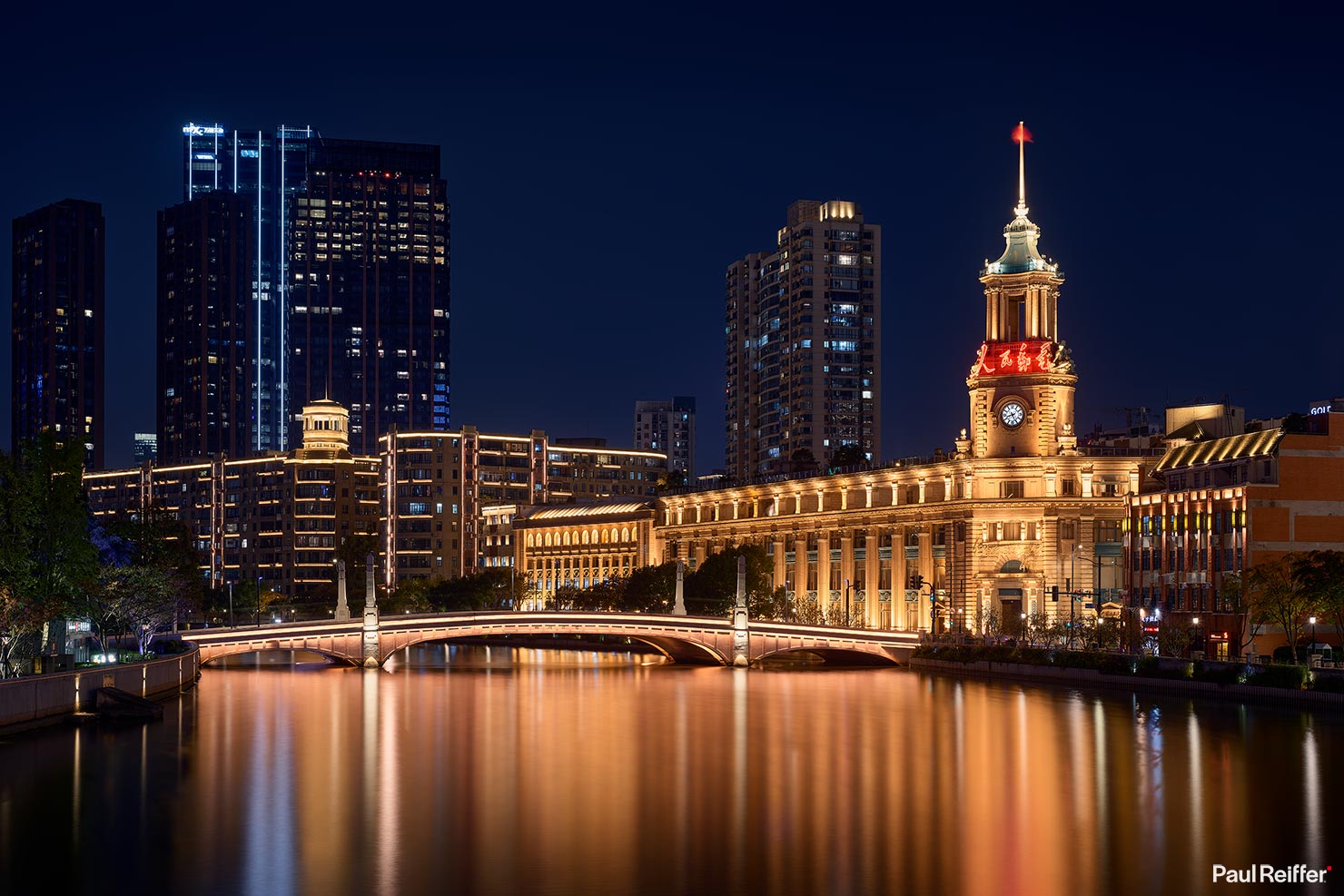
(And a quick note for those planning to capture a building with a big clock using a long exposure – keep it under a minute to keep the clock hands in the shot!)
Speaking of colonial buildings – while the megascrapers and light-show across the Huangpu river get most of the attention in modern Shanghai photography, it’s the rich history and colonial past that’s captured by the incredible architecture of The Bund on the other side, in Puxi.
What I’ve always found strange, however, is Shanghai’s insistence on having the lights turn on at the exact same time every day – seemingly regardless of sunset time each evening – leading to some seriously dull views if you time it wrong…
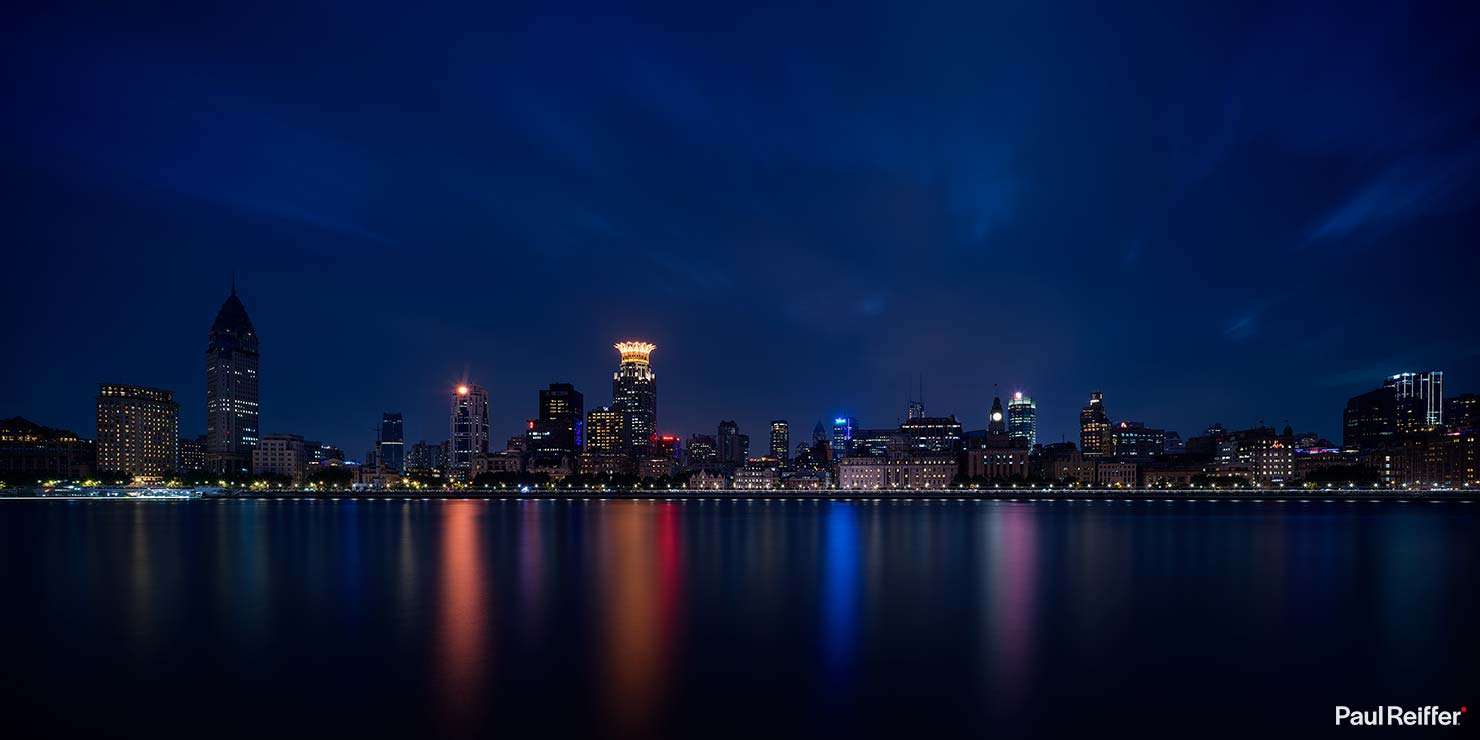
Wait an hour or two, however, and you’ll soon see that incredible architecture come to life as it’s washed in signature yellow lighting that gleams back from the stone facades and marble entranceways when viewed across the water.
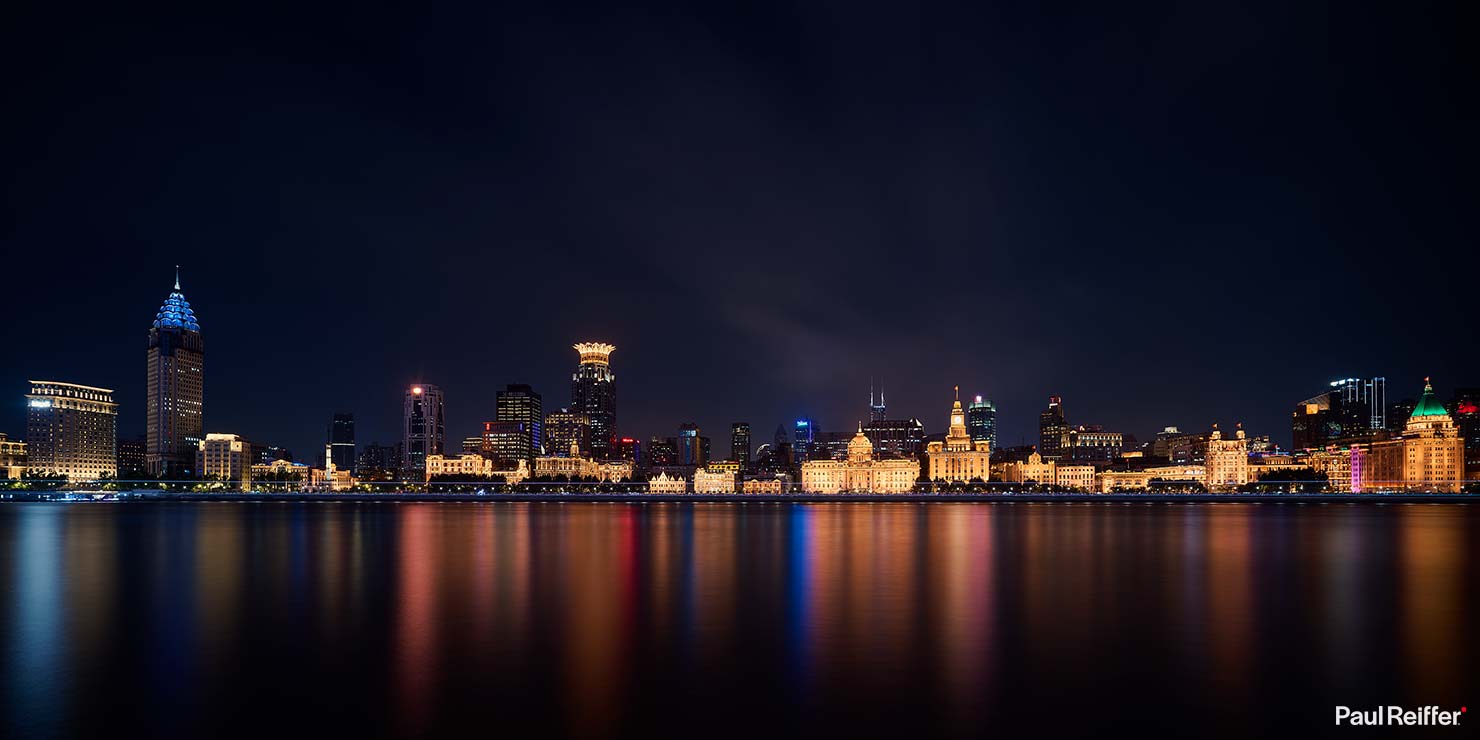
But while I love some of those older buildings (to the point where I think I’ll head back to shoot them in more detail soon), it really was all about the lights and towers on the eastern side for me on this trip – so back over the river once again…
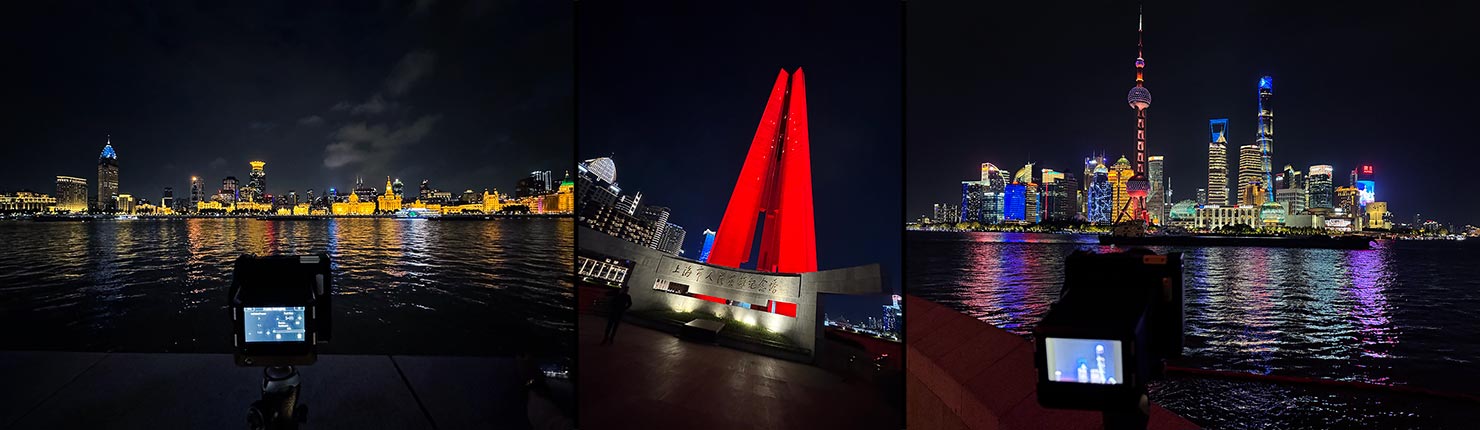
If anyone’s ever shot a concert with a Canon camera, you’ll know to put it away once the song commands red lights. Likewise, Nikon always seemed to have a problem with oversaturated blues when blue light became the primary source of illumination.
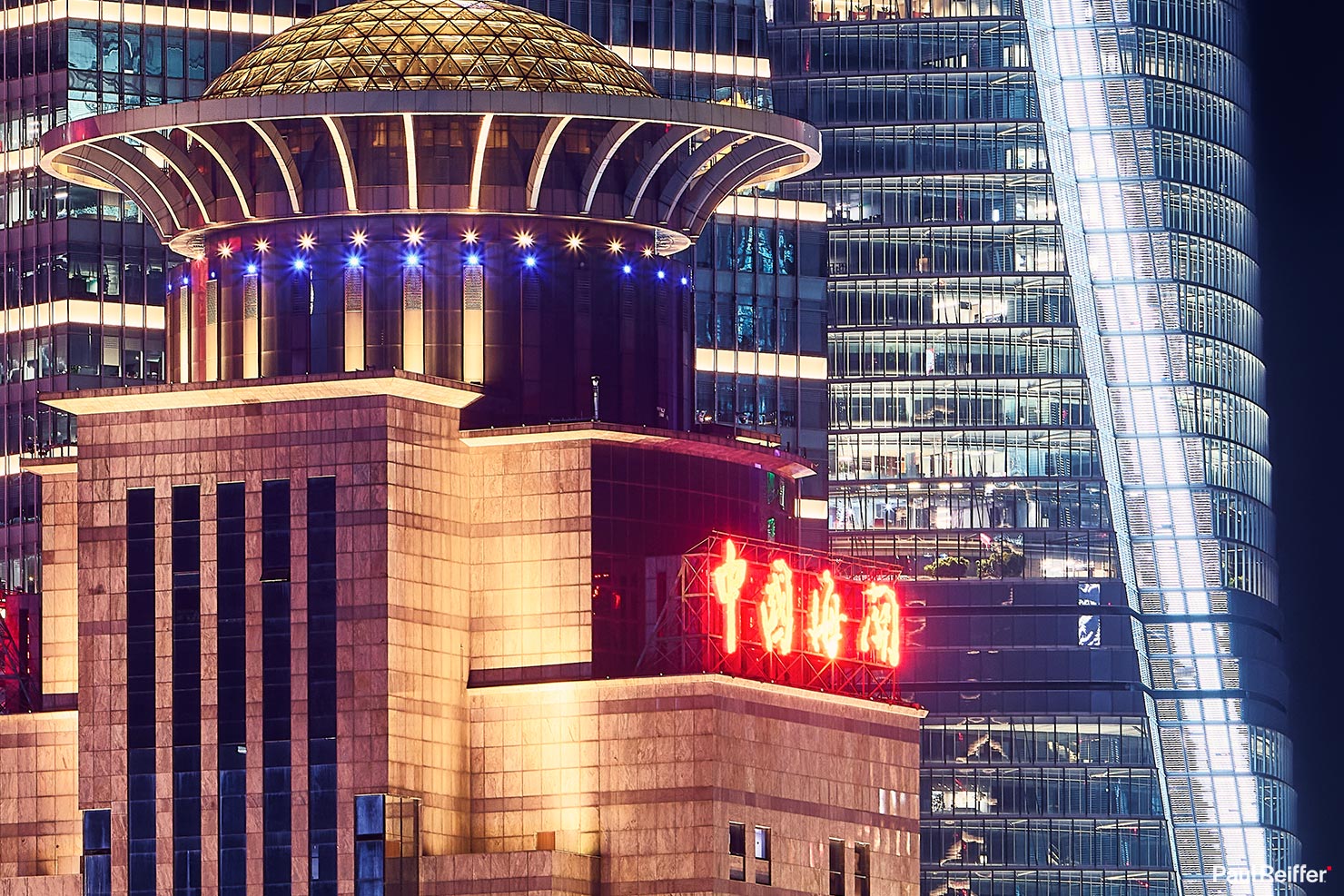
So, the prospect of shooting a solid red sculpture – the Shanghai People’s Heroes Monument – with any camera managed to give me that nervous feeling as I clicked the button, even with frame averaging enabled for noise…
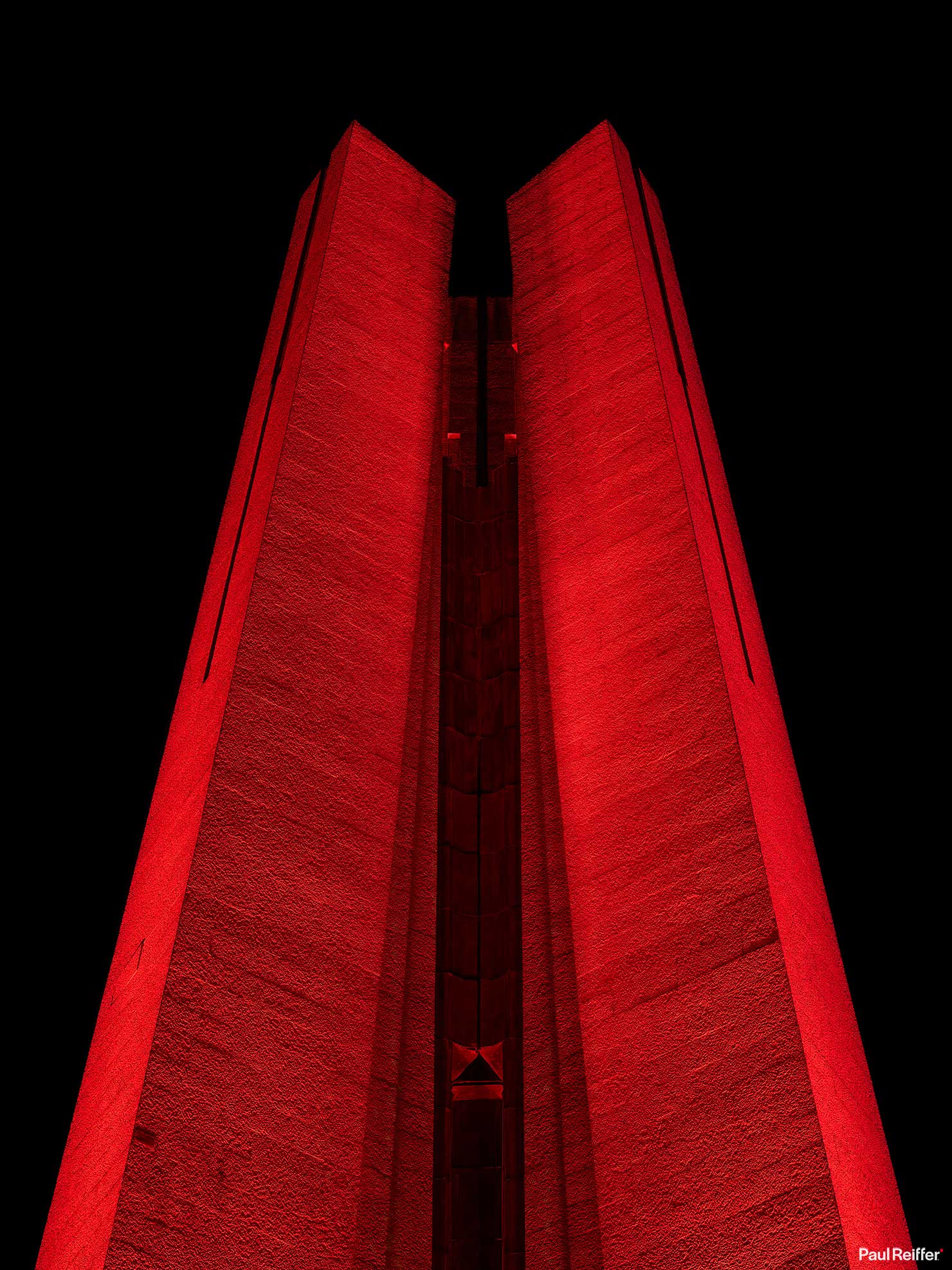
Shouldn’t have worried, I guess!
Phone cameras were disappointing people in all directions, as were many standard mirrorless setups – but wow, that IQ4 did a great job of capturing this with a 150mm XT lens attached. The detail, the retained texture, the tones of red that it stored – fair play.
Of course, from this point along the river you also get one of the “cleanest” views of the Lujiazui skyline itself.
While I had plans for the wide shot later on, with a 150mm lens attached I figured it might be interesting to shoot tight into the buildings for once.
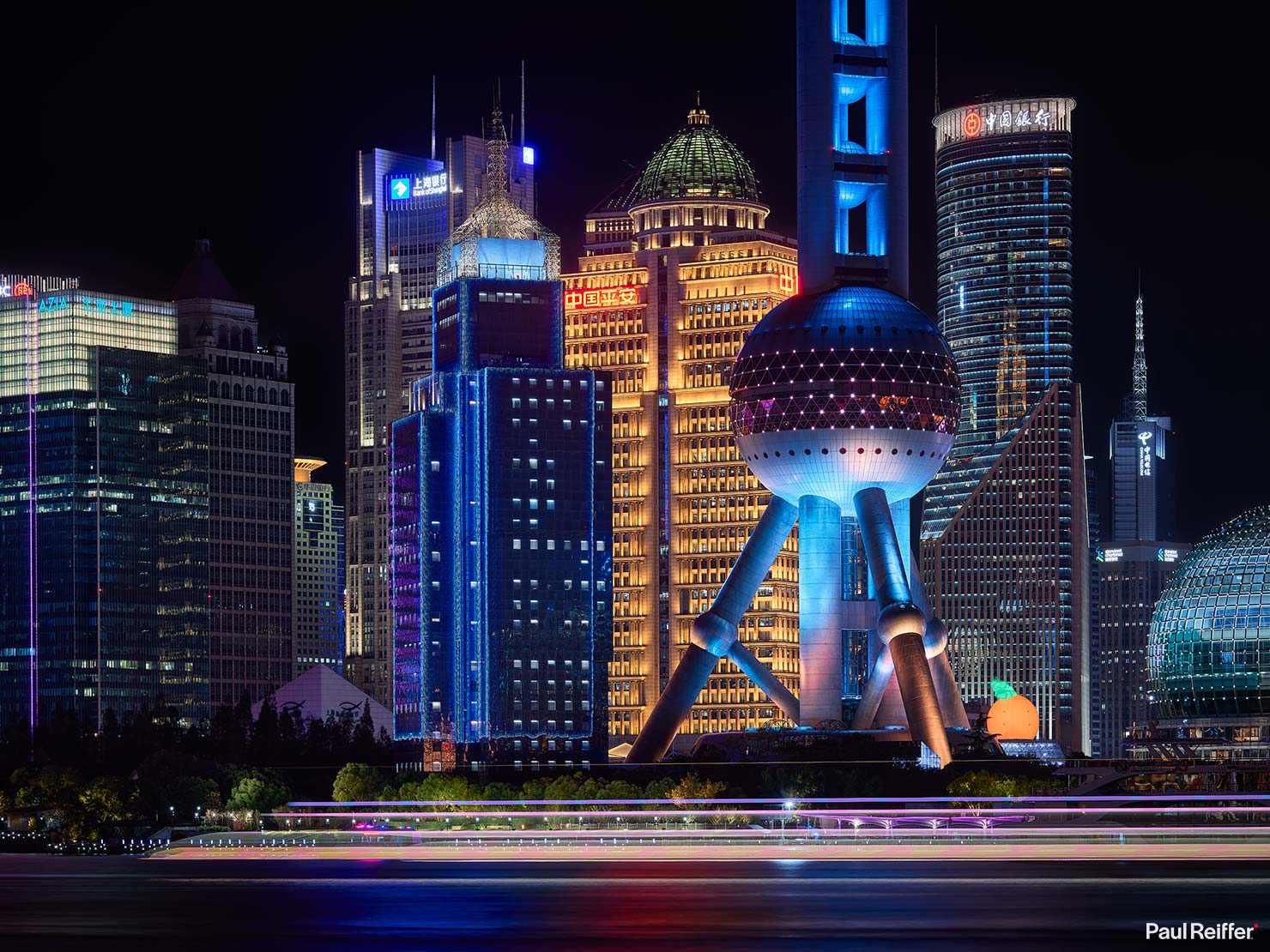
Sure, I wouldn’t be able to get the full view in one shot, but by excluding the wider context, it gave me a view over these incredible structures that focused purely on them, as buildings, rather than as part of a sprawling urban melting-pot.
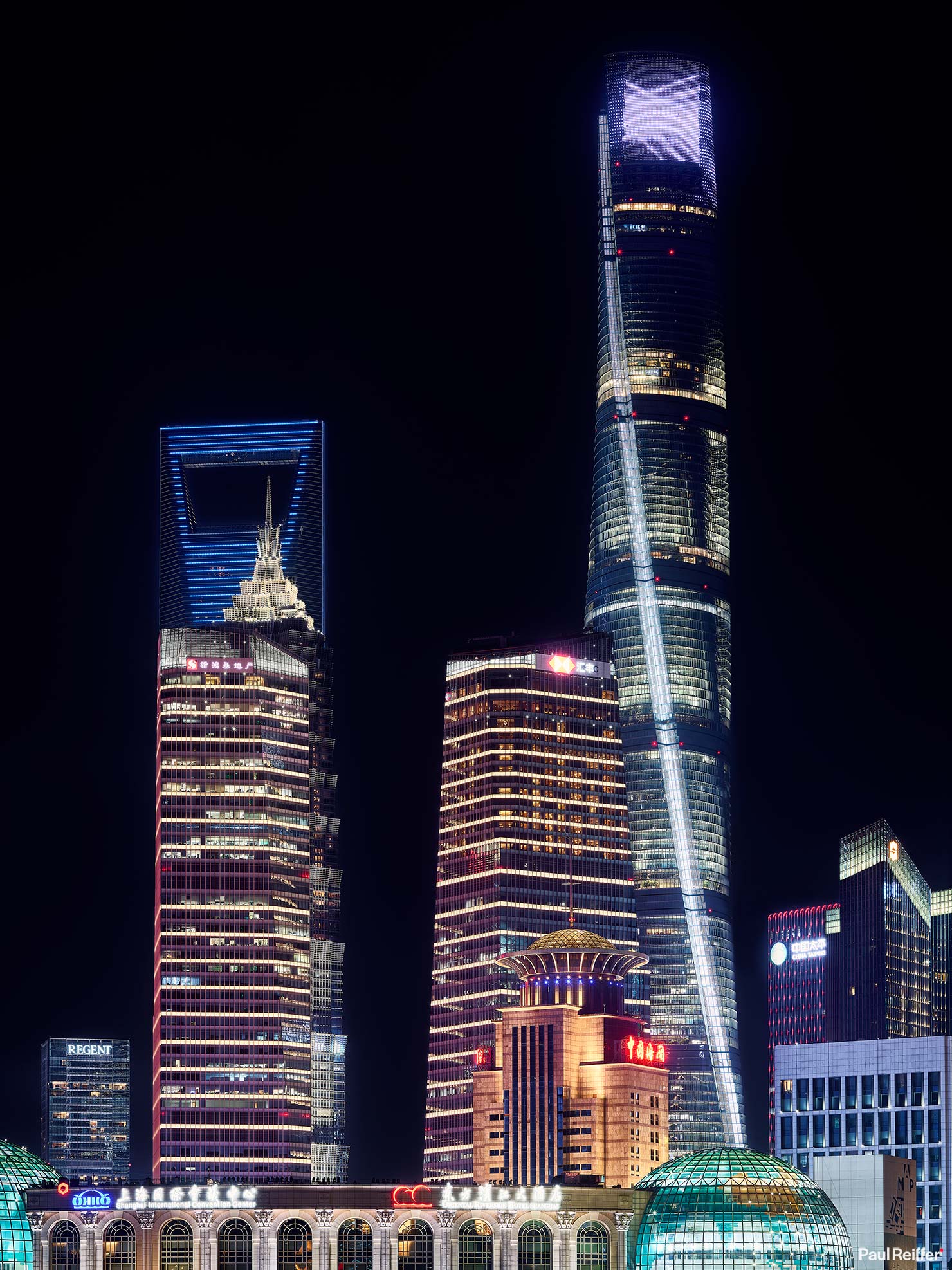
And up-close, that 150mm XT lens really didn’t disappoint. Every detail, as below in this 50% crop from the original file, came out clean, crisp, detailed and radiant – with perfect little pinwheels at each point of light.
And it was that section of the skyline I had my sights on for this trip. Having shot from Hyatt on the Bund’s rooftop a few times, I wondered if there was a closer view that gave me just the river as a foreground, from a little lower down without needing to clear anything in front, and delivered a more immersive view of the cityscape on that peninsula.
And then we found it – The Regent Shanghai.
Now for some back-story, there was once an, ahem, “questionable quality” hotel on the river known as The Seagull. With dingy rooms, many with no windows and a smell that transports you back to a time when Oliver Twist was walking the streets of London – it was not a destination of choice.
So, like much of Shanghai in the past 10 years, they fixed it!
Along came IHG and Regent, to completely remodel the building itself – installing balcony suites (with incredible bathtub views!) but more importantly, enough room to put up cameras and leave them running for timelapse, video and stills. (And all from the comfort of a true 5-star hotel!)
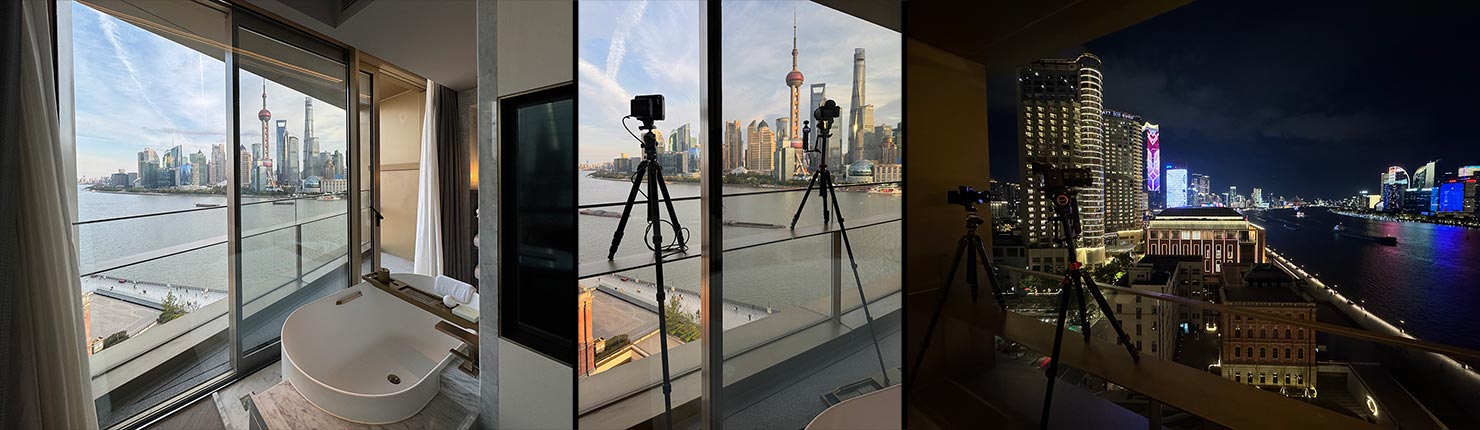
Not only has Shanghai spent time, effort and energy in upgrading its buildings and open spaces, the air quality has improved remarkably over the past decade.
To the ears, the lack of cars honking and dirty engines spewing out fumes all day has brought a calmness to the city that always felt “too close” in the air. To the eyes (and nose!) however, it’s brought a different thing entirely : clean, crisp, air – which is now on many days of a better quality than most cities in Europe.
And with that clean air? CLOUDS.
Yes, clouds. Sounds mad, right? But I spent years and years photographing the Shanghai skyline in solid “haze” (as they used to call it) – no structure, no texture, just yellowy-grey “haze”…
Sure, you might get lucky around Chinese New Year as people travelled back to their hometowns and factories slowed, but it was rare.
Now, however, this view has become the norm.
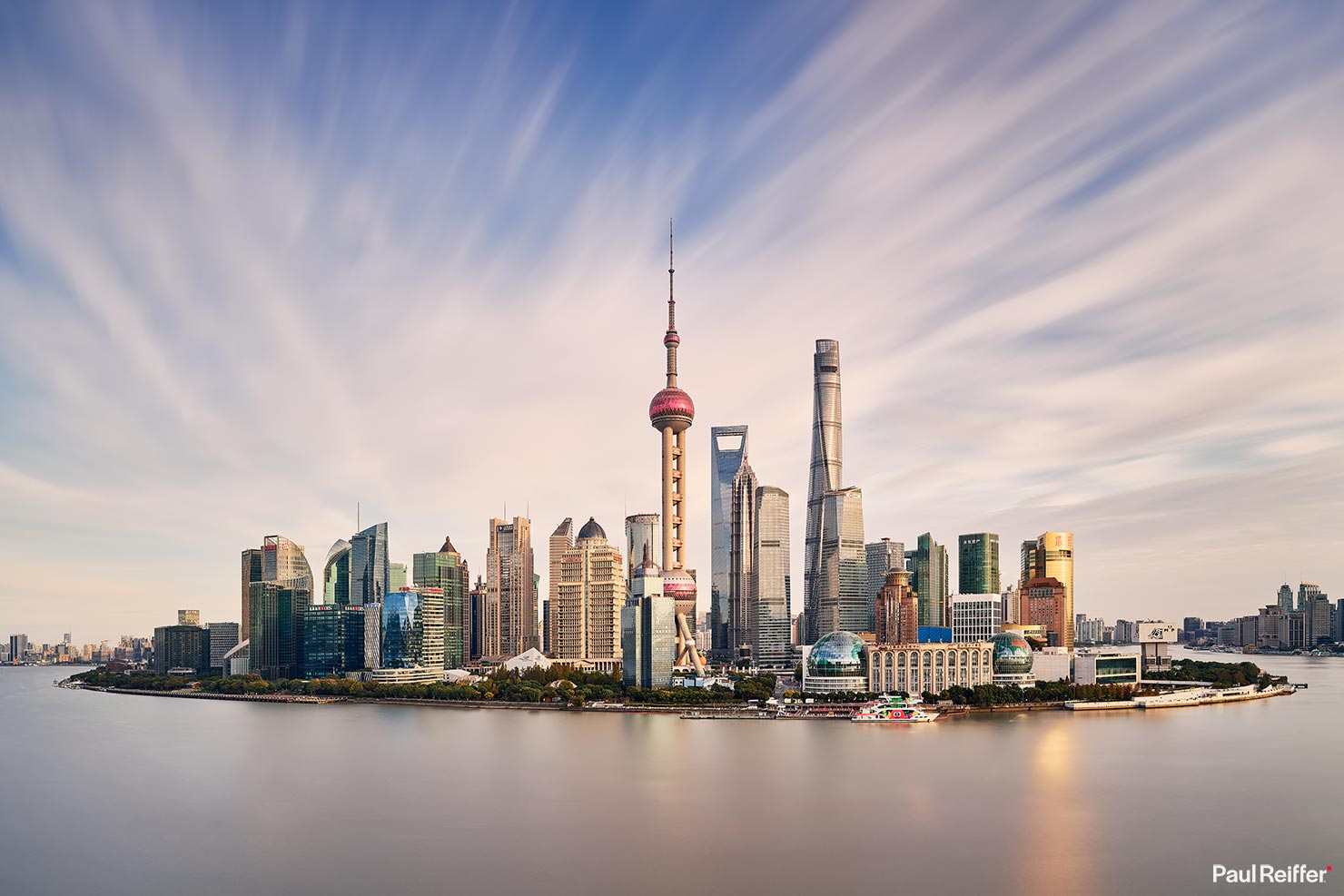
Turns out, Shanghai was indeed designed for long exposures all this time – we just needed to peel the protective plastic off… 😉
And then, by night – Wow.
What a view.
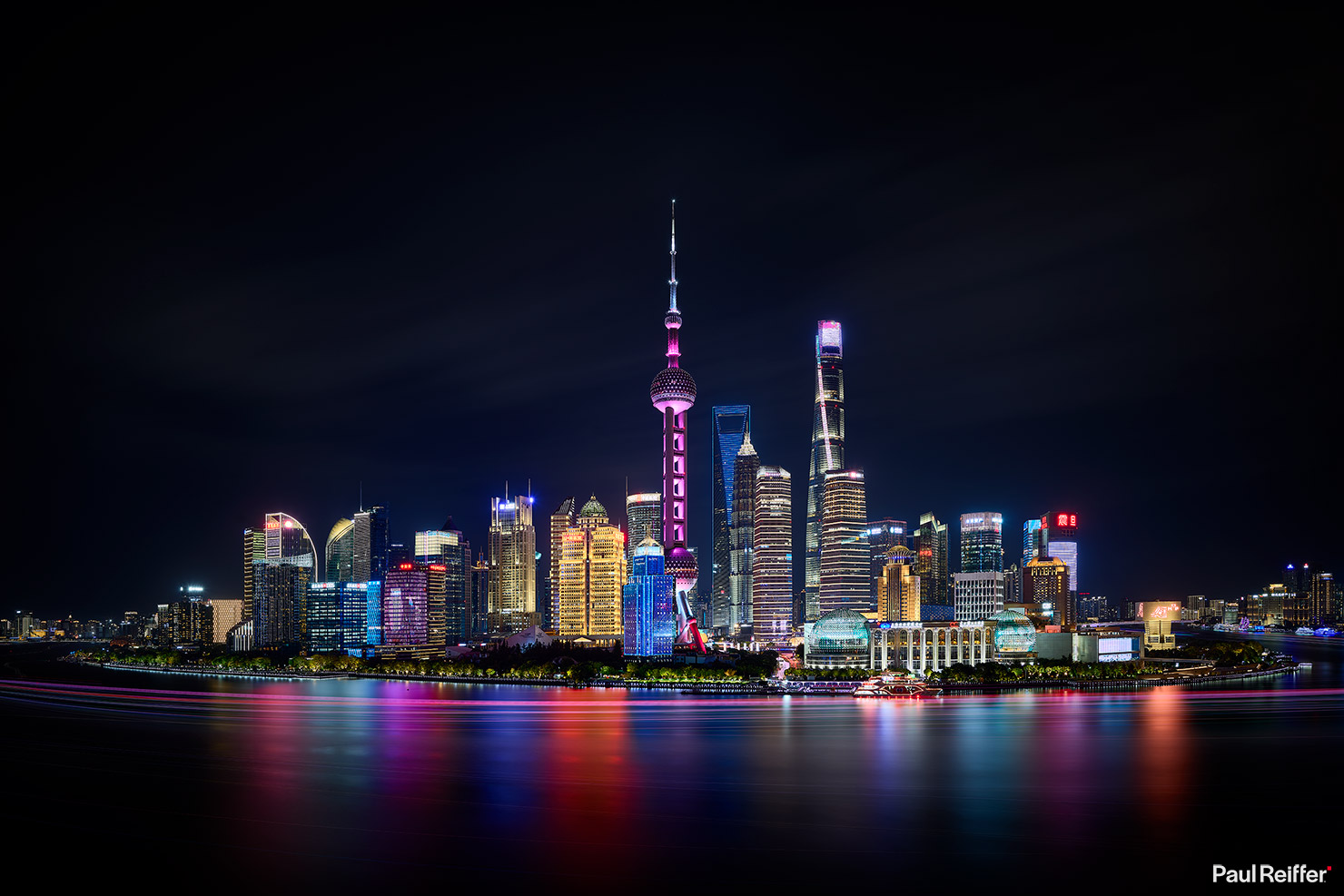
Whether taking it in from the balcony or bathtub, this is a view that will always be iconic in my mind.
The pace of building work has slowed, but the impression is not one single bit less impressive, each and every time I get to stand and look at that incredible skyline.
Up-close, offices still working into the night (well, those who still go to the office, of course!) and the upper floors of Jin Mao tower clearly identifying themselves as the Grand Hyatt area above the rest of the building itself.
You need to keep your long exposure short enough to allow for a maximum of one colour-change on the Oriental Pearl Tower (to avoid white-out), but look at what you get if you time it just right!
(Crop below at 50% of full size)
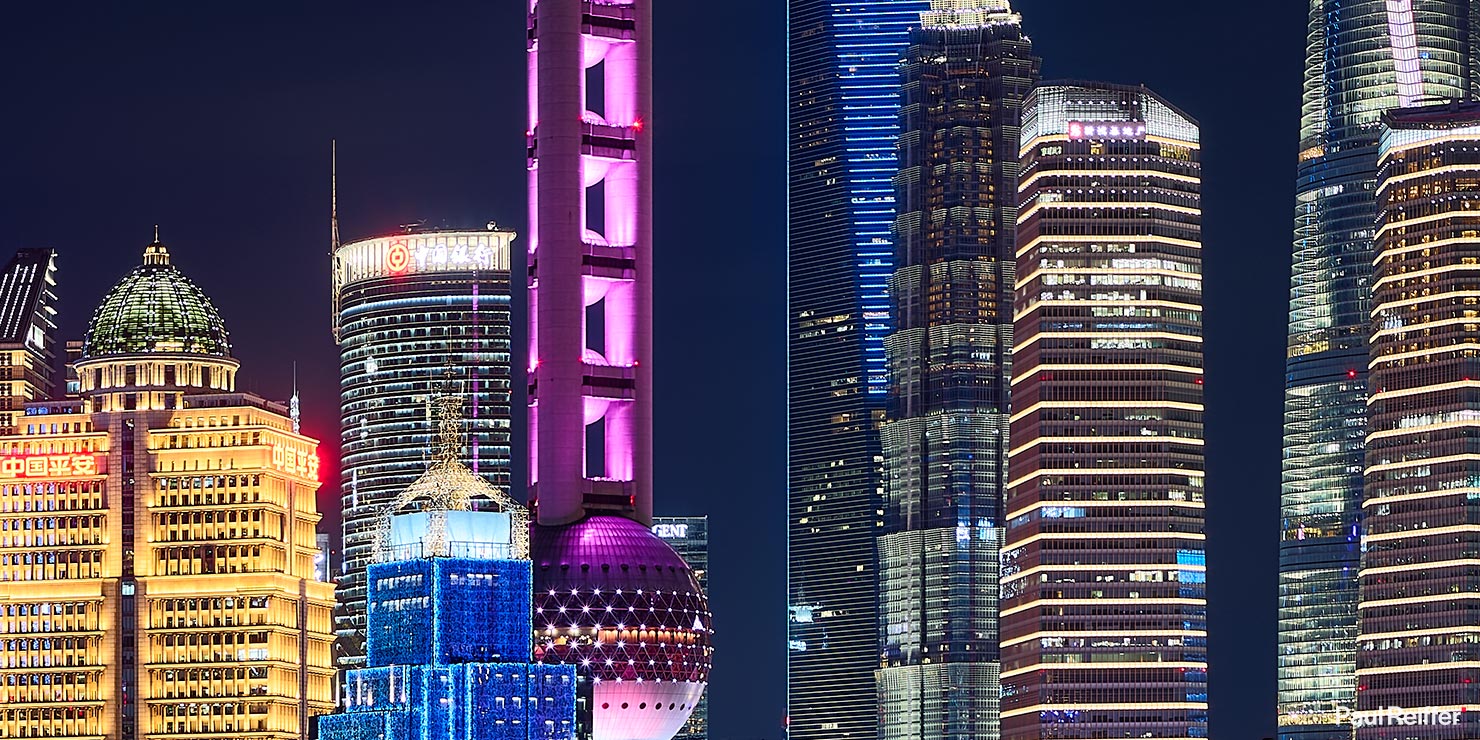
The Oriental Pearl Tower – few buildings can be such a key feature of a skyline as this in the world. Sure, buildings have sprung up in all directions around it, but the original TV and Radio broadcasting tower has stood on that corner of the ultra-modern side of the river for over 30 years now.
Indeed, when I first visited Shanghai in the early 2000’s, staying at Jin Mao Tower, it was the only other tall “thing” you could see from the 88th floor.
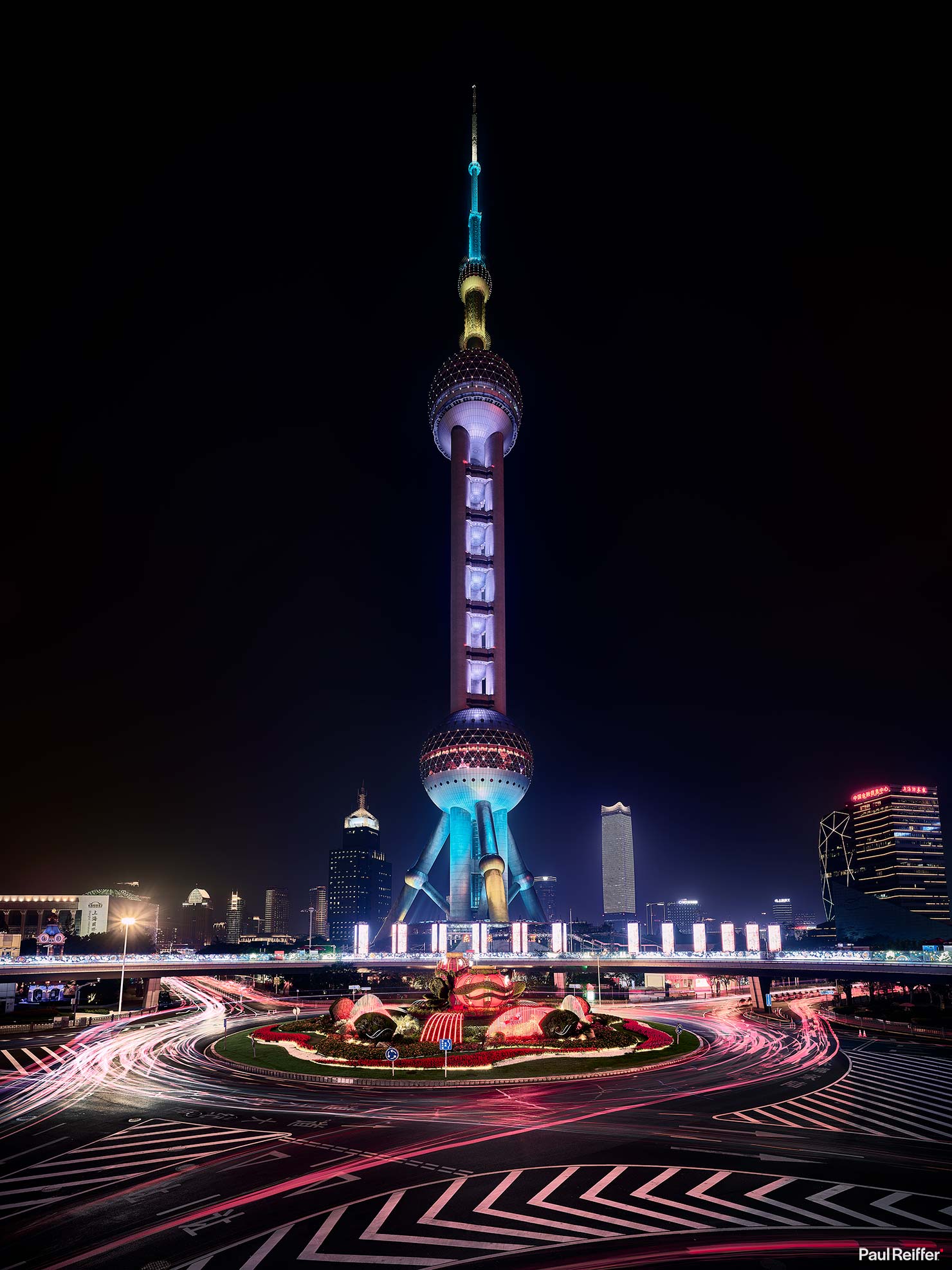
Since then, an elevated walkway has been installed to separate pedestrians from the increasing traffic below. Indeed, my shot – “Circular Motion” relies on this walkway as a leading line into the frame.
But I’d never shot up at the Pearl from down there before – so, while here…
Now here’s an interesting misunderstanding about China when it comes to law enforcement. Many foreigners seem to be “concerned” about police here – with no reason to be. If you’re not doing anything “wrong”, why would you be? And, in fact, in my own experience – they’re often actively looking to help, not get in the way.
And that applies to all cities, in all countries, surely? Play by the rules, and all is good.
Still, it doesn’t stop that feeling of “uh-oh” when one approaches you if you’re working on a “grey line”…
So when I dared to put my tripod foot slightly into the road and a police officer stopped their motorbike to come and speak to me – there was a quick moment where I thought this could be a telling off. Only, it wasn’t.
The lady looked at the back of my camera, saw what I was doing, and promptly stood to the right of me to help ensure cars and buses didn’t get too close.
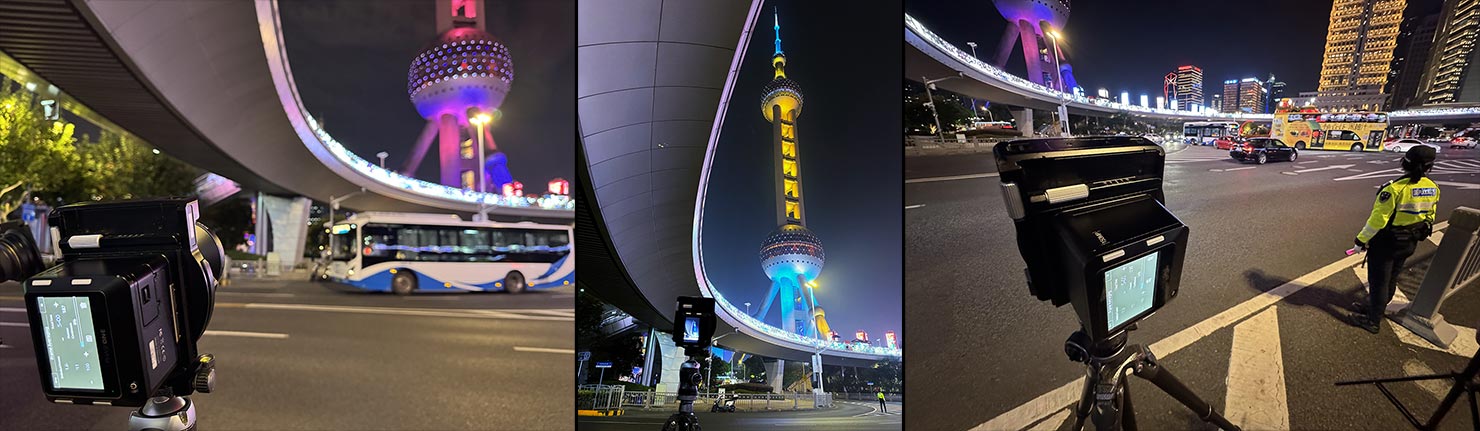
Now imagine that in London/New York/Paris…!
Do I love the shot? Not really – I think Circular Motion has a lot more energy from being down low and not worrying about distortion.
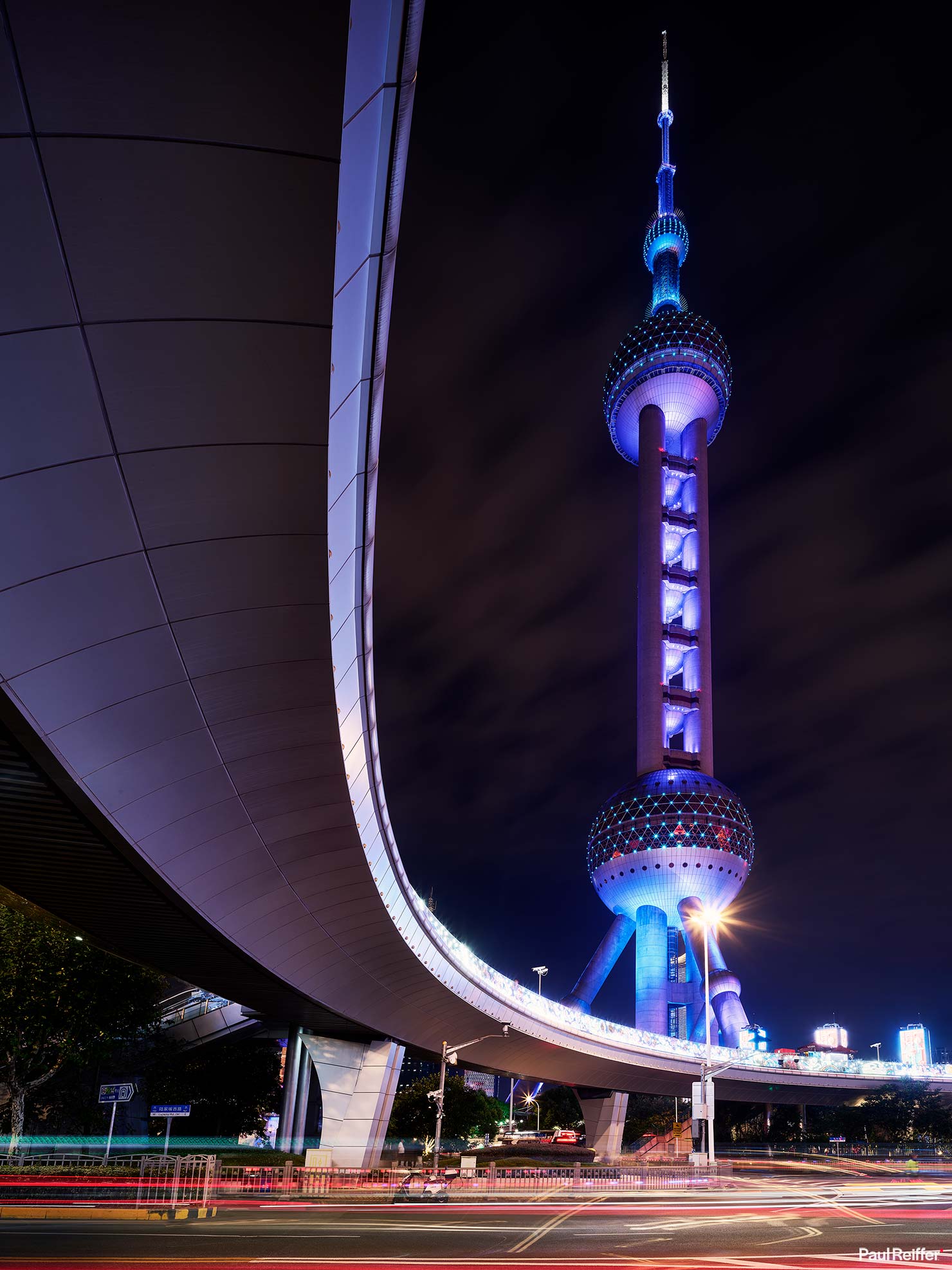
But, do I appreciate the shot, with her bike sat there being striped left and right by the traffic trails of passing cars, knowing the story behind her wanting to assist?
You bet.
And while packing up, I made the decision that I’d focused on the wrong subject here – for my own memories.
I’ve always been fascinated by the “Three Giants” – the 3 megascrapers in Lujiazui: The SWFC, Jin Mao Tower and Shanghai Tower.
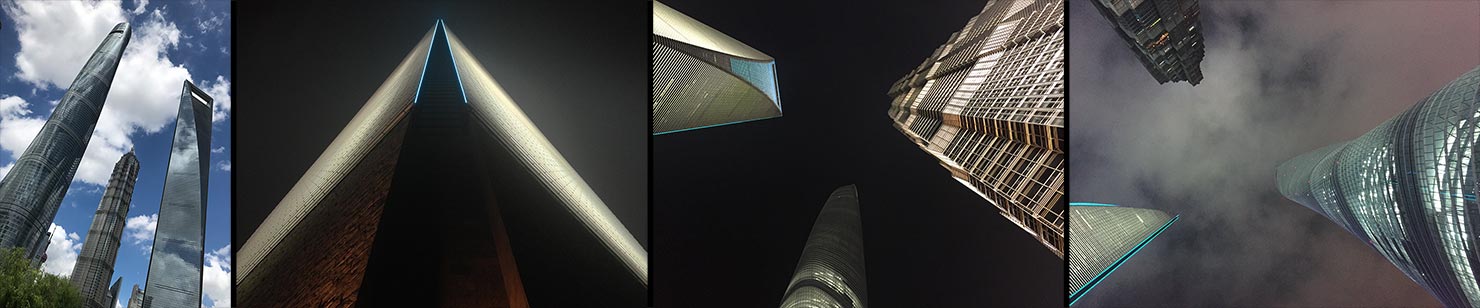
Situated, likely intentionally, in a way where they all reach up to the same point in the sky – I’ve captured them on my iPhone for many years.
Only, maybe I need to do the same capture with my “big camera” next time and see what we can get!
As they say, it’s always a good thing to leave something to come back for…
Speaking of returns, there is always one particular location that will never let me down – Nine Dragon Interchange.
From a drone, below, you get the idea…
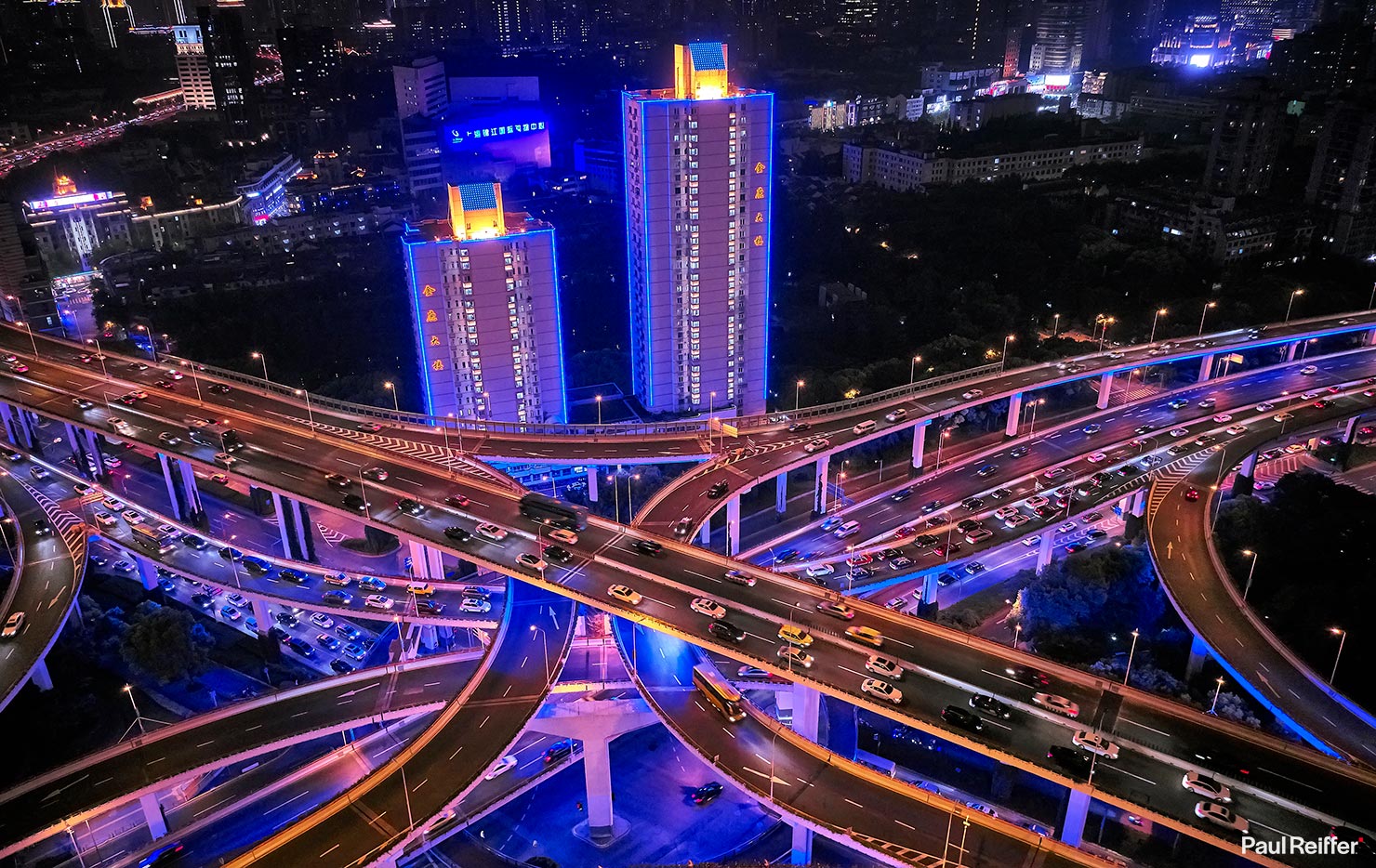
With an on-off location access history, and challenges over what (or indeed, if any) lights are on rotation that night, this complex intersection was made famous by the blue illuminations under the Yan’an Elevated Highway as featured in James Bond – Skyfall.
Whatever angle you choose to capture it from, the interweaving of such an incredible network of roads, along with a sprinkling of traffic trails and the light show underneath, means there’s never a “bad shot” here, but – again – I do love a rooftop…
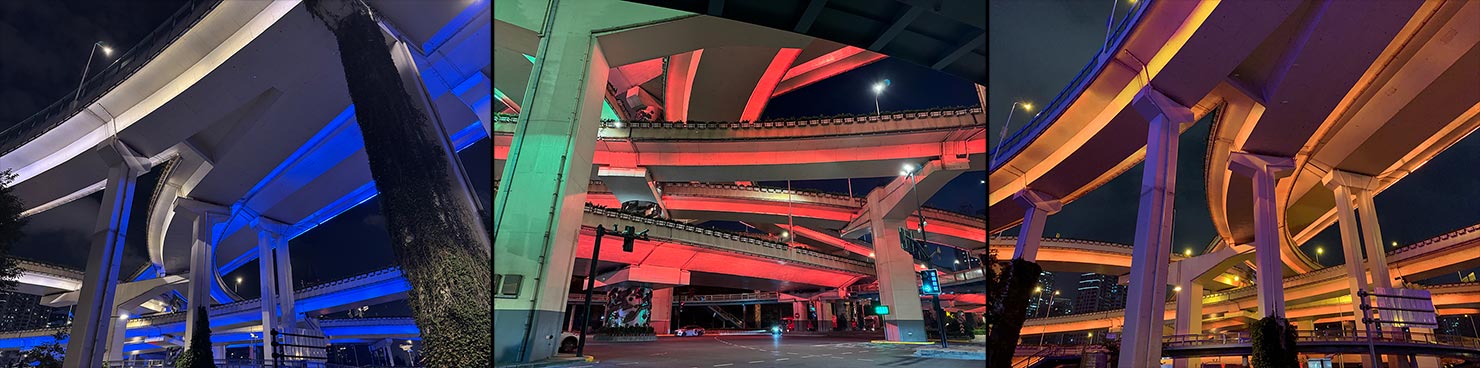
When I shot “Shanghai Calling” a few years back, we only got blue.
Since then? Well, let’s just say it’s had an upgrade…
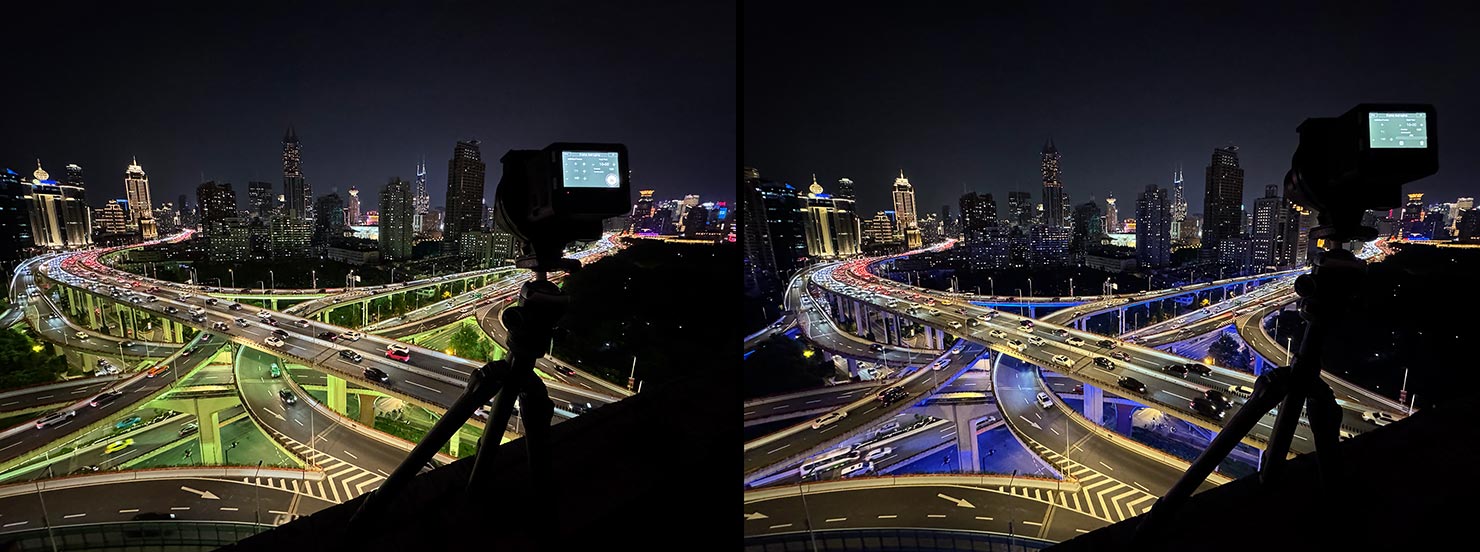
As the city pulses through the rainbow of colours programmed into the network below, it’s almost like different phases of the night get highlighted by the different tones and moods.
Just as with Nanpu Bridge, it’s the motion of the cars that brings the energy to this shot – leading the viewer into the chaos of overlapping ramps, with the residential towers “trapped” between the arms of this major artery of Shanghai’s commute.
And as that tone changed, so did the shot – the feel – the presence of the rest of the view.
Trying not to recreate past shots, this time I decided to keep the feel darker, more late-night, than previous captures – where even in its signature blue, it’s still the whites and reds of the cars that take centre stage.
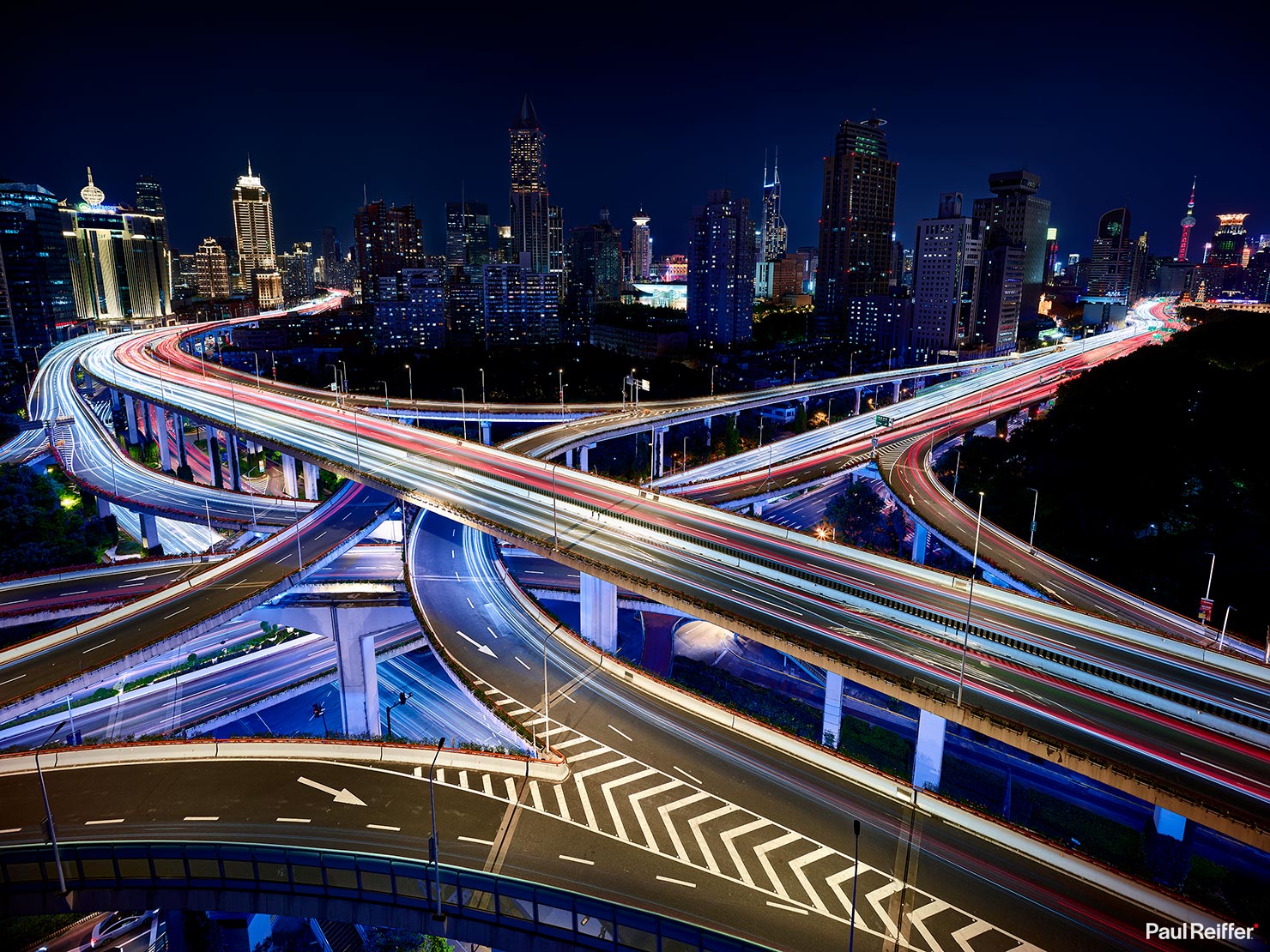
And with that setup, that difference in feel becomes really apparent as colours shift from standard to red, orange, yellow, green:
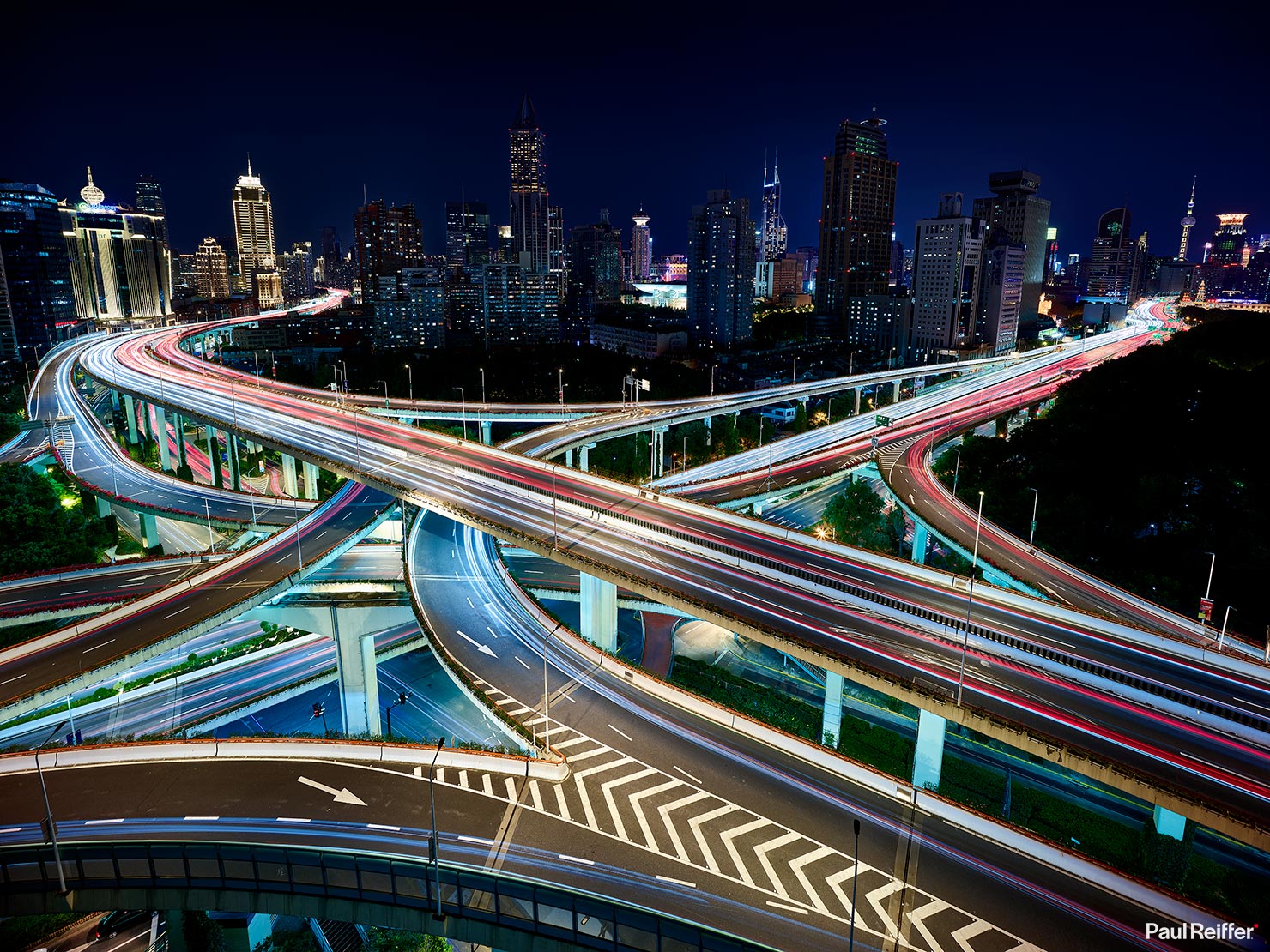
Plus, hey – we’re on a rooftop, it doesn’t only look one way, right?
So what’s that over there in the distance?
That’s right – 3.5km away is that same Lujiazui skyline across the river. With layers of parkland, old historic buildings, new apartment blocks, hotels and offices, that 150mm lens once again did a great job of capturing all I could see…
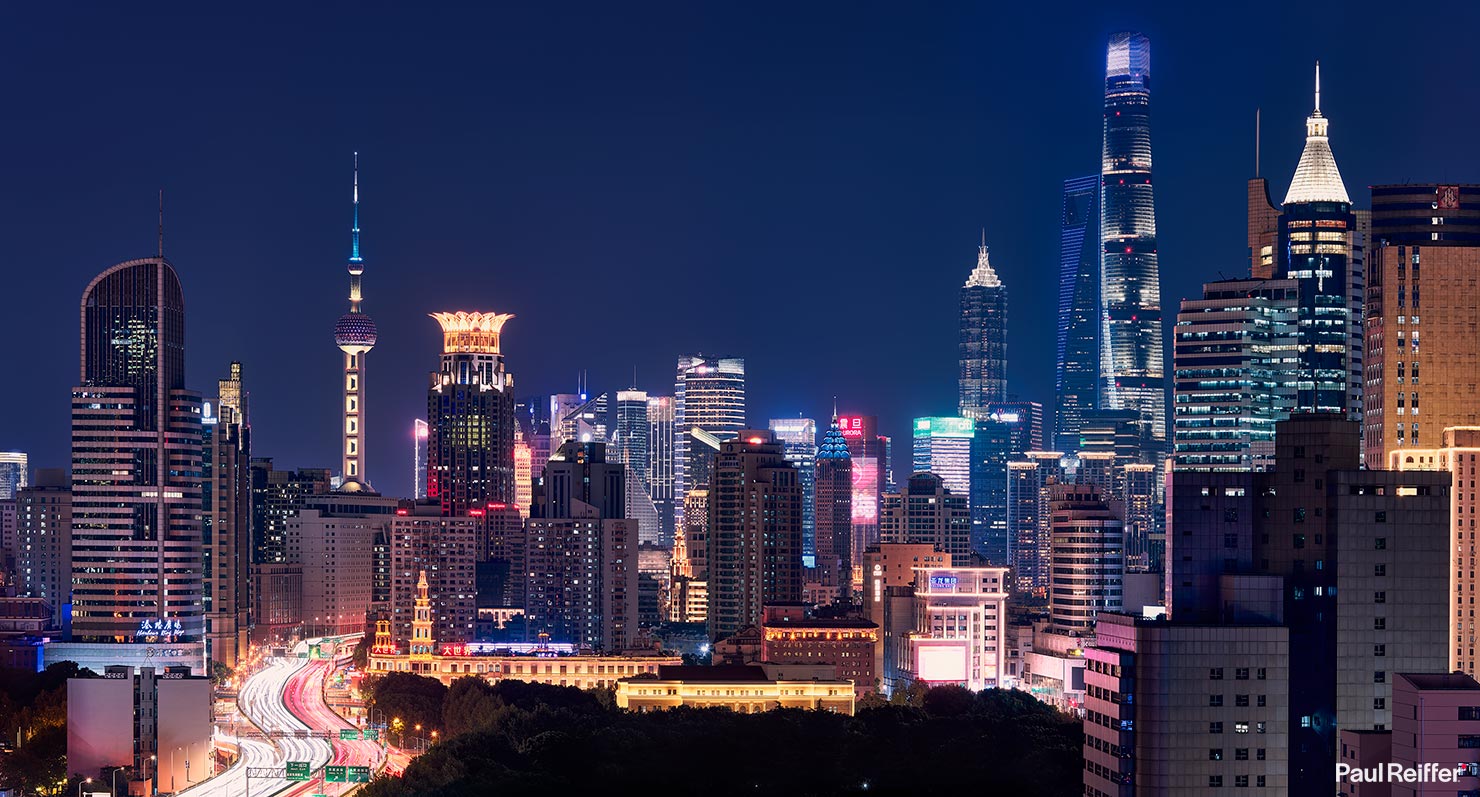
…and more – as this 50% crop of the buildings next to the freeway demonstrates quite nicely.
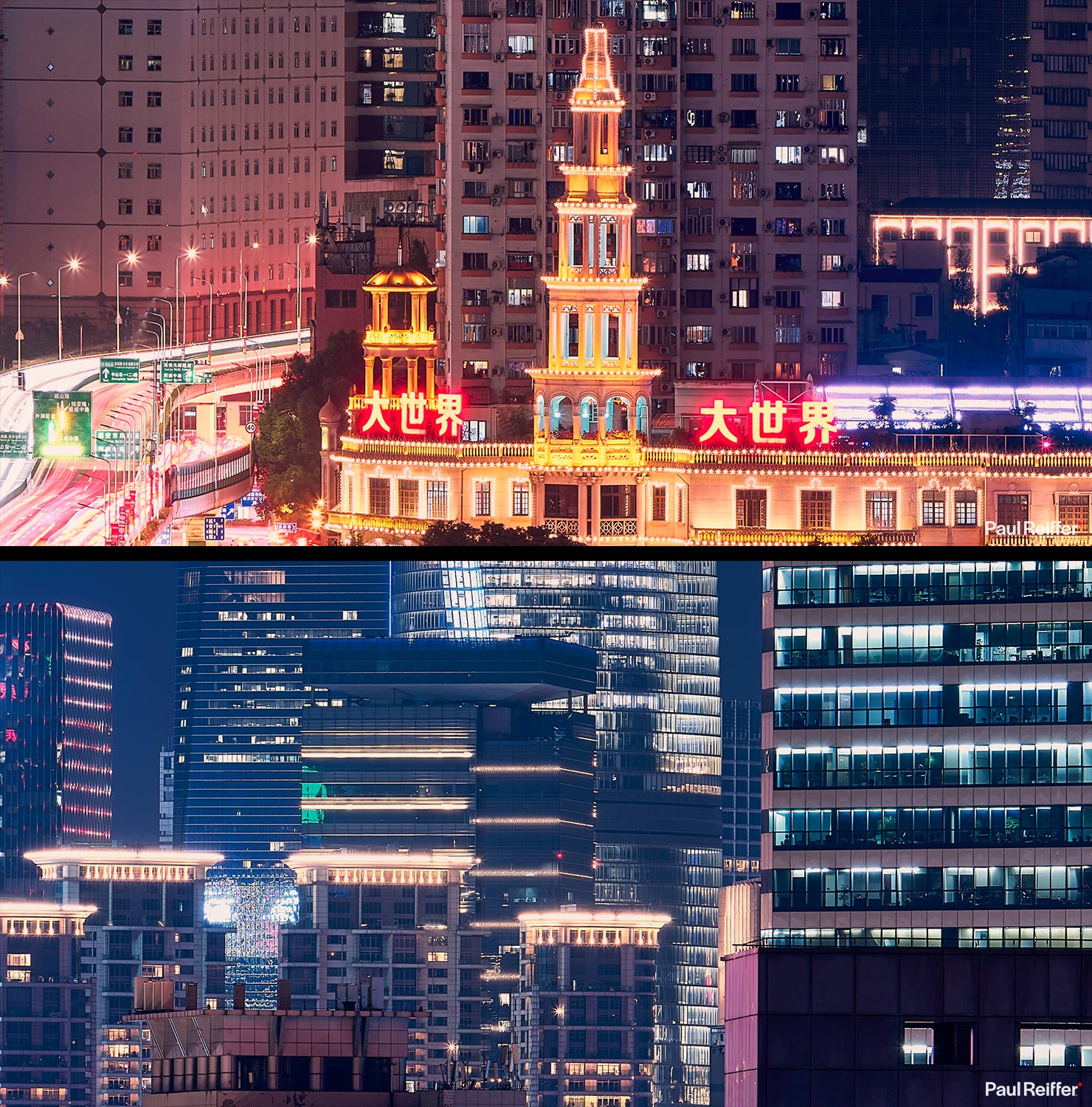
Along with that distant office block and Shanghai Tower all that way away.
Who’d have thought I’d be picking out crystal clear details 3.5km away in a city that I sometimes used to struggle to see more than 1km from where I was stood!
So, did I get my “fix” on this trip? Sure did.
Was it enough? Never.
And plans are already afoot to pick up where I left off next time.
Final thoughts?
- While I often dislike “going western” when in Asia, the Regent’s (oddly) perfectly round burger is quite the win.
- Yang’s Dumpling still rules, always.
- Shanghai’s started getting much better at eggs.
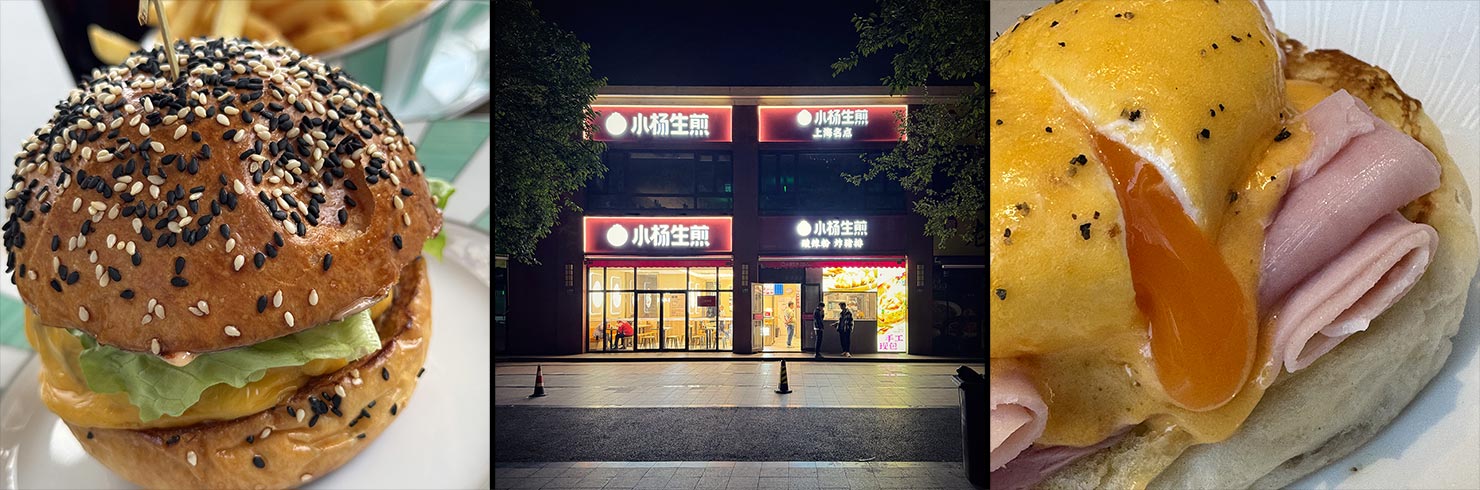
But then – they giveth, yet they taketh away.
Yes, that was a cheese… cake…
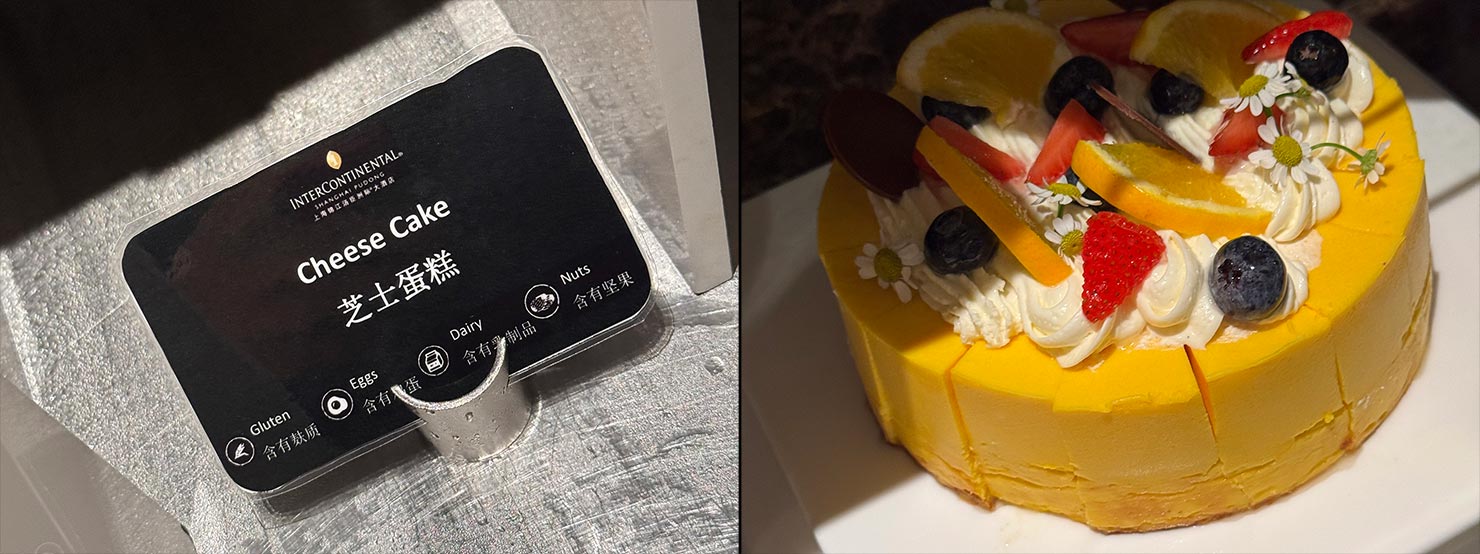
…an actual cake made of cheese.
So close, guys, so close.